The Aphelion reference library
Where would you like to begin?
Explore the sky, make sense of a photograph, or find a piece of astronomy art. The complete reading directory is below.
More guides and references
Search this library
The observatory journal
Start with a question about the sky, explore the objects beyond it, or find practical help choosing and printing your own artwork.

Astronomy print questions, answered.
The questions people type into a search bar before they buy something for the wall: how big, framed or not, and whether any of these pictures are real.
Your own sky
Search this library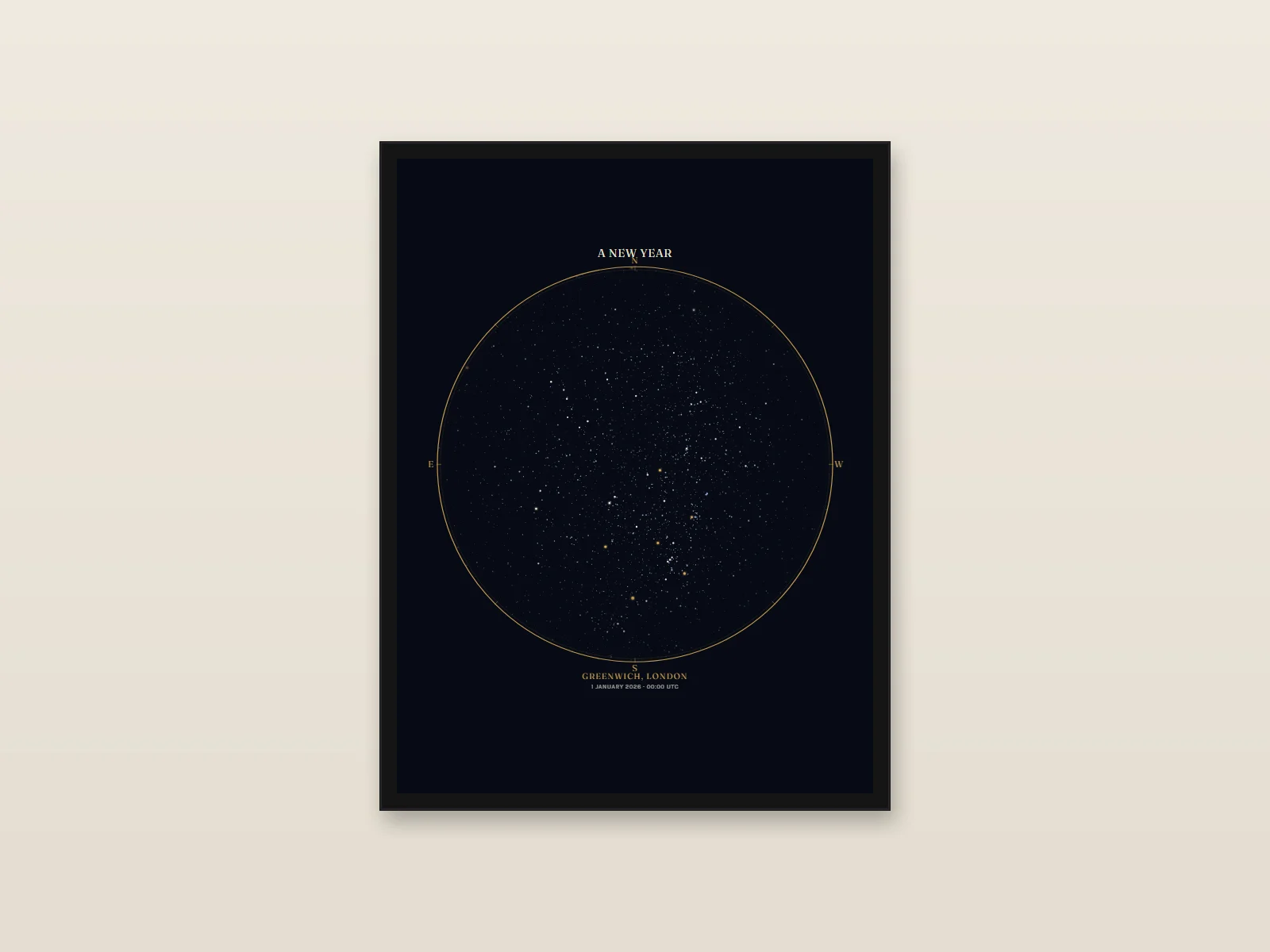
Star map gift: print the sky from the night that mattered
A star-map gift is calculated for a place, date and time: a birth, wedding or first meeting. What the chart models, why the inputs change it, and how to choose a moment that means something.
Name a star or give a star map? What each gift means
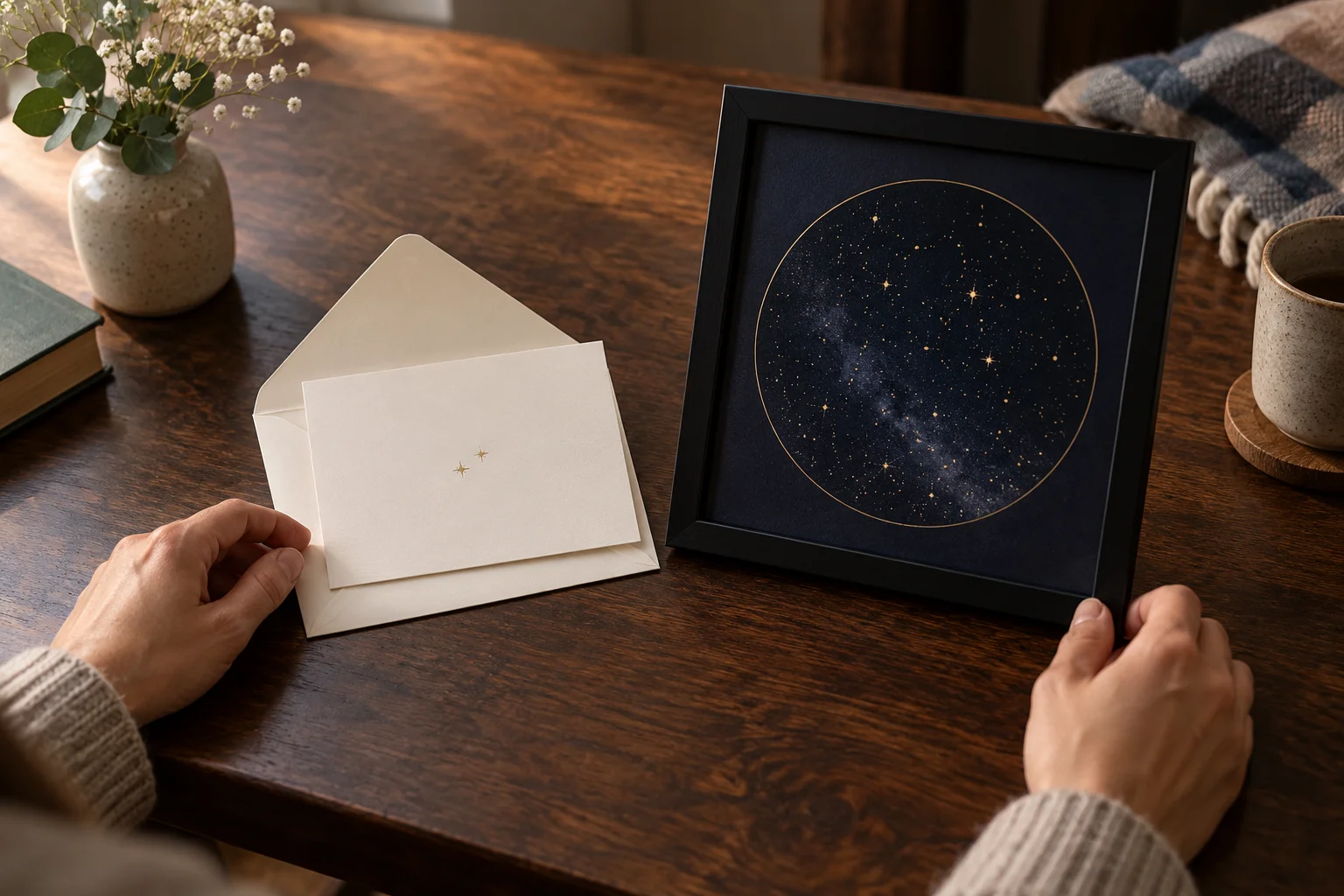
A commercial star-naming package can be a symbolic keepsake; it does not give a star an officially recognised astronomical name. A personalised star map records the calculated sky for a…
How to turn a photo into art in a painted style
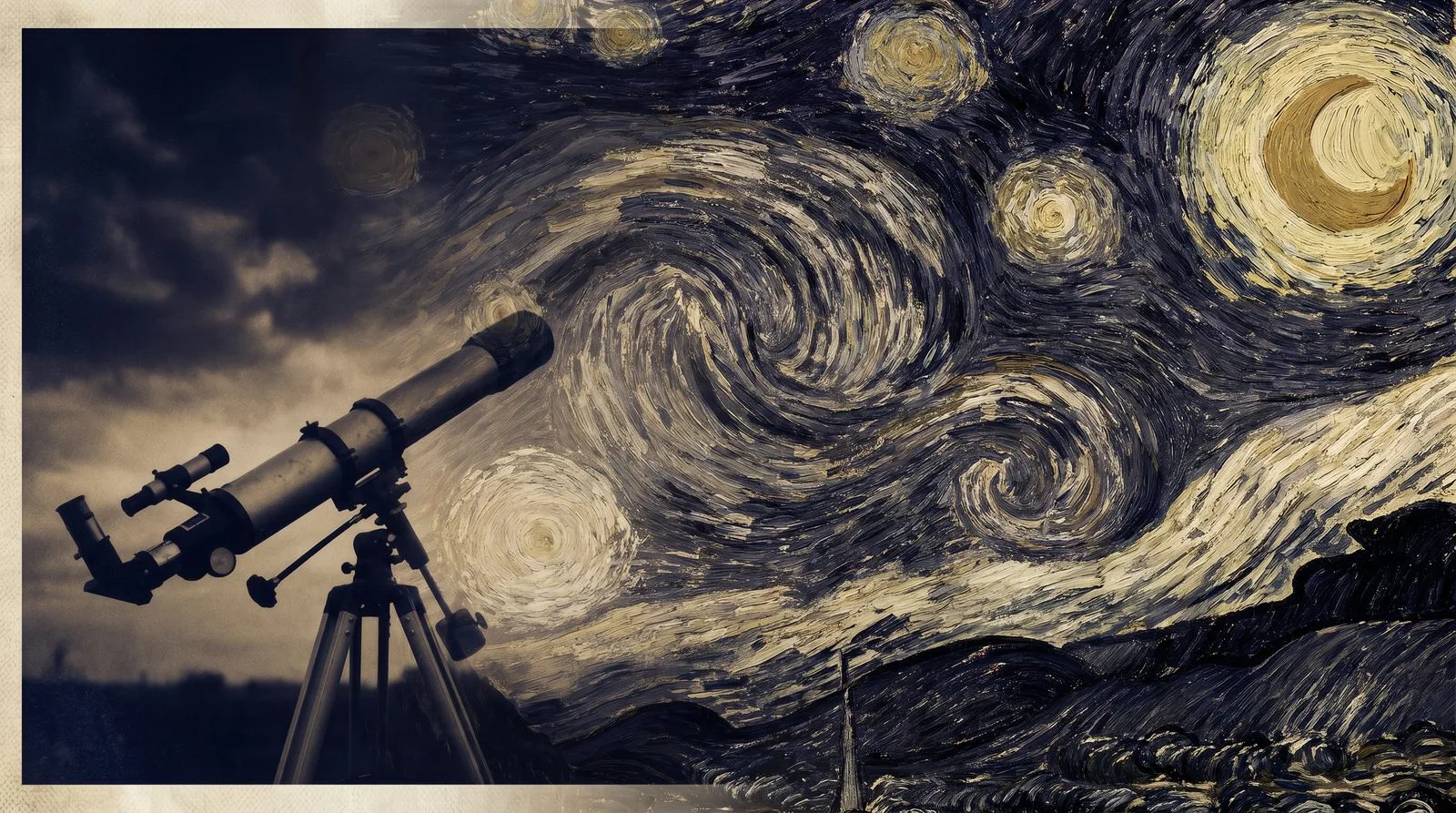
The fastest way to turn a photo into art in a painted style is to let an AI image model restyle it in a look you choose: upload, pick a look, and preview it free before deciding whether…
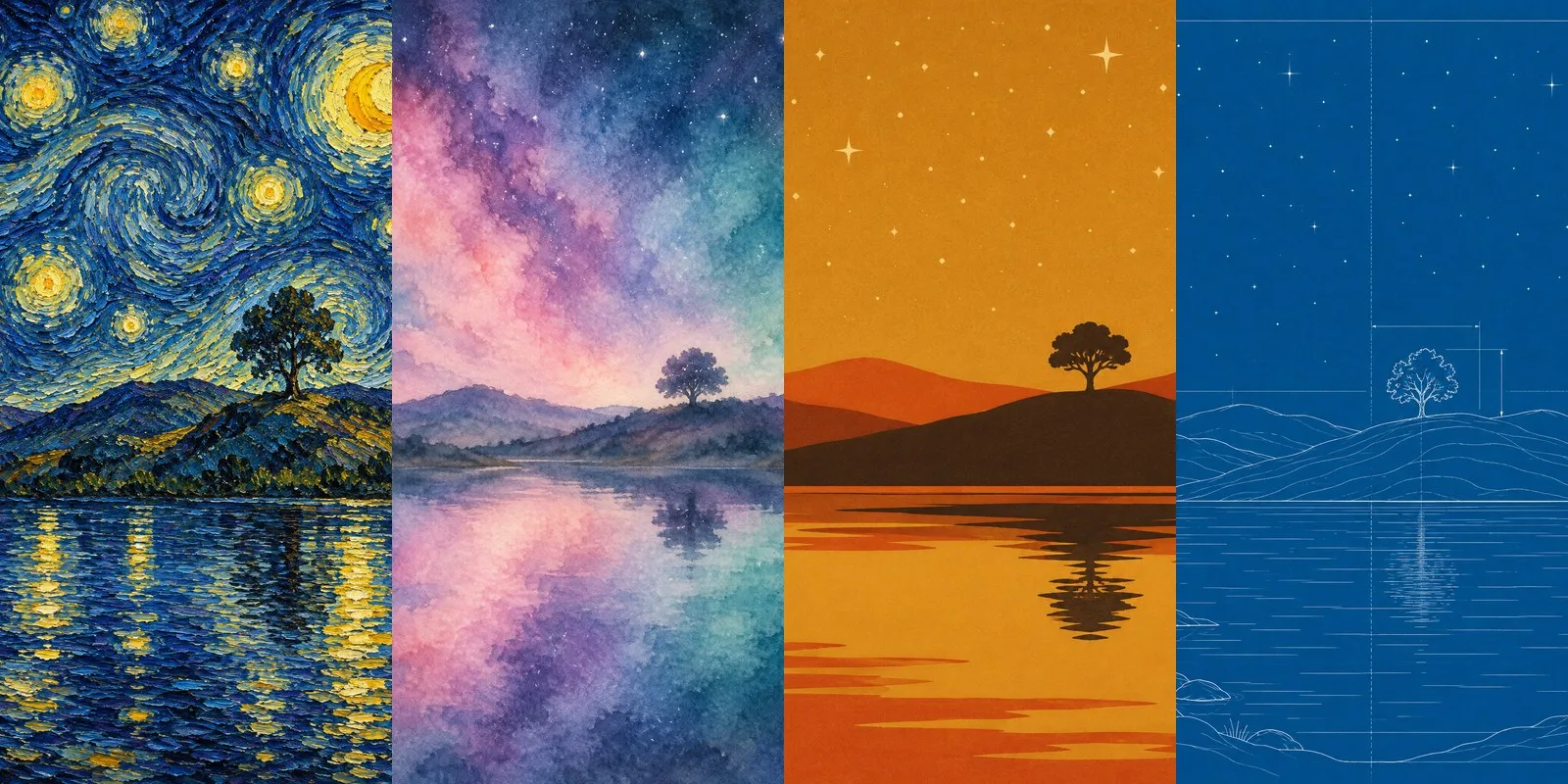
Turn a photo into wall art: 4 styles compared
There's more than one way to turn a photo into wall art. These are four distinct styles, and the kind of photo each one flatters most.
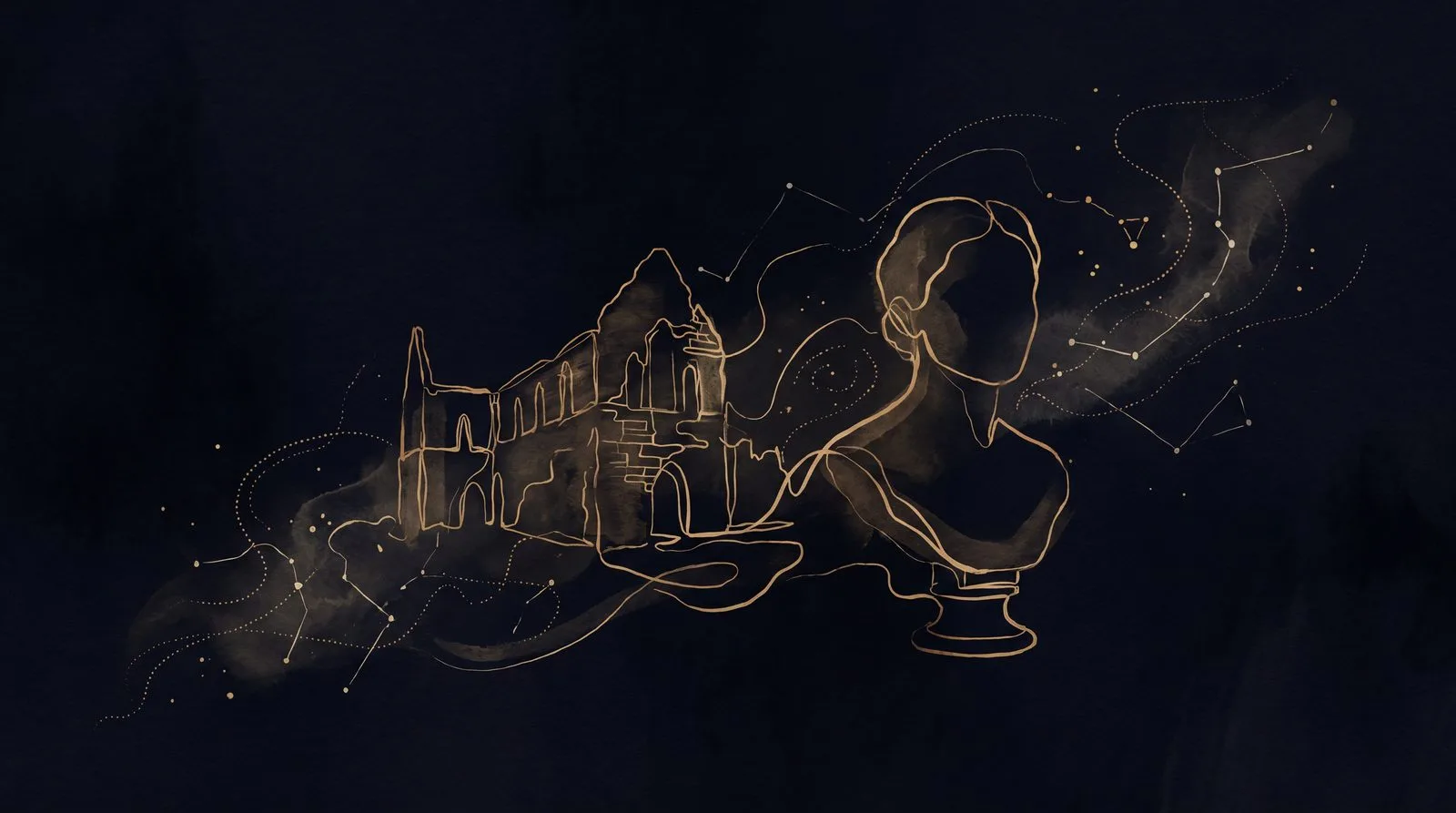
How to turn a photo into line art
Upload a photo to Cosmic Canvas, choose Line Art and review an AI interpretation in sparse linework. Check the details before choosing an eligible print or digital download.
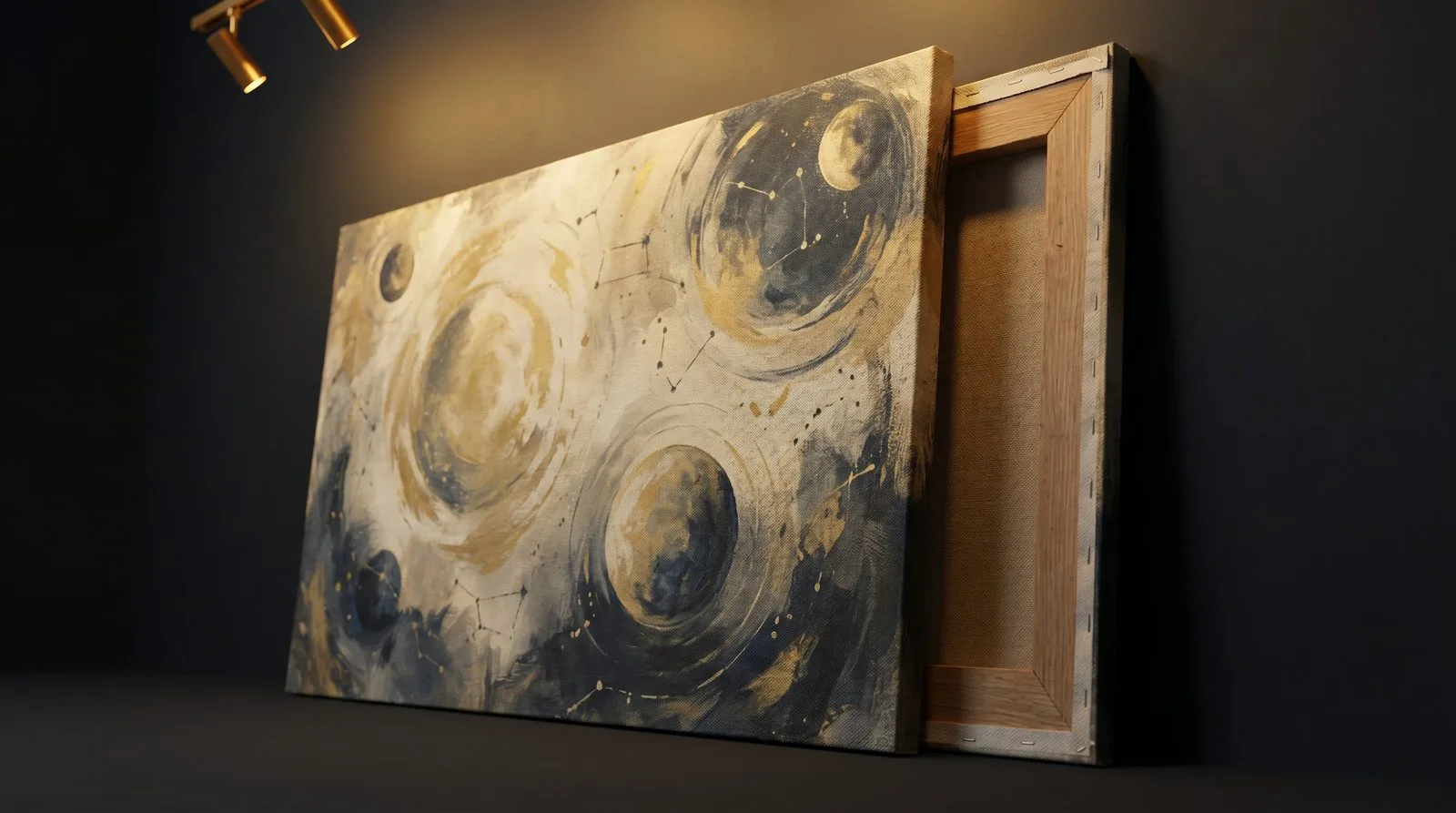
Photo to canvas: the complete guide
Turning a photo into a canvas print is simple once you know the sizes, the resolution you need, and what to look for. This guide covers all of it, for UK buyers.
What is a star map print?
A star map print shows the sky as it appeared above one location at one moment: a specific date, time and set of coordinates, plotted rather than illustrated.
Your own sky: start here
One particular night, or one particular photograph. What a star map shows, and what happens to a photo you upload.
The night sky on the day you were born
You need three things to see the night sky on the day you were born: the place, the date and, ideally, the time. With those, a planetarium program or a star map shows exactly which stars…
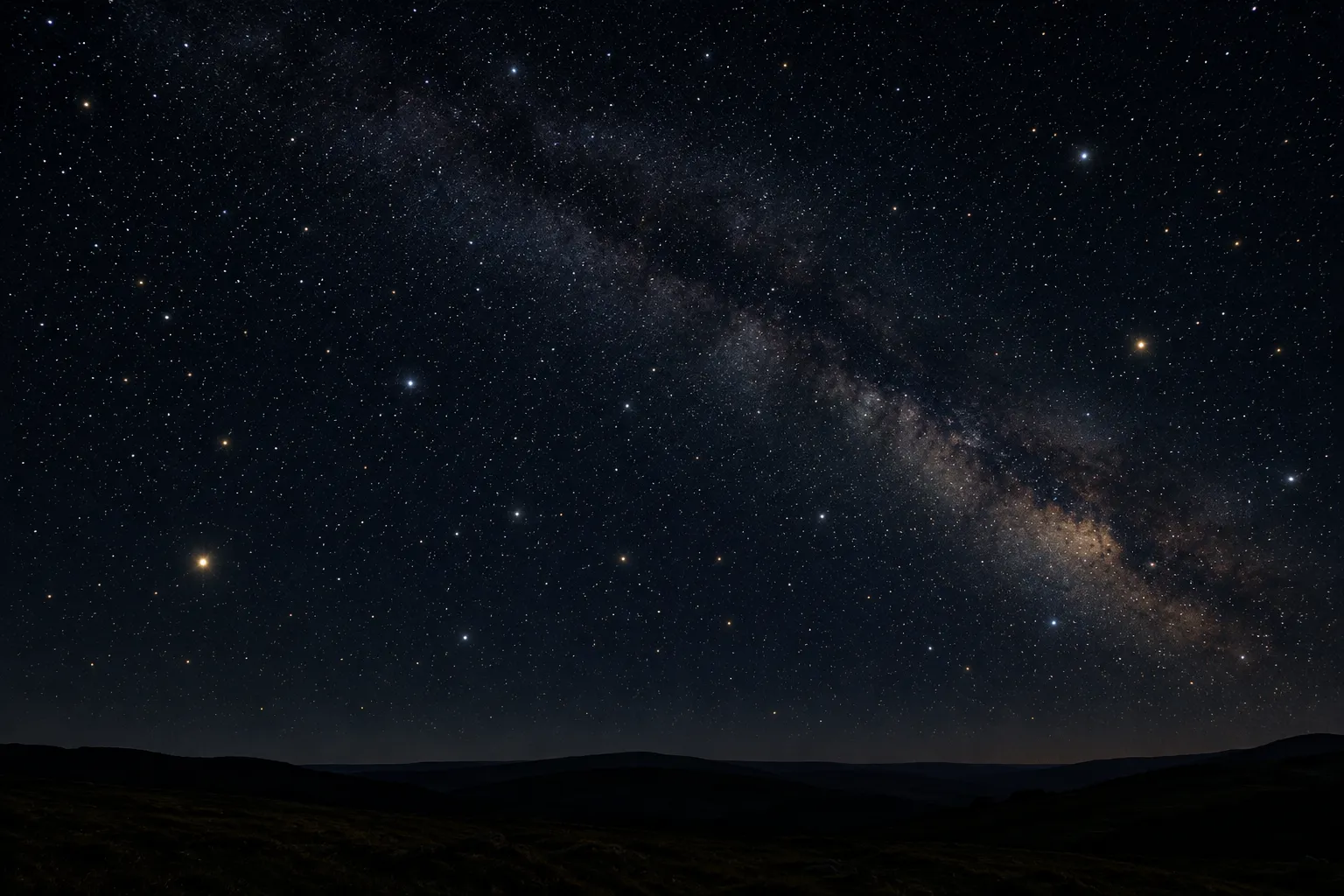
How accurate is a star map?
How accurate is a star map? It is accurate if it shows the stars that were really above that place at that minute, in the right positions. The number of stars on it says very little: on…
Looking up
Search this library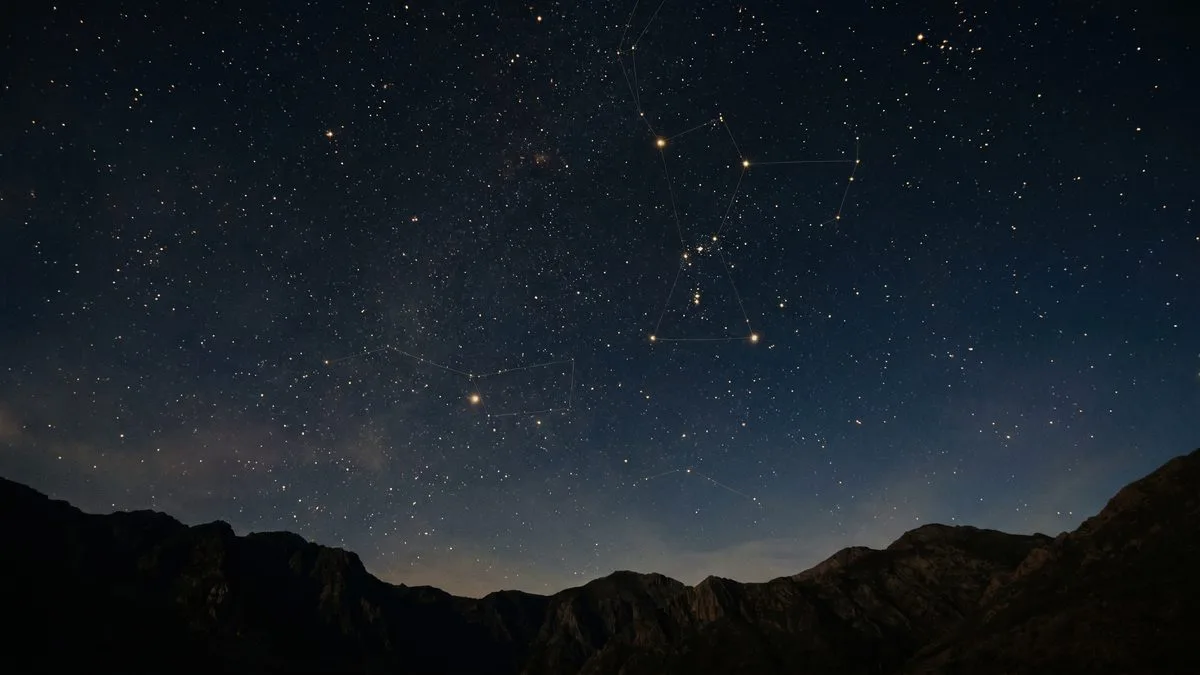
What is a constellation? The 88 patterns, explained
A constellation is a recognised pattern of stars: and, in the modern sense, a defined patch of sky around it. There are 88 official ones, set by the International Astronomical Union, and…
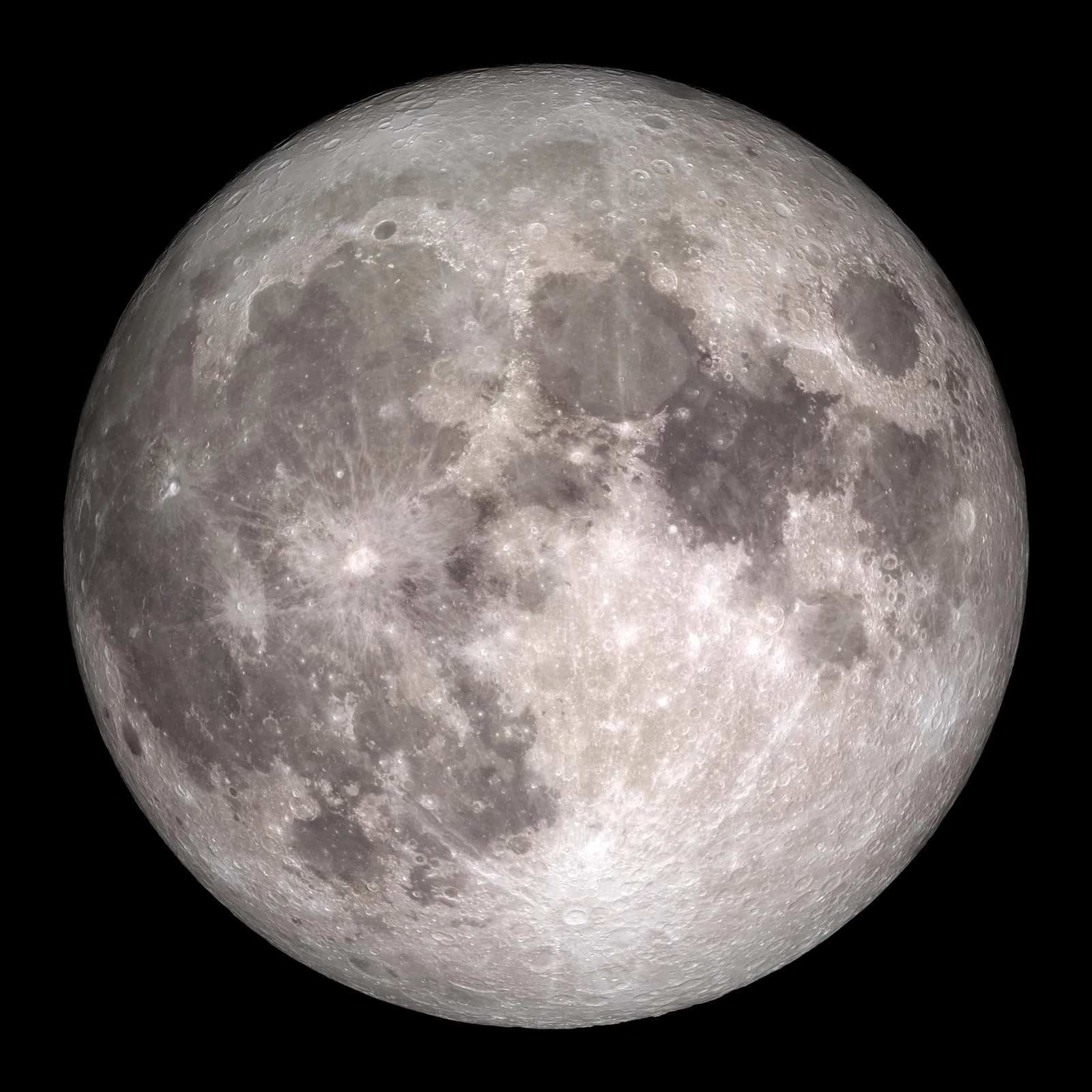
Phases of the Moon: all eight in order, including gibbous
A waning gibbous moon is more than half lit and shrinking after full moon; a waxing gibbous is more than half lit and growing towards full. These are all eight phases of the Moon in…
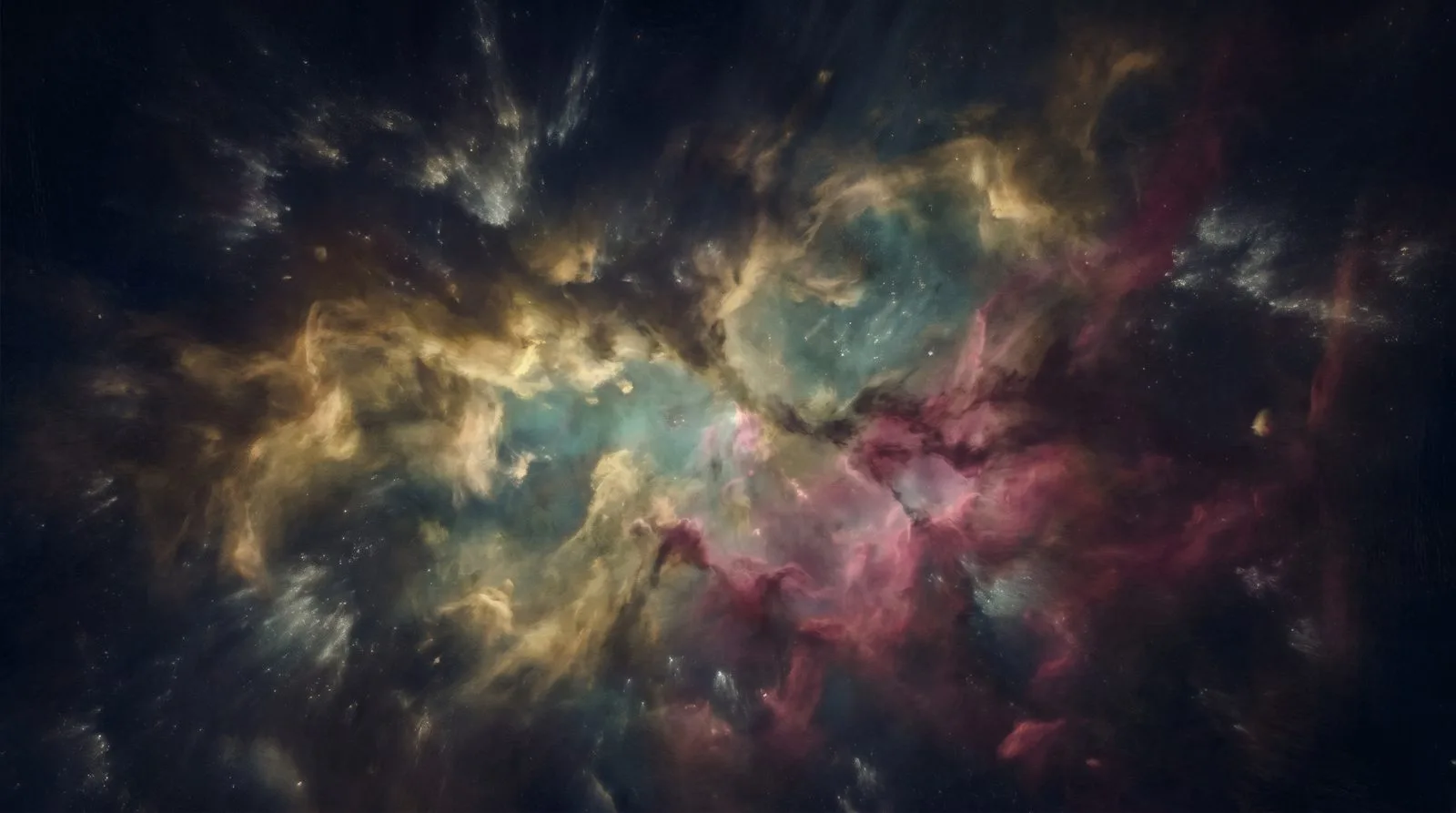
Nebula meaning: what a nebula is
The nebula meaning is simple: NASA calls them giant clouds of gas and dust in space. Some are stellar nurseries, others the remains of dying stars. These are the main types and the…
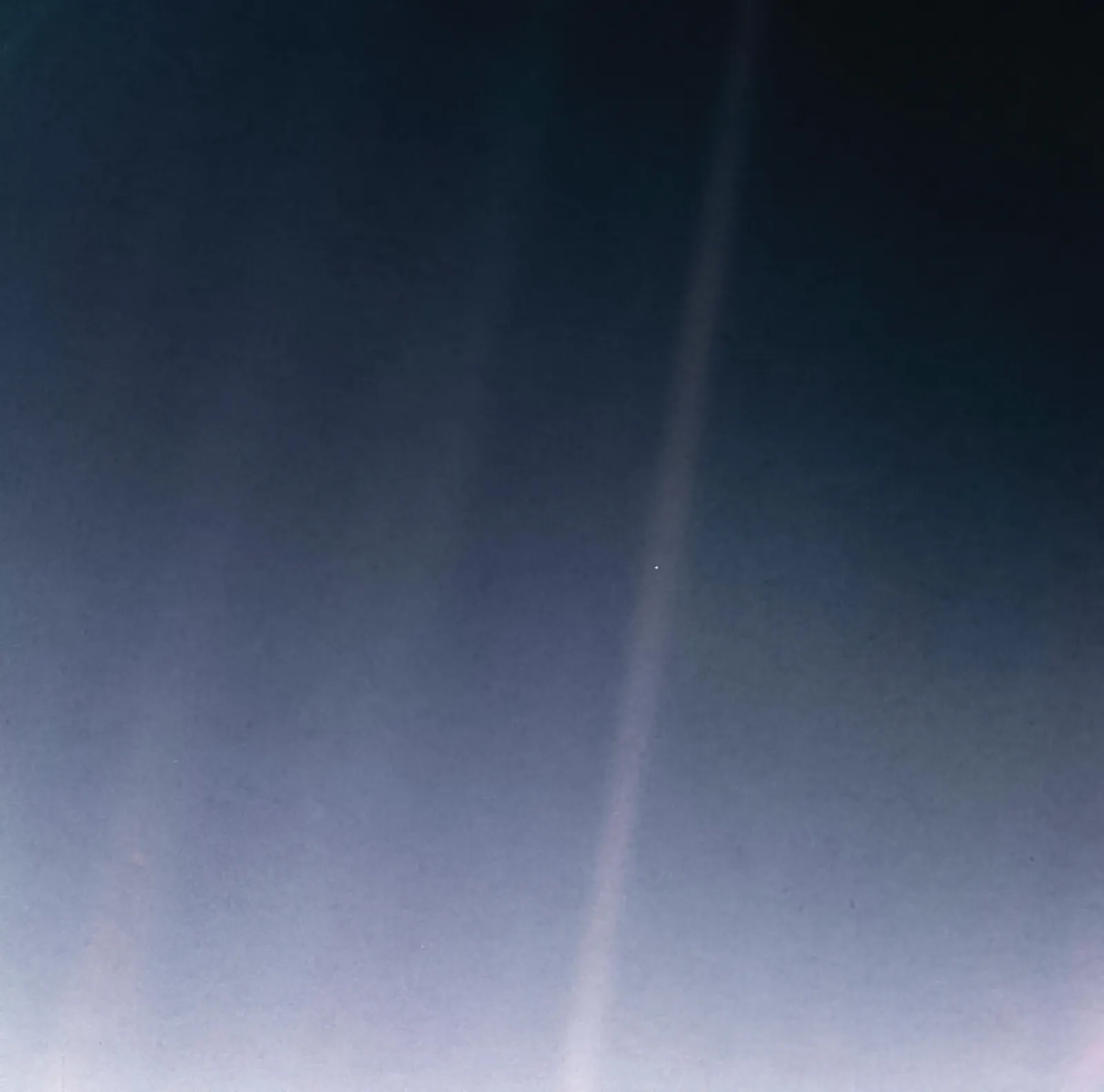
Pale Blue Dot Image: Voyager 1's Photograph of Earth
The Pale Blue Dot is a 1990 photograph of Earth taken by Voyager 1 from six billion kilometres away, our entire world reduced to a single point of light.
What causes the northern lights?
An aurora is the sky glowing where the solar wind meets Earth's magnetic field. What causes it, where to see one, and why the colours differ.
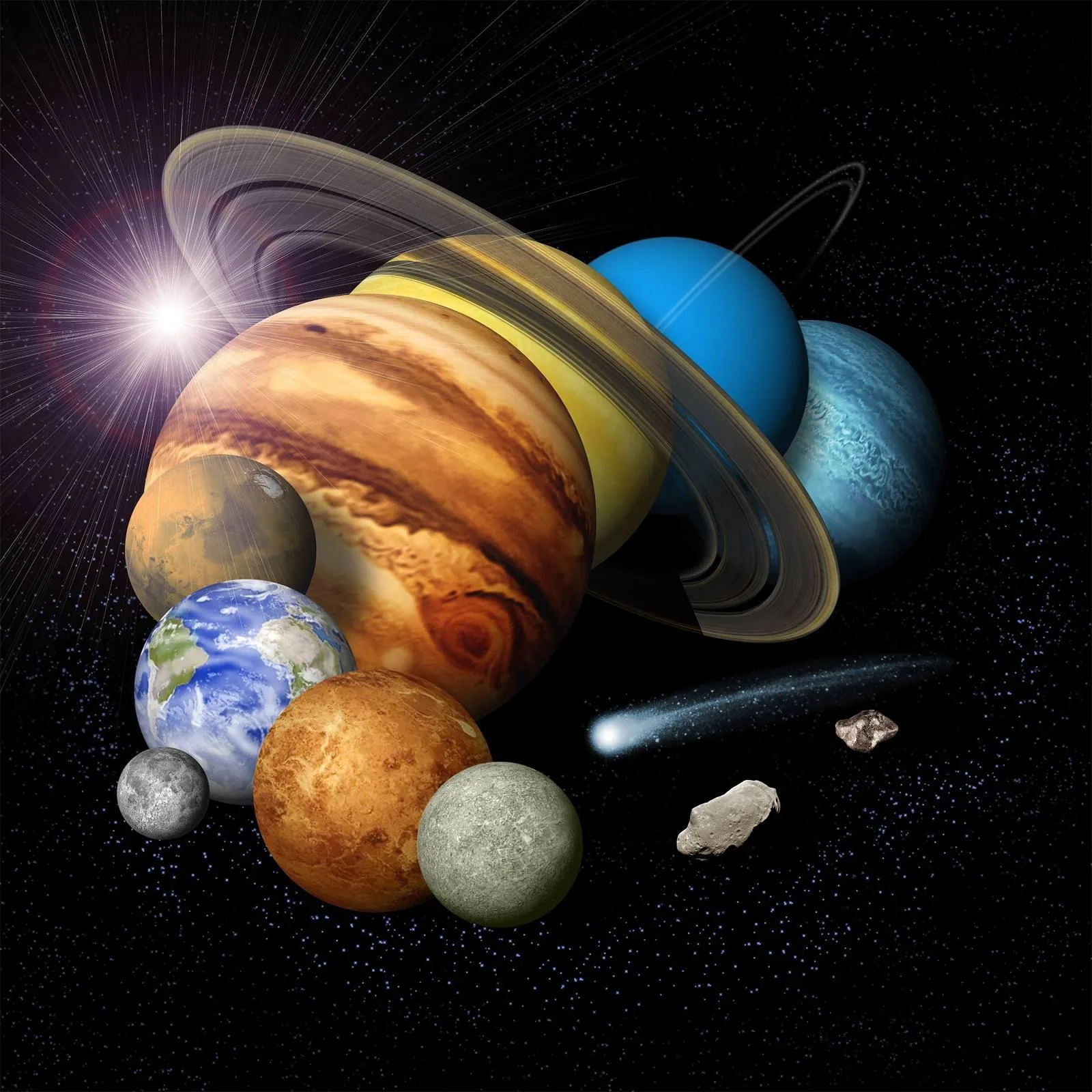
Planets in order from the Sun, with a trick to remember
The planets in order from the Sun: Mercury, Venus, Earth, Mars, Jupiter, Saturn, Uranus, Neptune. The sequence with real figures from NASA's planet pages, and what the solar system would…
Star names: the brightest stars and what their names mean
The names of stars and meanings behind them run from Greek antiquity through Arabic astronomy to the modern IAU list. Who names a star, which meanings are documented, and where to find…
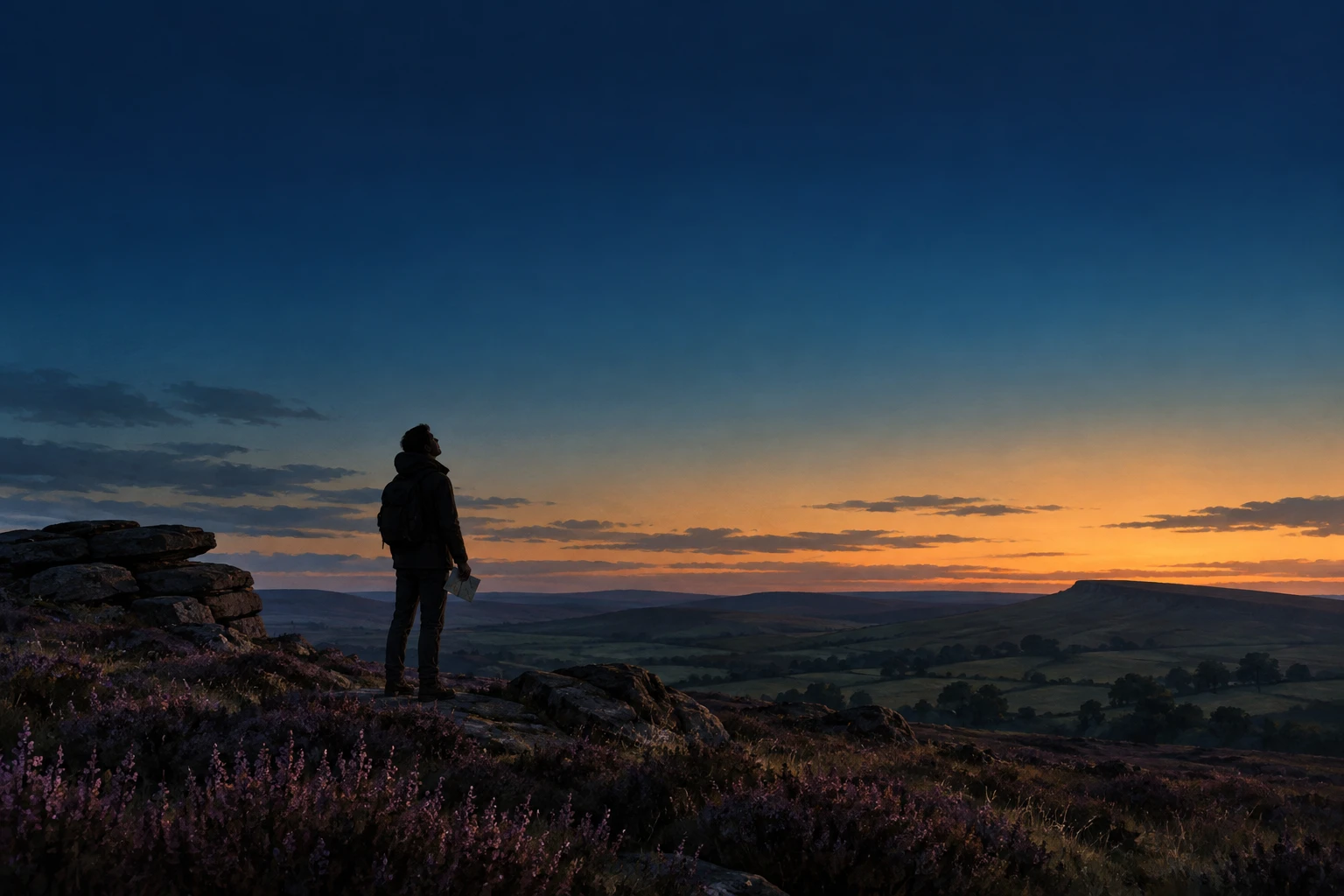
How to find the Summer Triangle
Vega, Deneb and Altair form a large triangle across three constellations. From Britain it is a useful summer and autumn landmark: find those bright corners, then use them to recognise…
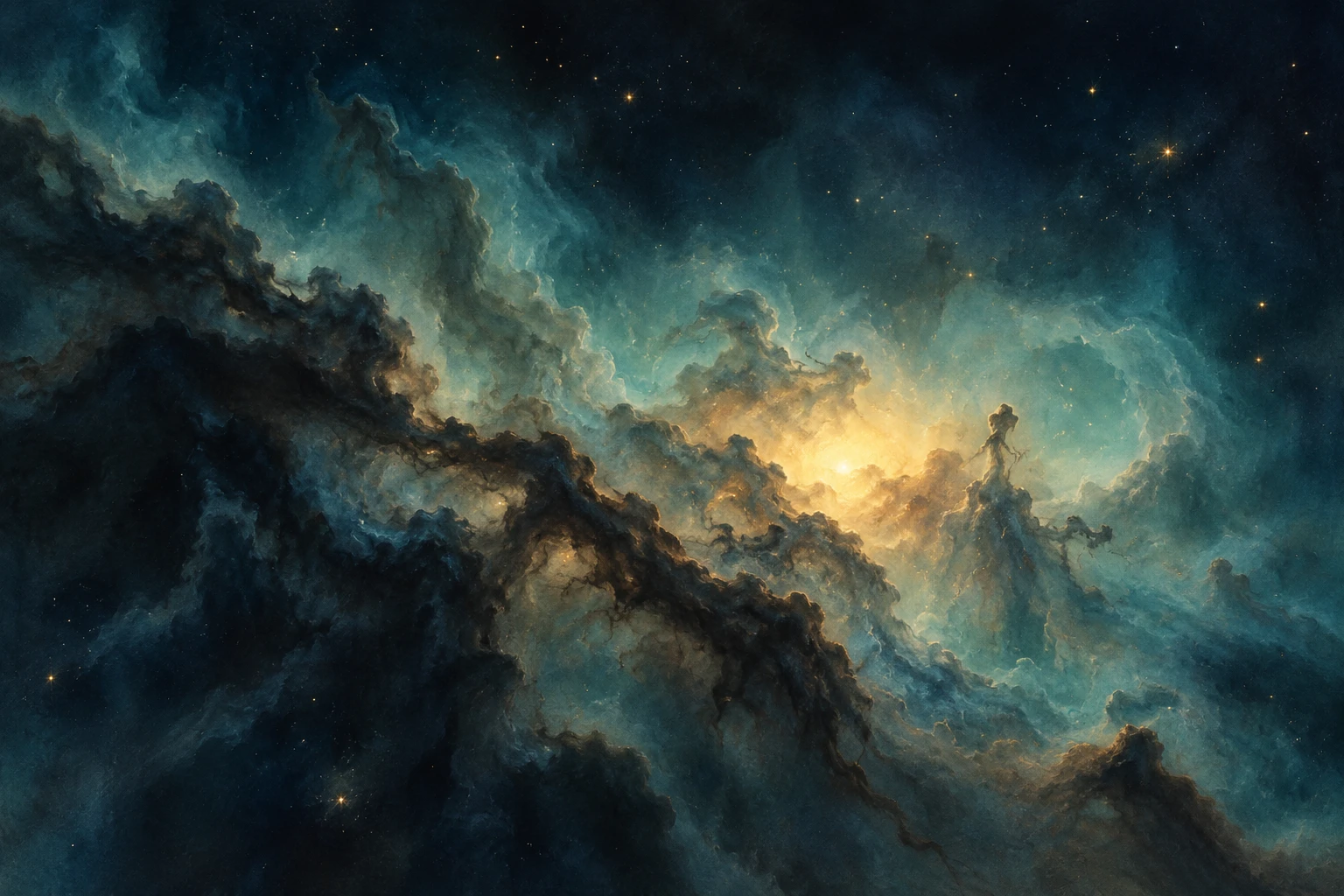
The life cycle of a star: two different endings
A star forms as gas collapses, spends much of its life fusing hydrogen in its core, then changes when that core fuel runs short. Its initial mass strongly shapes the route: a Sun-like…
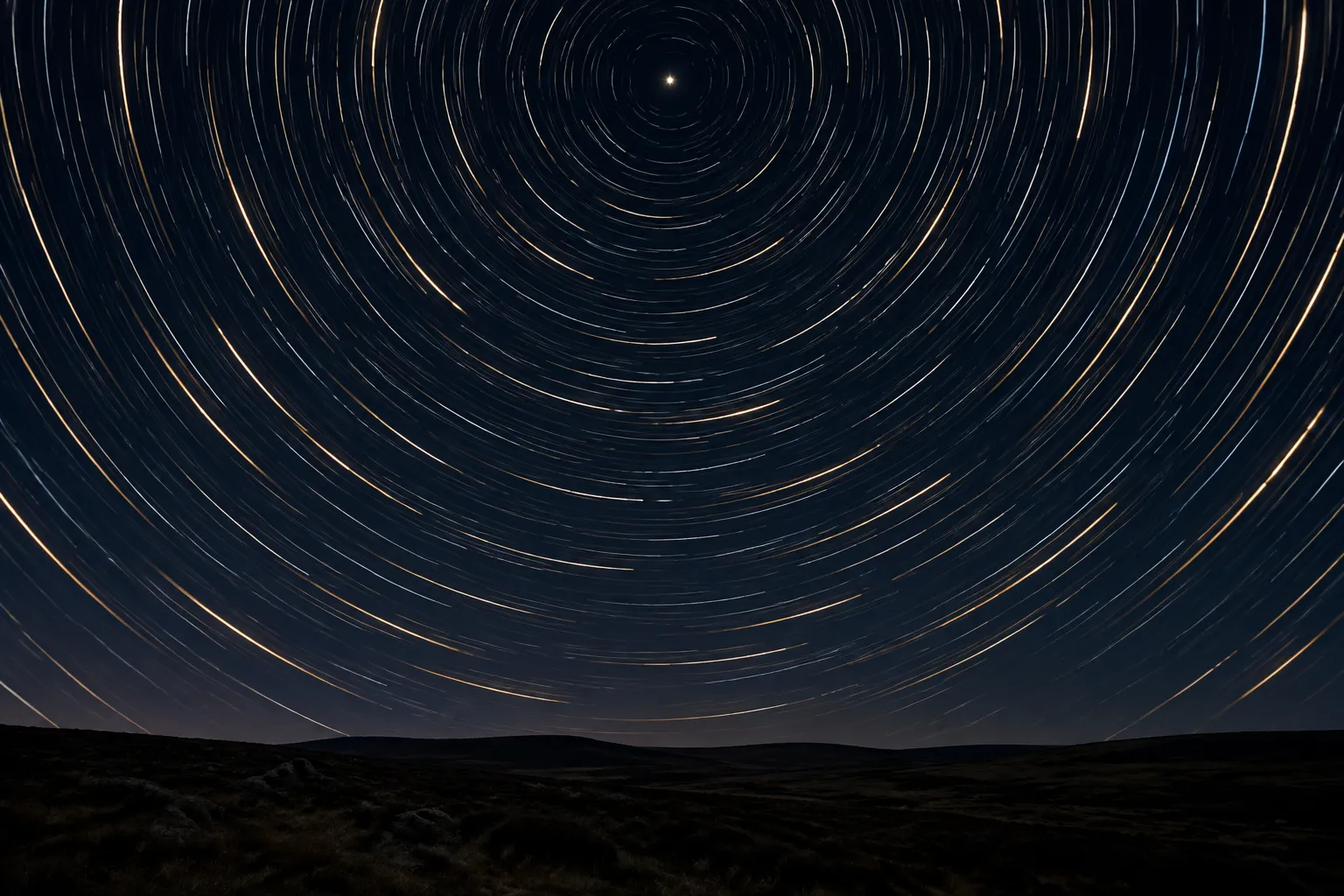
The North Star: how to find Polaris from Britain
The north star is Polaris, and NASA puts its job plainly: it sits more or less directly above Earth’s north pole, along our planet’s rotational axis. That one fact is why it barely moves…
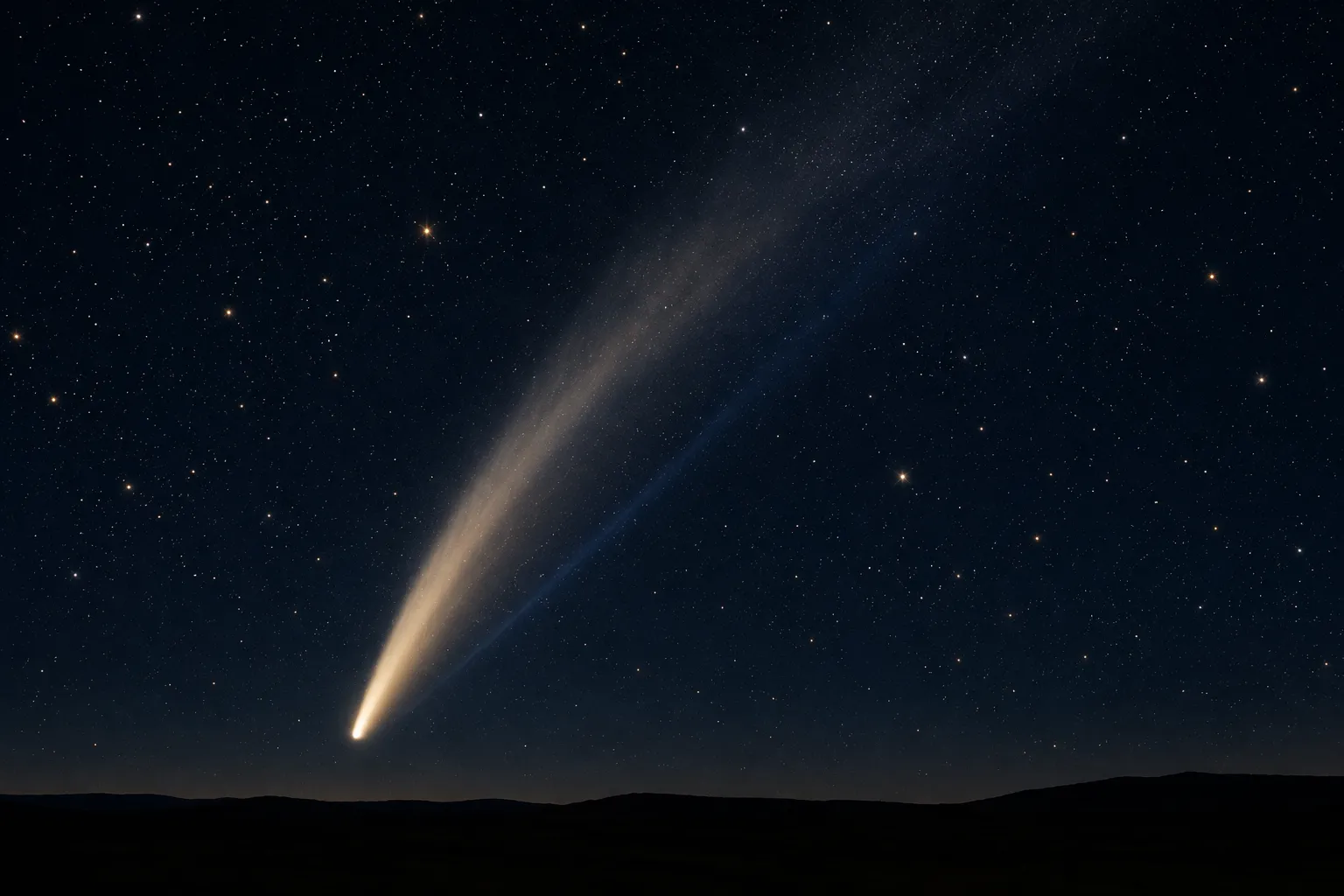
Halley’s Comet: the 1986 visit and the 2061 return
Halley's Comet takes an average of 76 Earth years to orbit the Sun. It last returned in 1986 and is due back in 2061; its debris gives observers the Eta Aquarids and Orionids every year.
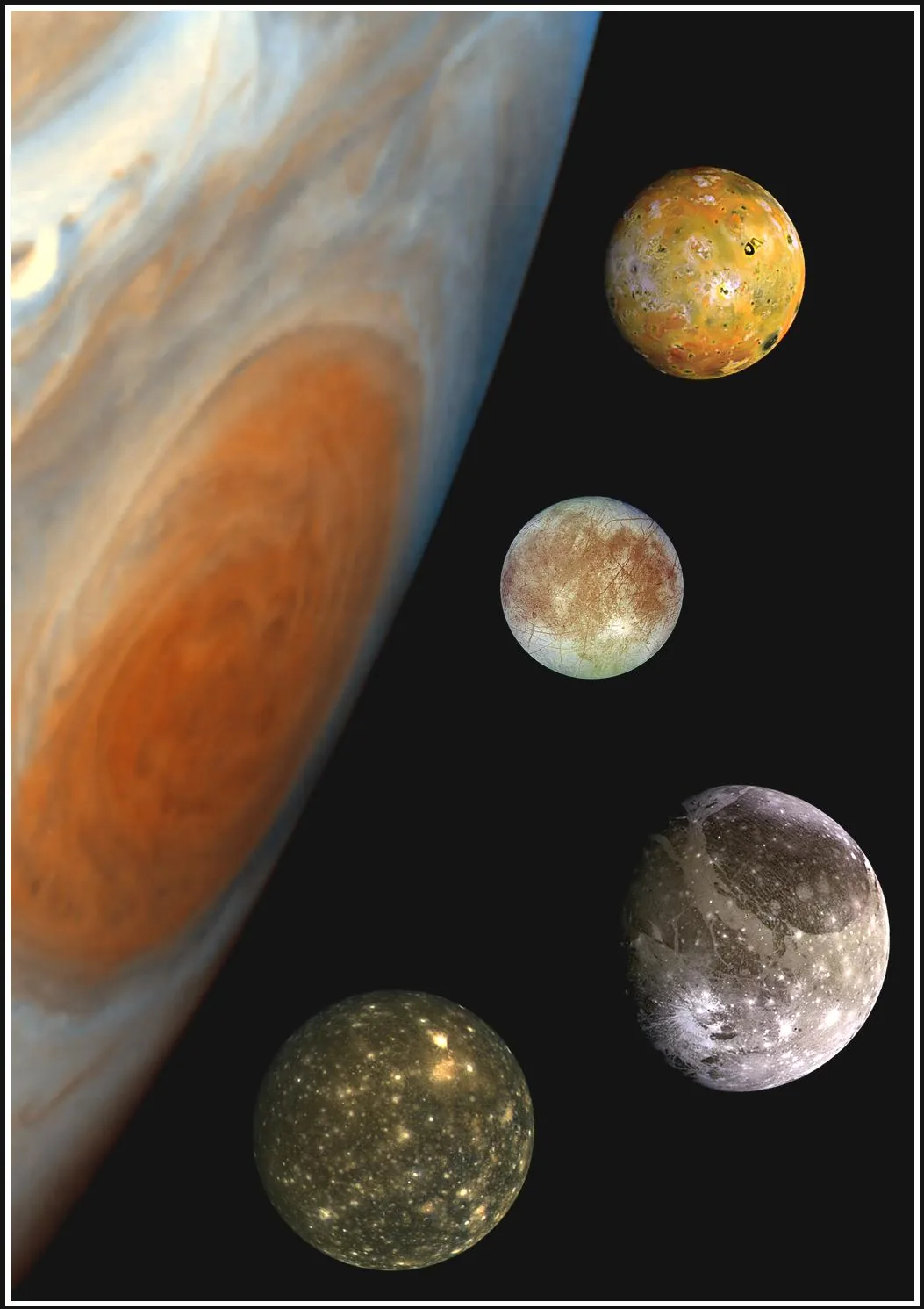
Jupiter’s moons: the four you can observe, and 111 more
NASA counts 115 moons of Jupiter officially recognised by the International Astronomical Union as of August 2026. The four large Galilean moons are within reach of suitable, steady…
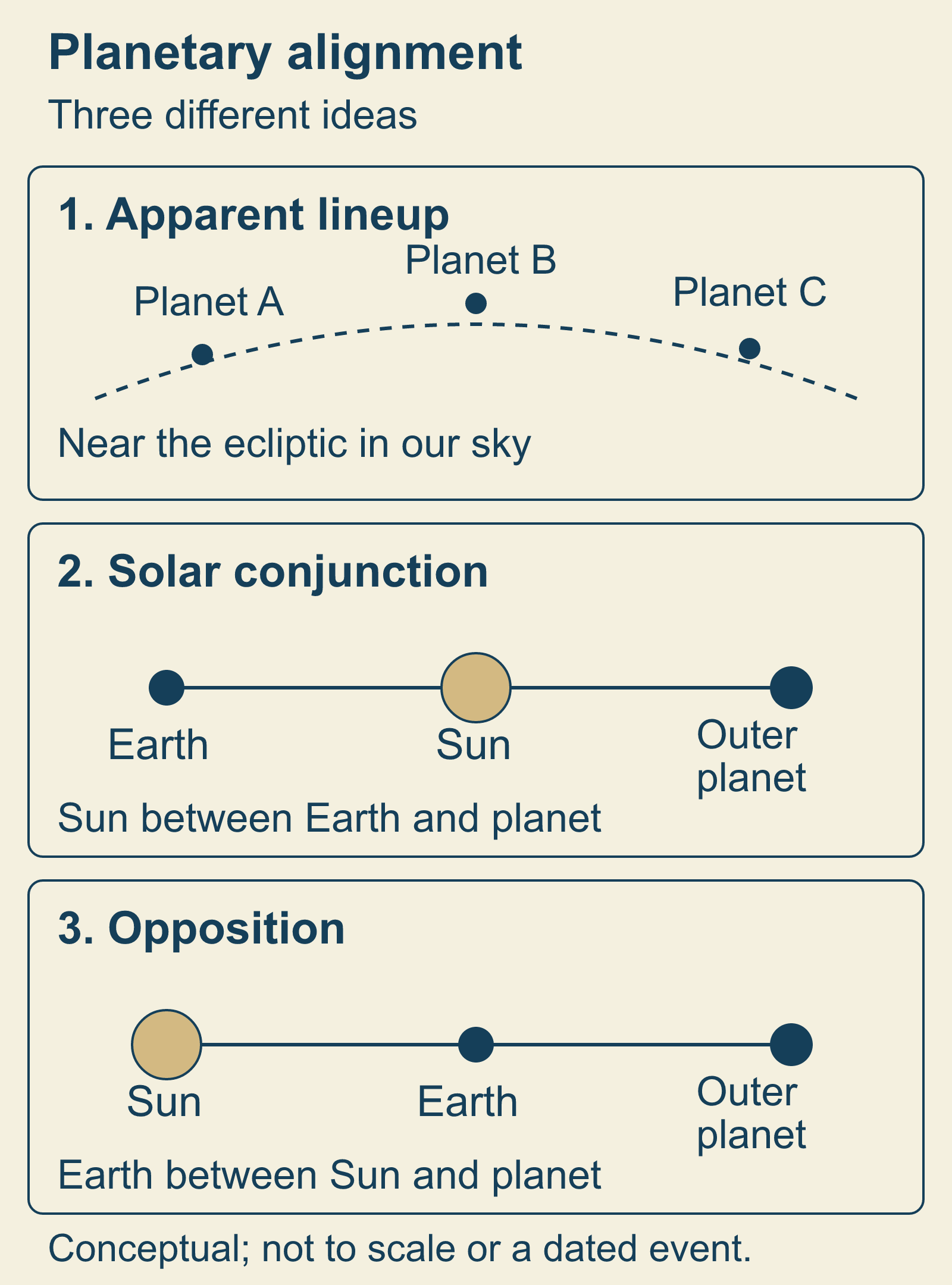
Alignment of planets: what lines up in the night sky
An alignment of planets can mean an apparent lineup in our sky or a particular Sun–Earth–planet geometry. A planet parade is an informal name for several planets sharing the sky, not a…
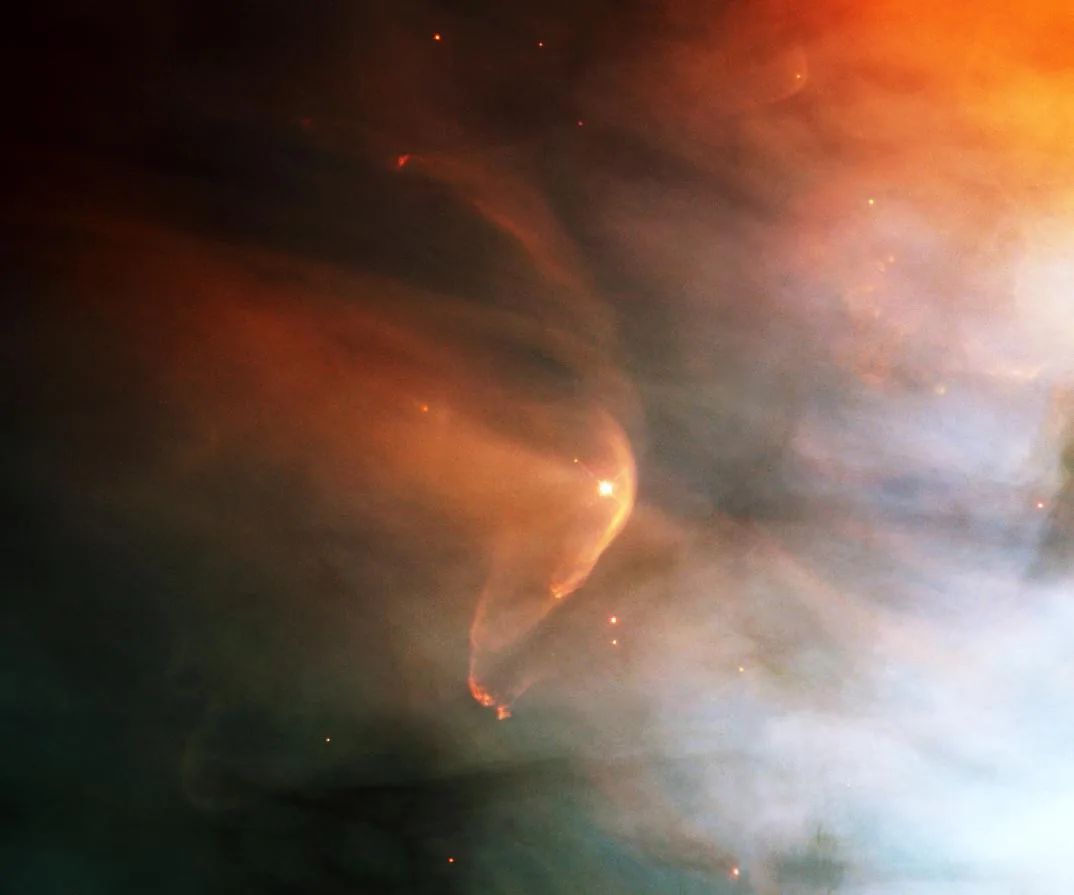
Orion's Belt: how to find Orion in the UK winter sky
Orion's belt is a useful anchor in a British winter sky: three bright stars in a short, nearly straight row, with roughly similar spacing. Find those and the rest of Orion follows.
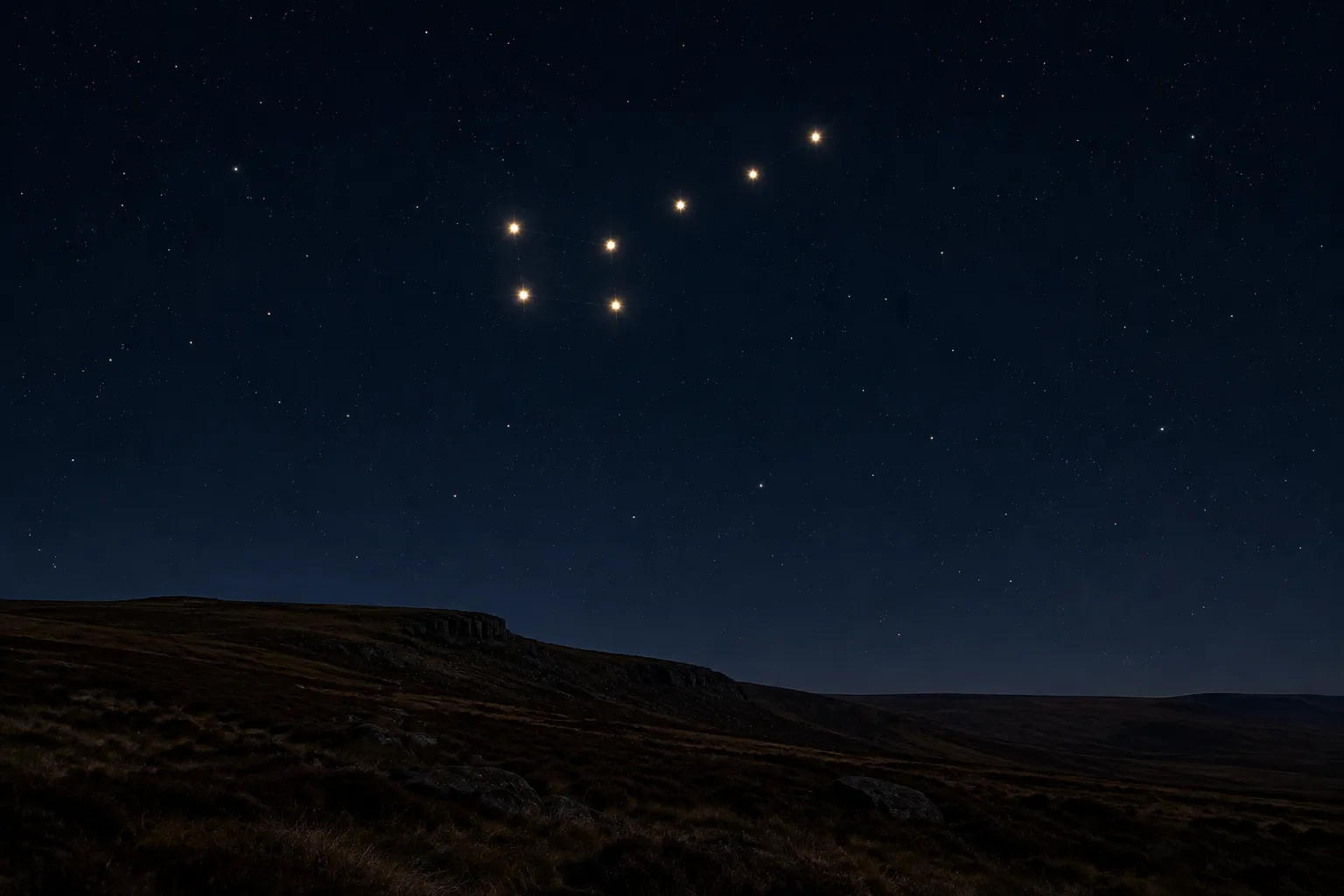
The Plough constellation that is not a constellation
The Plough constellation is one of the most familiar shapes in the British sky, and it's an asterism, not a constellation: seven recognisable stars within the larger constellation Ursa…
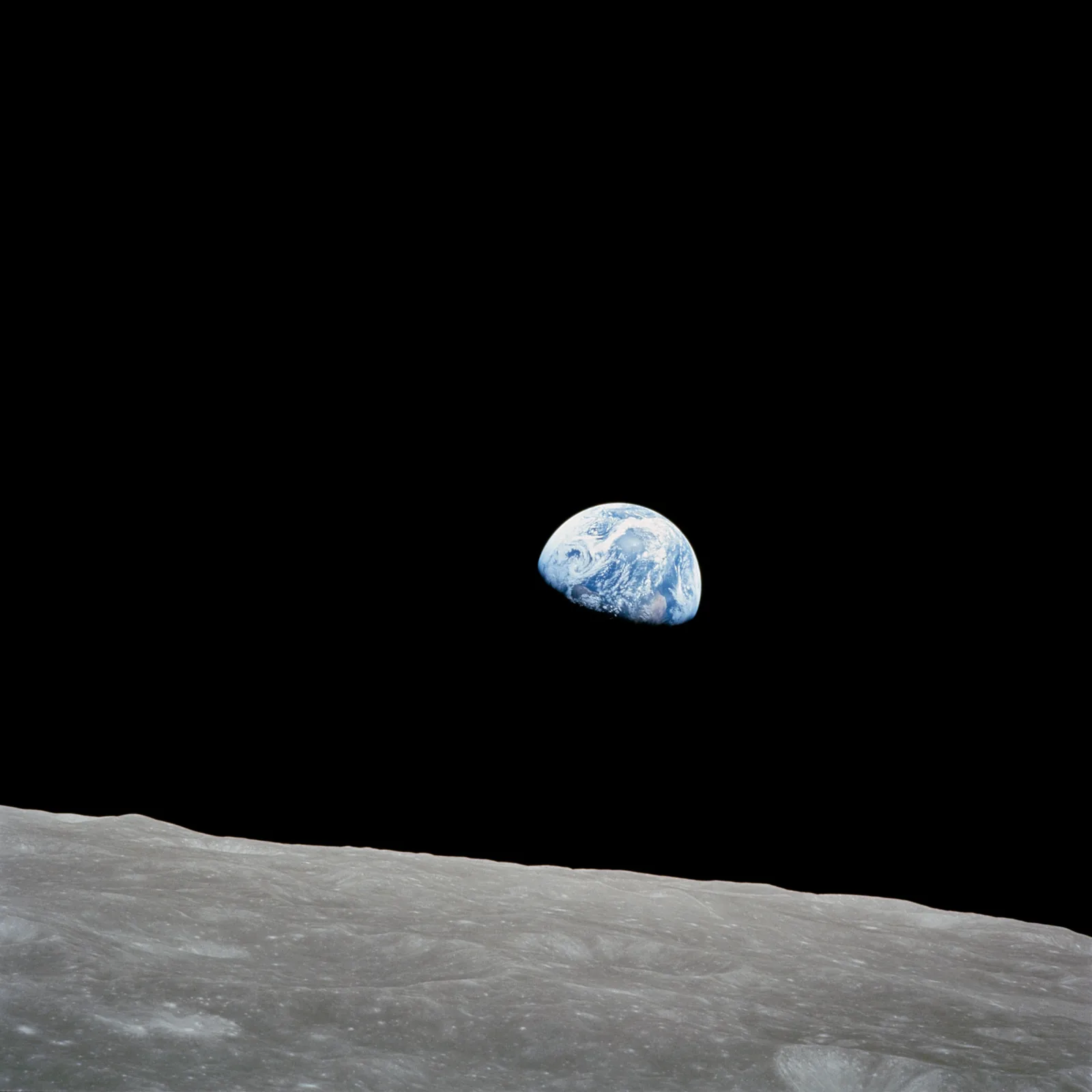
How long does it take to get to the Moon?
How long does it take to get to the Moon? It depends on the mission, trajectory and endpoint. Apollo astronauts crossed the distance in days; ESA’s SMART-1 took around 13 months to enter…
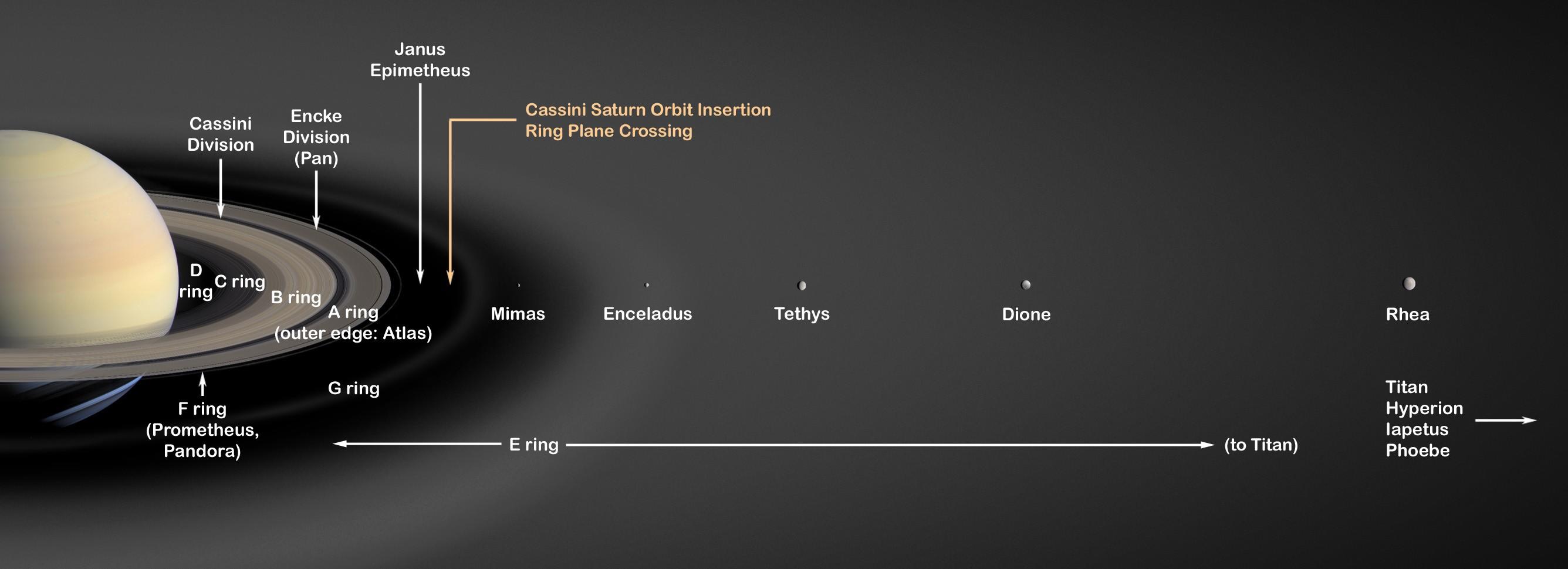
Planet rings: Jupiter, Saturn, Uranus and Neptune have them
Planet rings are found on Jupiter, Saturn, Uranus and Neptune. Saturn's are the most conspicuous: countless separate particles, mainly water ice, orbiting in a thin, structured disc.
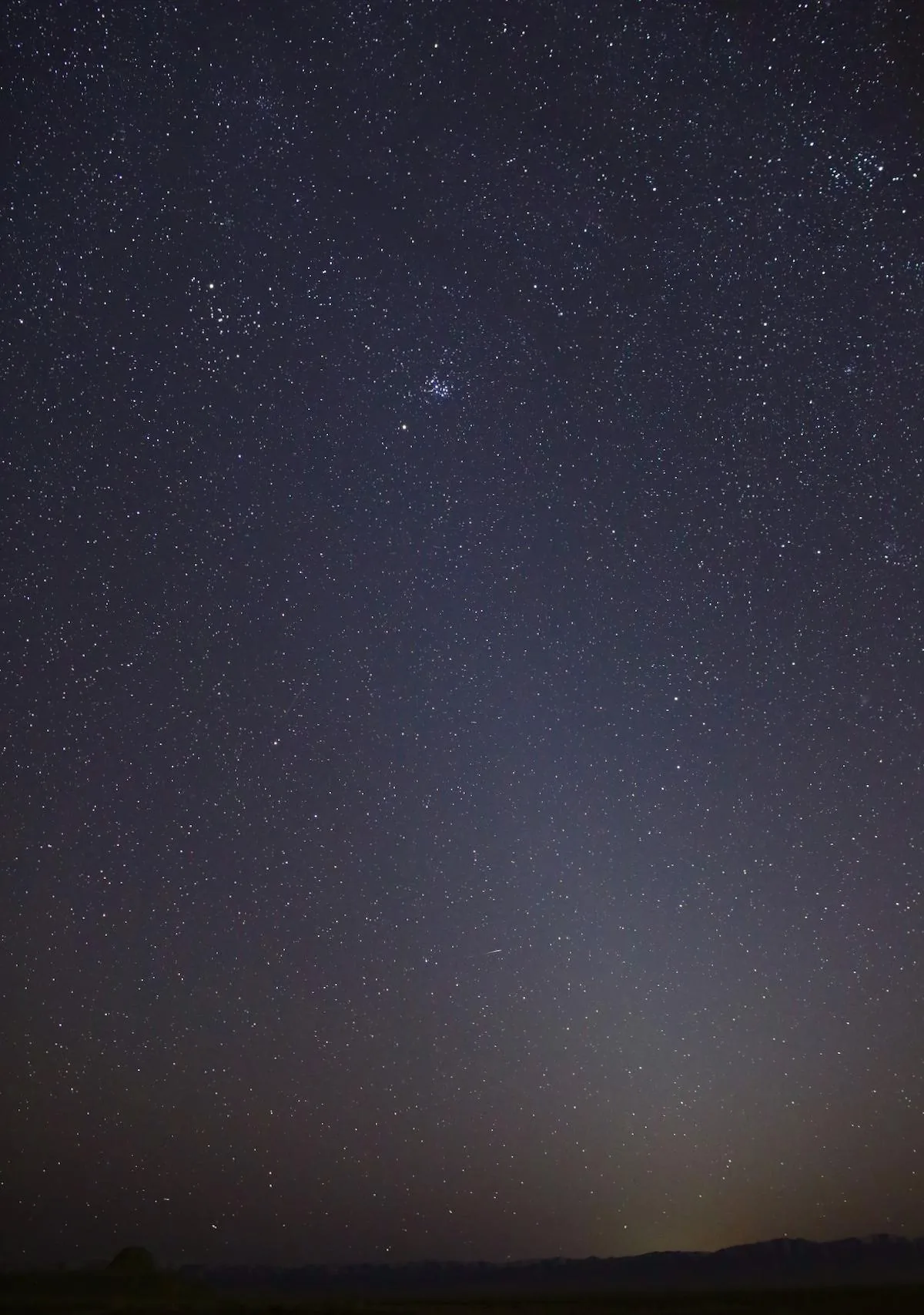
The zodiac constellations and the real sky
The zodiac constellations are real star patterns strung along the path the Sun takes through our sky. There are thirteen of them, not twelve, and the dates most people know were fixed…
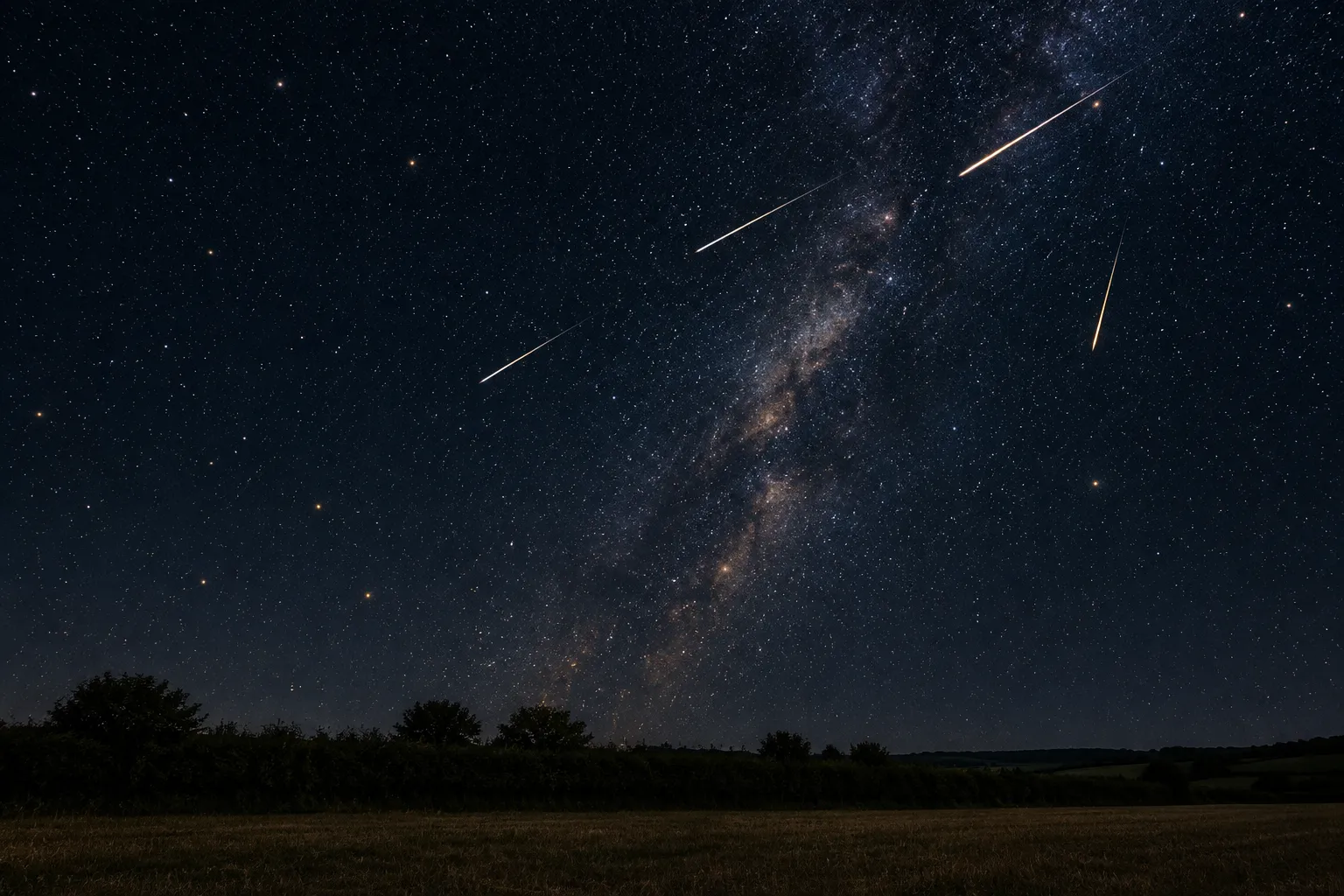
UK meteor showers and the Moon: which peaks are dark this year
Eight of the main meteor showers, their peak dates for 2026 and 2027, and how far each peak falls from a full moon. Dates from Royal Museums Greenwich and the International Meteor…
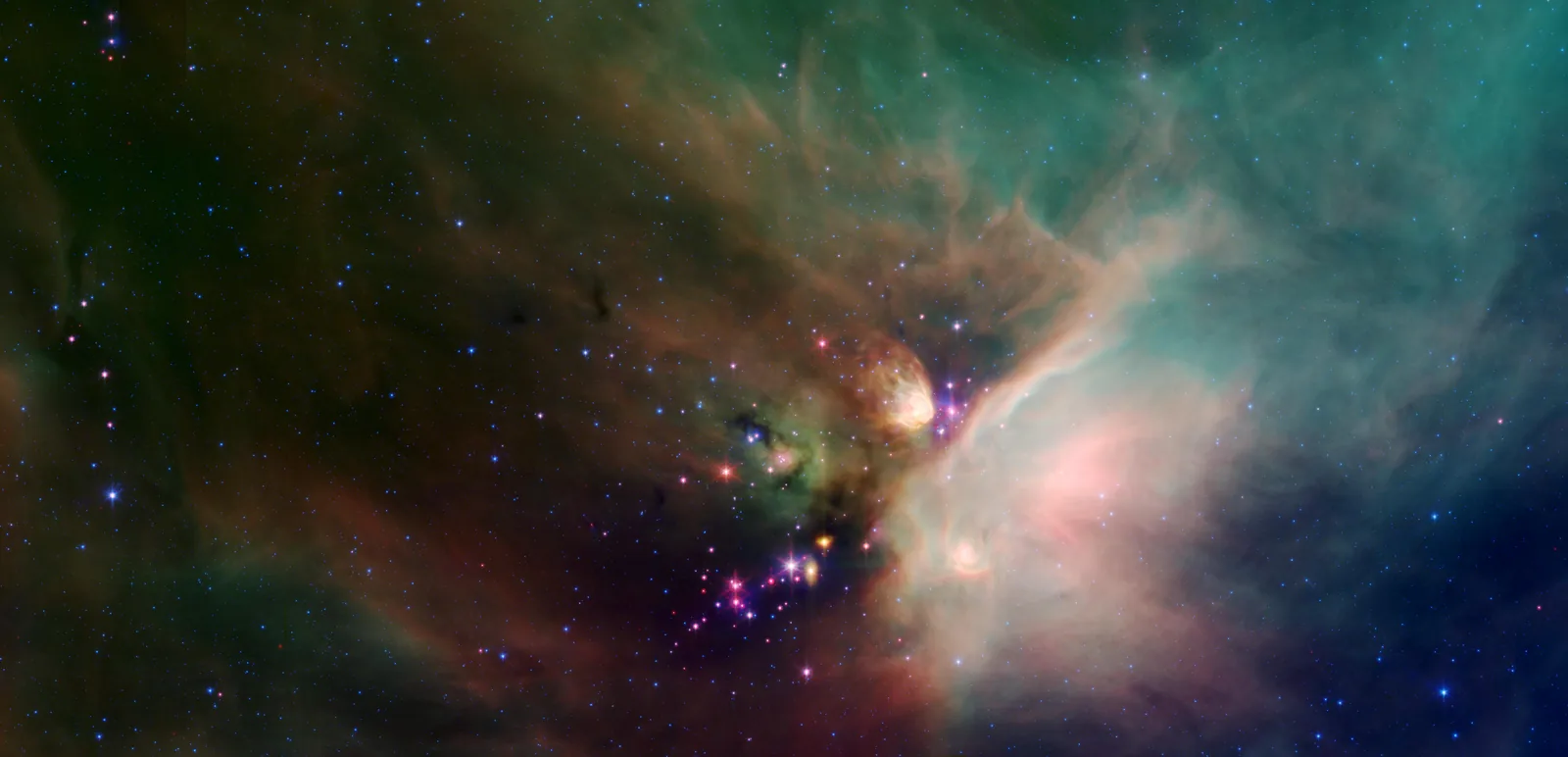
Ophiuchus constellation: the one left out
The Ophiuchus constellation is the thirteenth the Sun passes through each year, and the one the Babylonians dropped. NASA is explicit: they picked one, Ophiuchus, to leave out, so that…
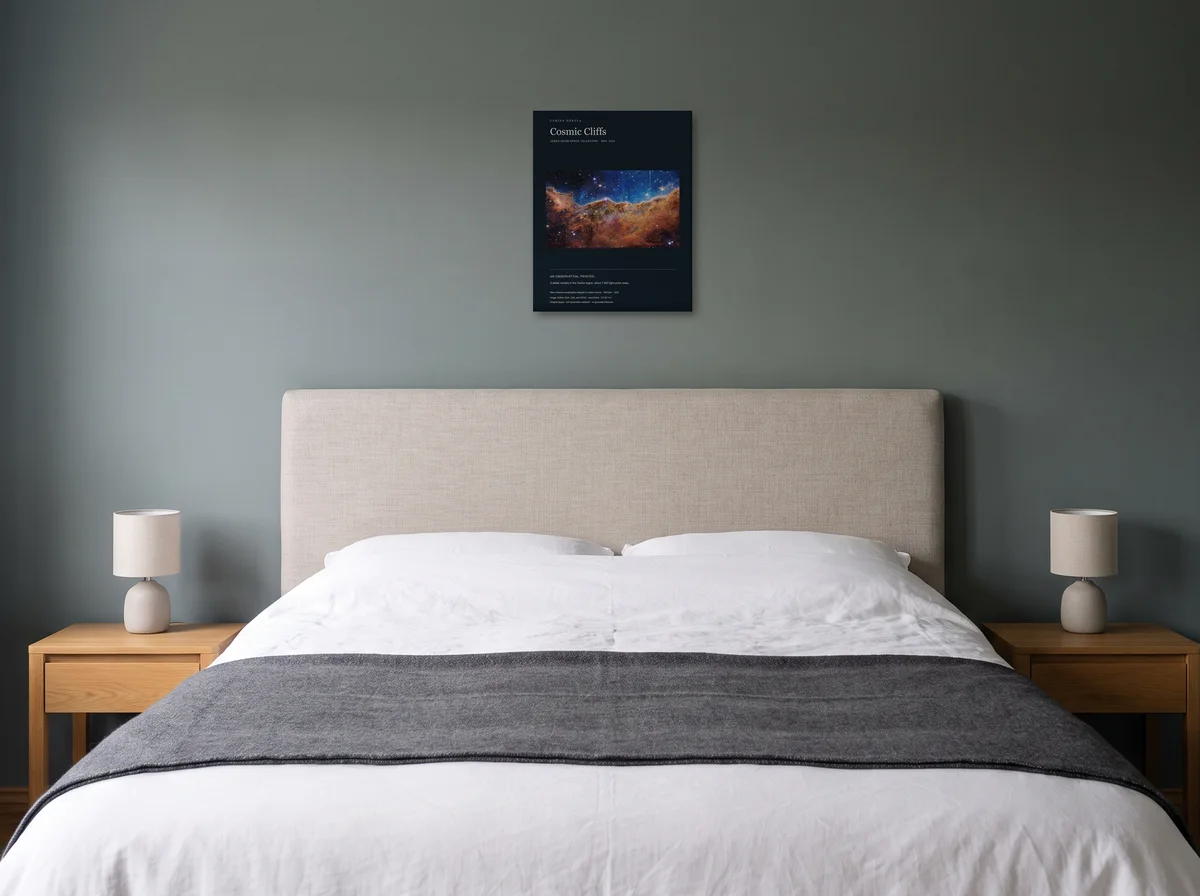
Are photos of nebulae real?
The objects in telescope photographs are real, but the colour depends on the instrument and processing. Some images combine visible-light channels; others map infrared or other…
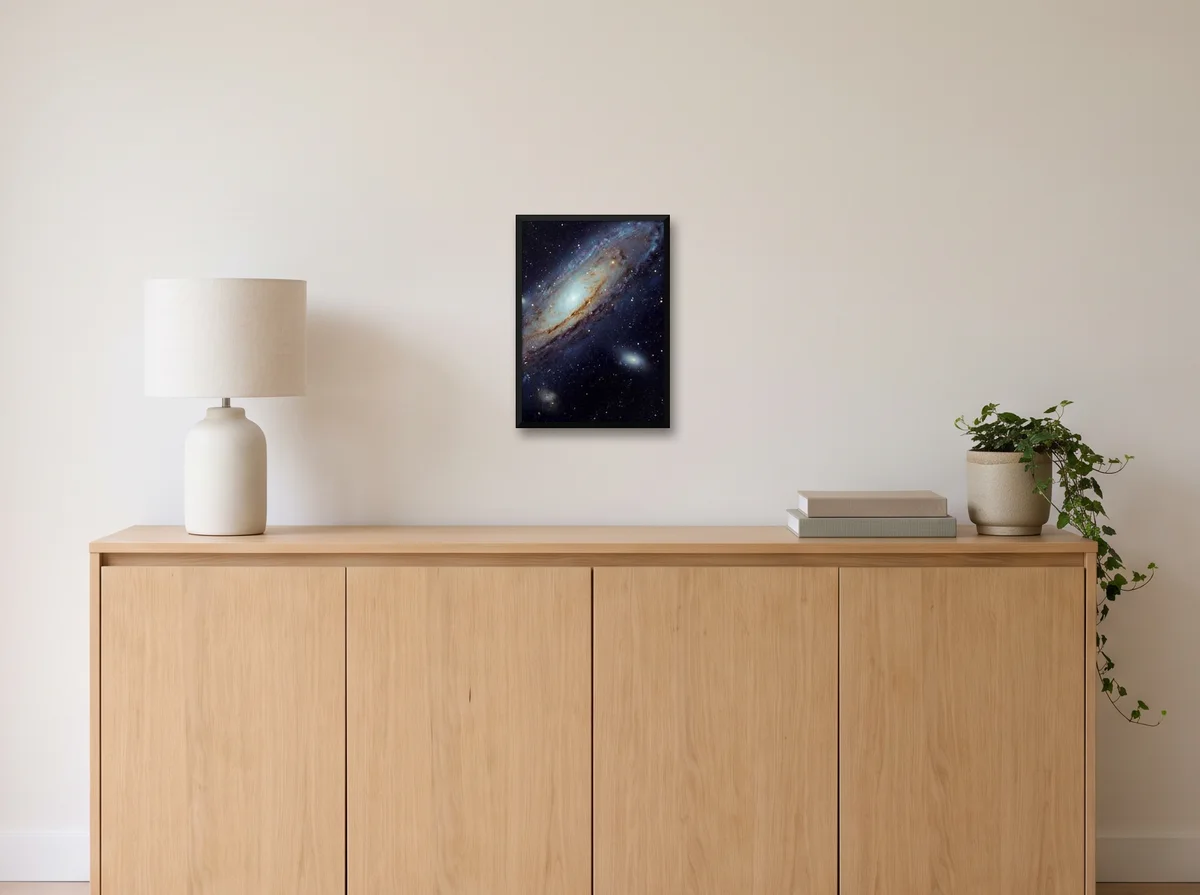
How do people get pictures of galaxies?
Often by combining tracked exposures to reveal faint structure. Stacking improves the signal relative to random noise; the camera and filters determine how colour is recorded.

When were galaxy prints popular?
In the UK, searches for galaxy print climbed through 2012, reached their highest month in December 2012 and stayed close to it through 2013, according to Google Trends. By 2016 interest…
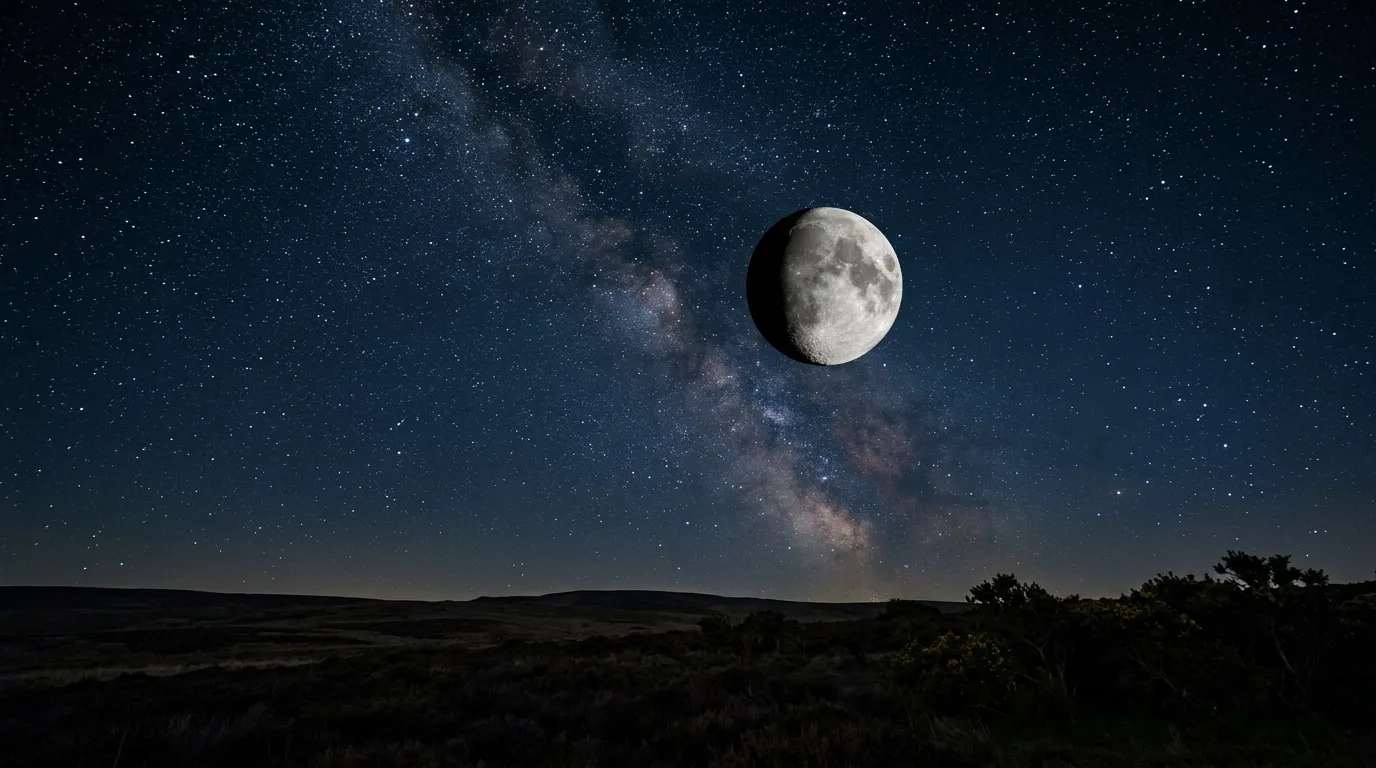
Looking up: start here
What the Moon is doing, what a nebula and a constellation are, and whether the pictures are real.
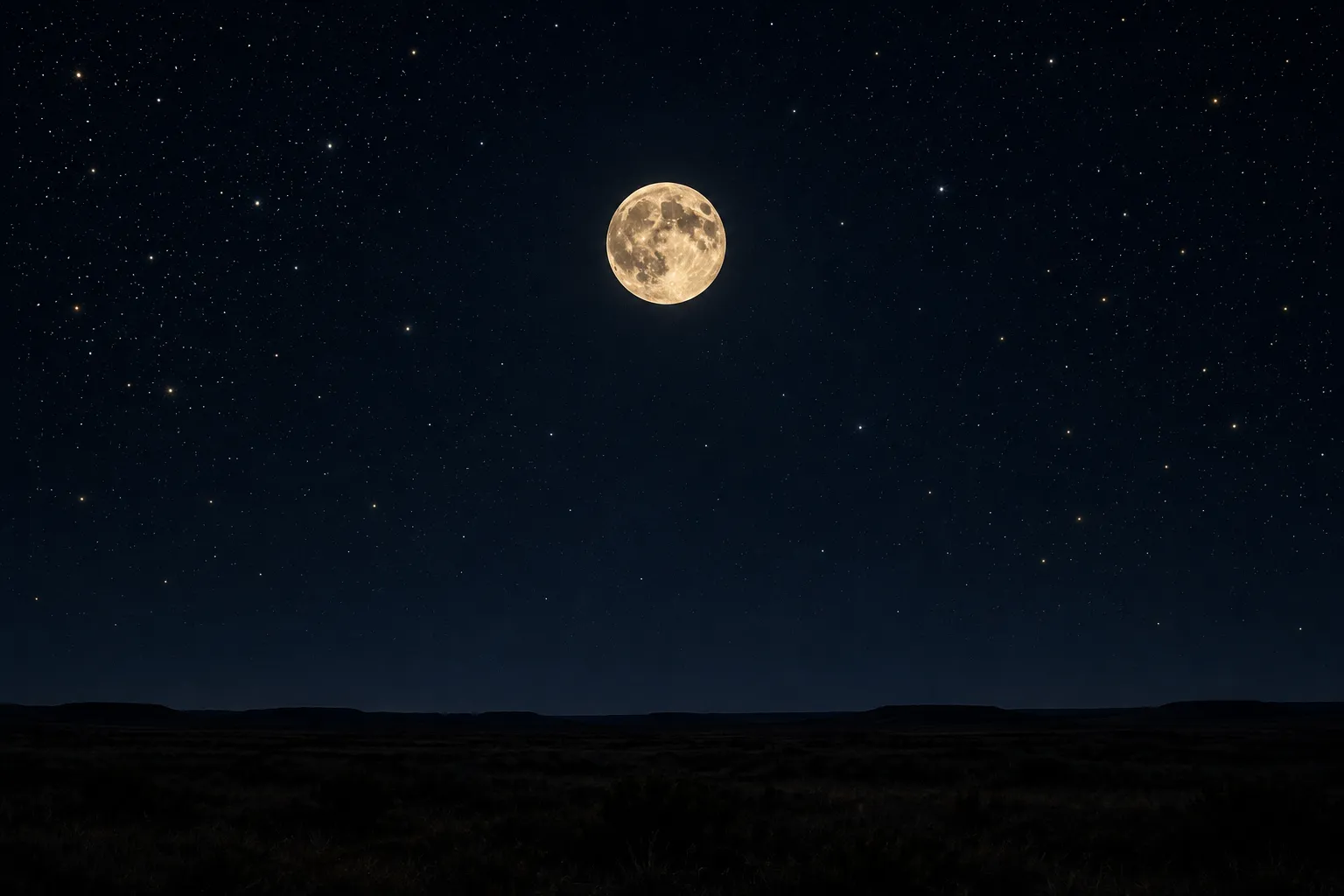
Next full moon UK: dates for 2026 and 2027
The next full moon in the UK is the Hunter's Moon, full at Monday 26 October 2026 at 4:12am (GMT). Below are all thirteen full moons in 2026 and twelve in 2027, with their traditional…

Snow Moon: February’s full moon
February’s full moon is called the Snow Moon, next full on Saturday 20 February 2027 at 11:23pm GMT. February is often the clearest month of a British winter, and the Moon is still…

Wolf Moon: January’s full moon
January’s full moon is called the Wolf Moon, next full on Friday 22 January 2027 at 12:17pm GMT. January full moons ride high across a UK sky, because a full moon sits opposite the Sun…

Cold Moon: December’s full moon
December’s full moon is called the Cold Moon, next full on Thursday 24 December 2026 at 1:28am GMT. The highest full moon of the year from the UK, and the longest time above the horizon,…

Sturgeon Moon: August’s full moon
August’s full moon is called the Sturgeon Moon, next full on Tuesday 17 August 2027 at 8:29am BST. In 2026 the Sturgeon Moon carries a partial lunar eclipse: part of the Moon passes into…

Beaver Moon: November’s full moon
November’s full moon is called the Beaver Moon, next full on Tuesday 24 November 2026 at 2:53pm GMT. November is the point where UK full moons are properly high again and the nights are…

Worm Moon: March’s full moon
March’s full moon is called the Worm Moon, next full on Monday 22 March 2027 at 10:44am GMT. The last full moon of winter, and in 2026 it carries a total lunar eclipse that this country…

Hunter's Moon: October’s full moon
October’s full moon is called the Hunter's Moon, next full on Monday 26 October 2026 at 4:12am GMT. October full moons climb back up the sky as the year turns, and the nights are long…

Buck Moon: July’s full moon
July’s full moon is called the Buck Moon, next full on Sunday 18 July 2027 at 4:45pm BST. Another low summer full moon from the UK, up for a short night and often coloured by the horizon.

Pink Moon: April’s full moon
April’s full moon is called the Pink Moon, next full on Tuesday 20 April 2027 at 11:27pm BST. The Moon does not turn pink.

Strawberry Moon: June’s full moon
June’s full moon is called the Strawberry Moon, next full on Saturday 19 June 2027 at 1:44am BST. June gives the lowest full moon of the year from the UK, and the shortest window of…

Harvest Moon: September’s full moon
September’s full moon is called the Harvest Moon, next full on Thursday 16 September 2027 at 12:04am BST. The Harvest Moon is the one with a genuine astronomical quirk behind the folklore.

Flower Moon: May’s full moon
May’s full moon is called the Flower Moon, next full on Thursday 20 May 2027 at 11:59am BST. By May a full moon stays low and skims the southern horizon, because the Sun is high and the…

Blue Moon: May’s full moon
May’s full moon, next full on Sunday 31 May 2026 at 9:45am BST. It is not blue.
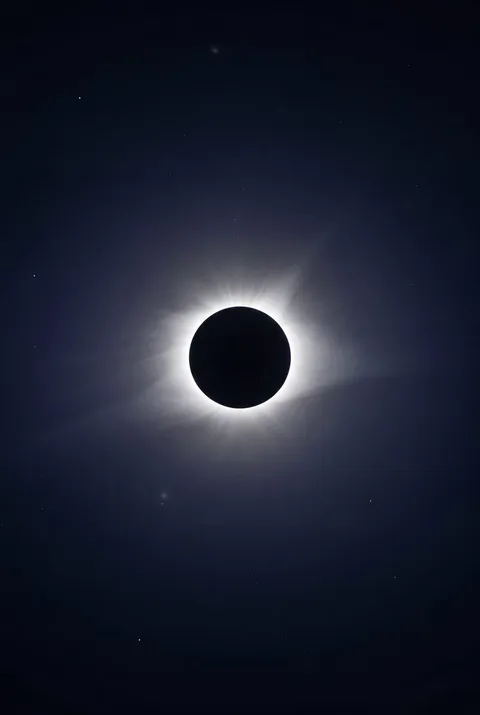
Next solar eclipse in the UK
The next solar eclipse in the UK is a partial eclipse on 2 August 2027, when the Moon covers about 45% of the Sun from London at around 10am, according to the Royal Observatory…
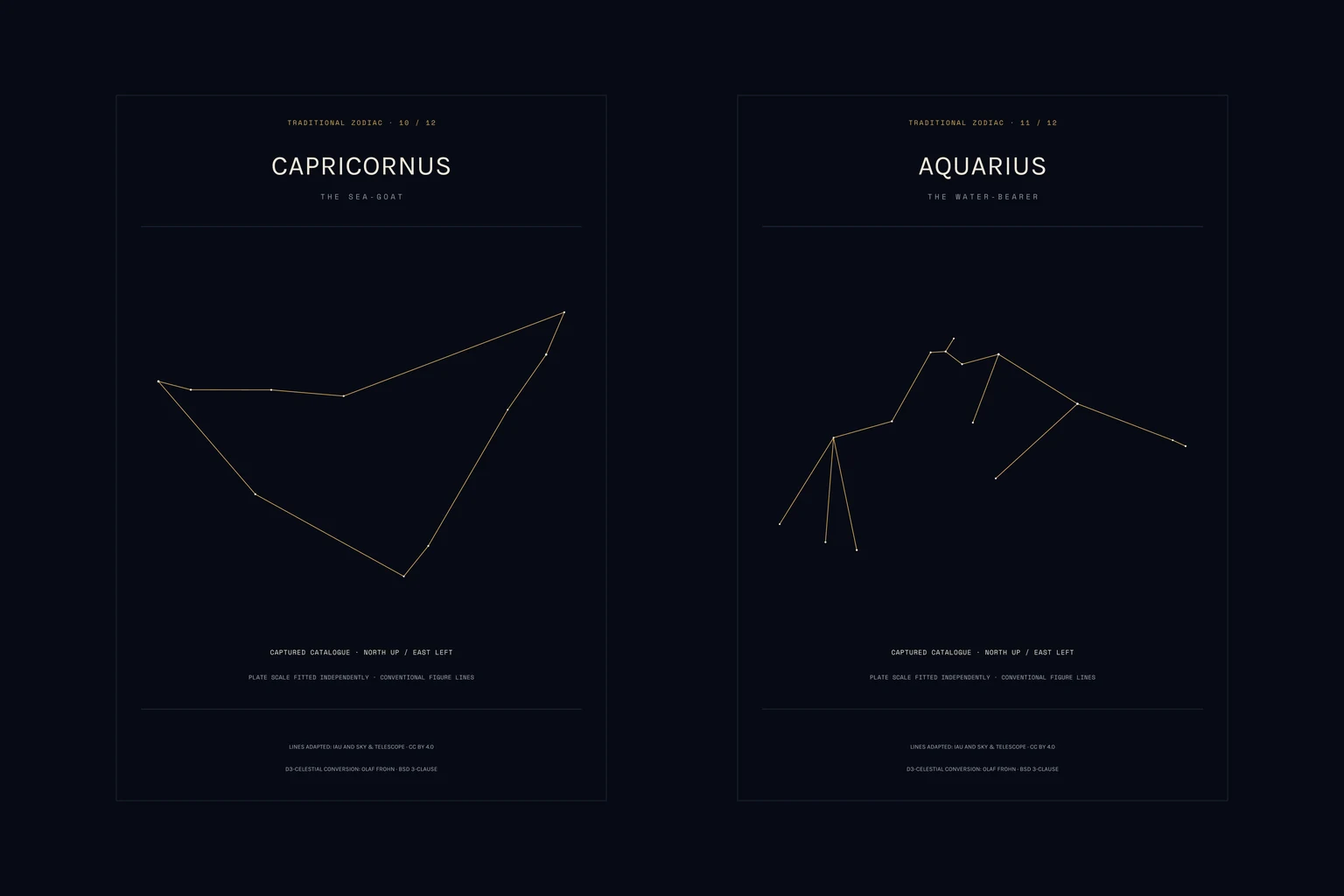
January zodiac sign: Capricorn and Aquarius dates
The January zodiac signs are Capricorn, until 19 January, and Aquarius, from 20 January. Capricorn runs 22 December to 19 January and Aquarius runs 20 January to 18 February.
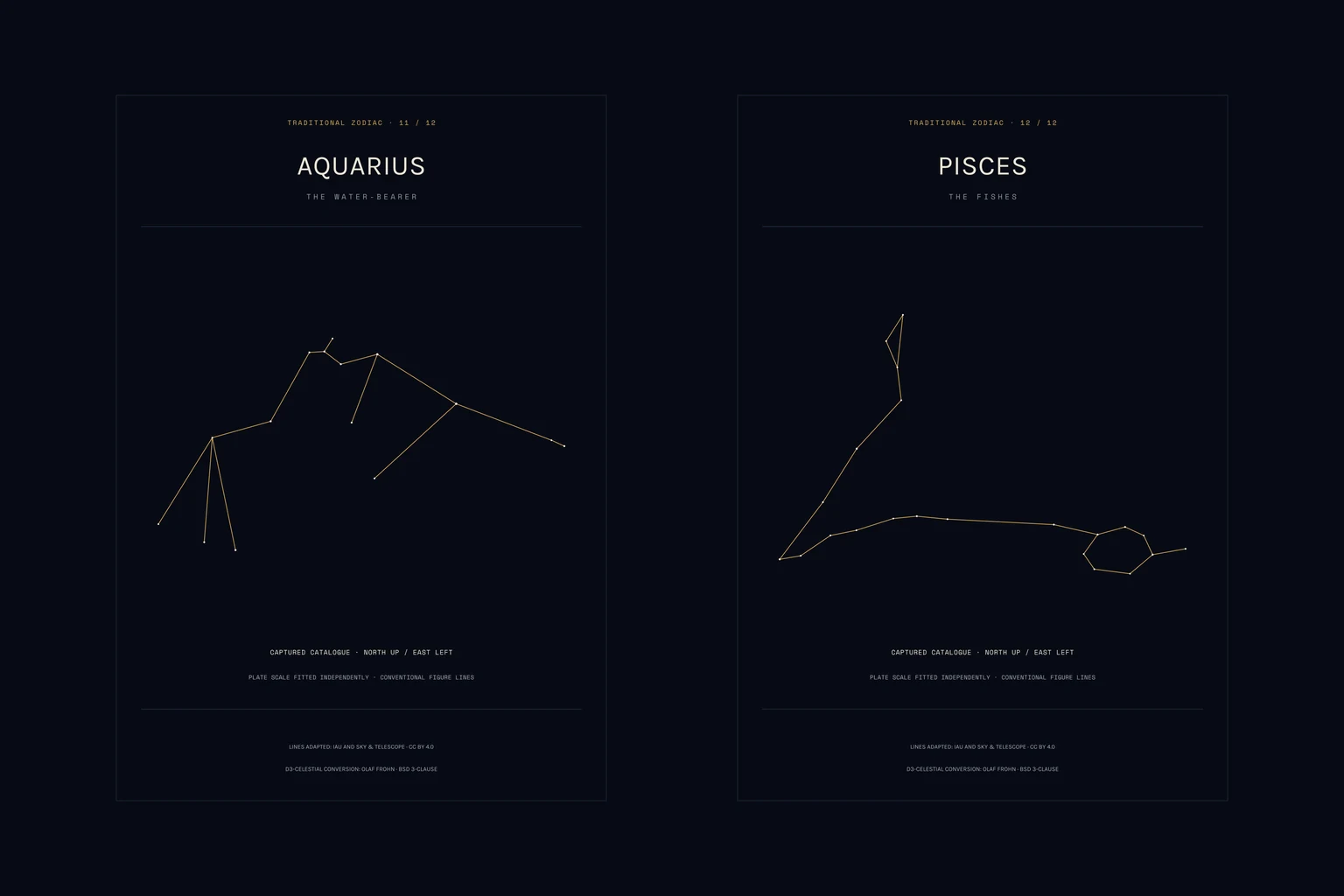
February zodiac sign: Aquarius and Pisces
The February zodiac signs are Aquarius, until 18 February, and Pisces, from 19 February. Aquarius runs 20 January to 18 February and Pisces runs 19 February to 20 March.
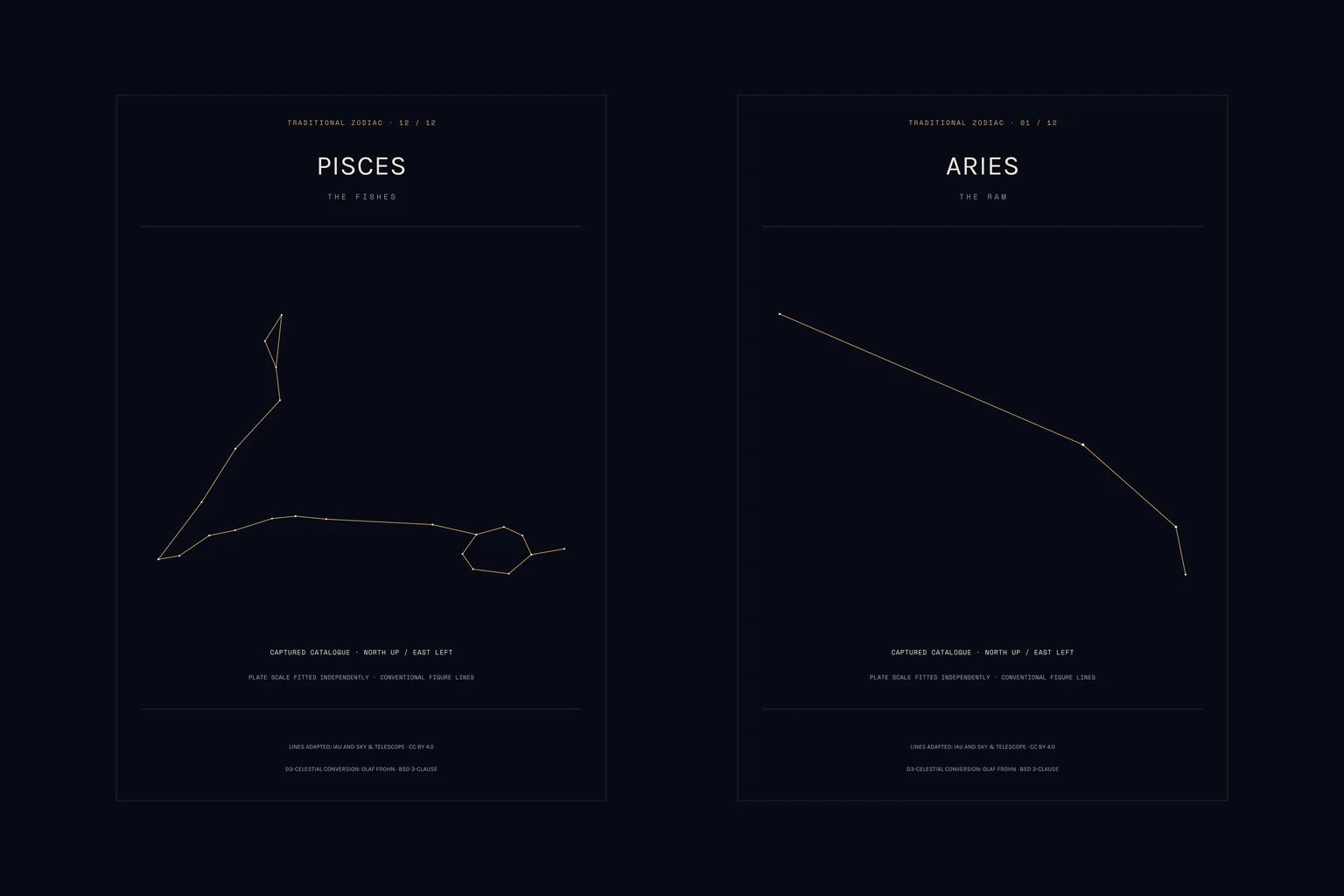
March zodiac sign: Pisces and Aries
The March zodiac signs are Pisces, until 20 March, and Aries, from 21 March. Pisces runs 19 February to 20 March and Aries runs 21 March to 19 April.
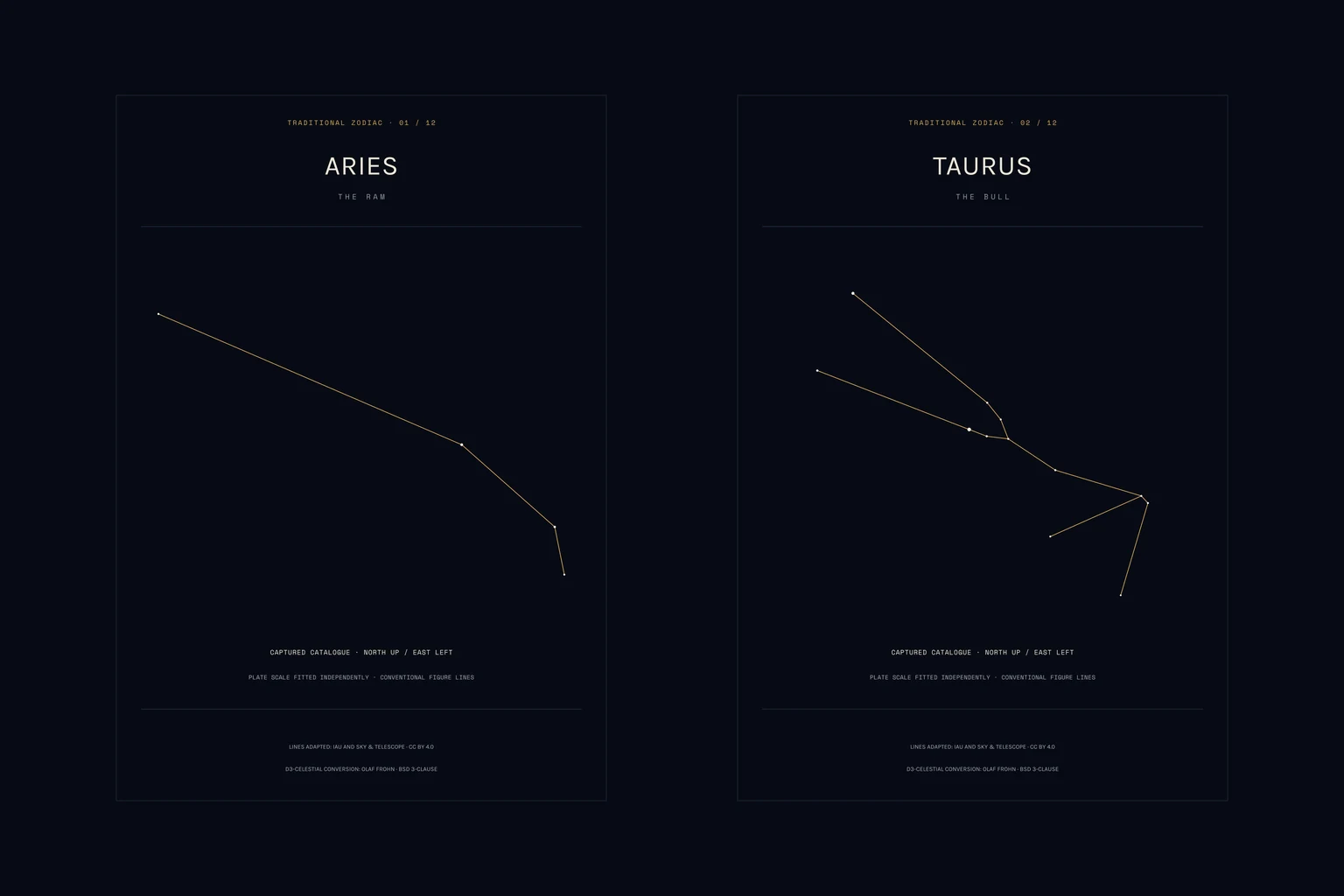
April zodiac sign: Aries and Taurus
The April zodiac signs are Aries, until 19 April, and Taurus, from 20 April. Aries runs 21 March to 19 April and Taurus runs 20 April to 20 May.
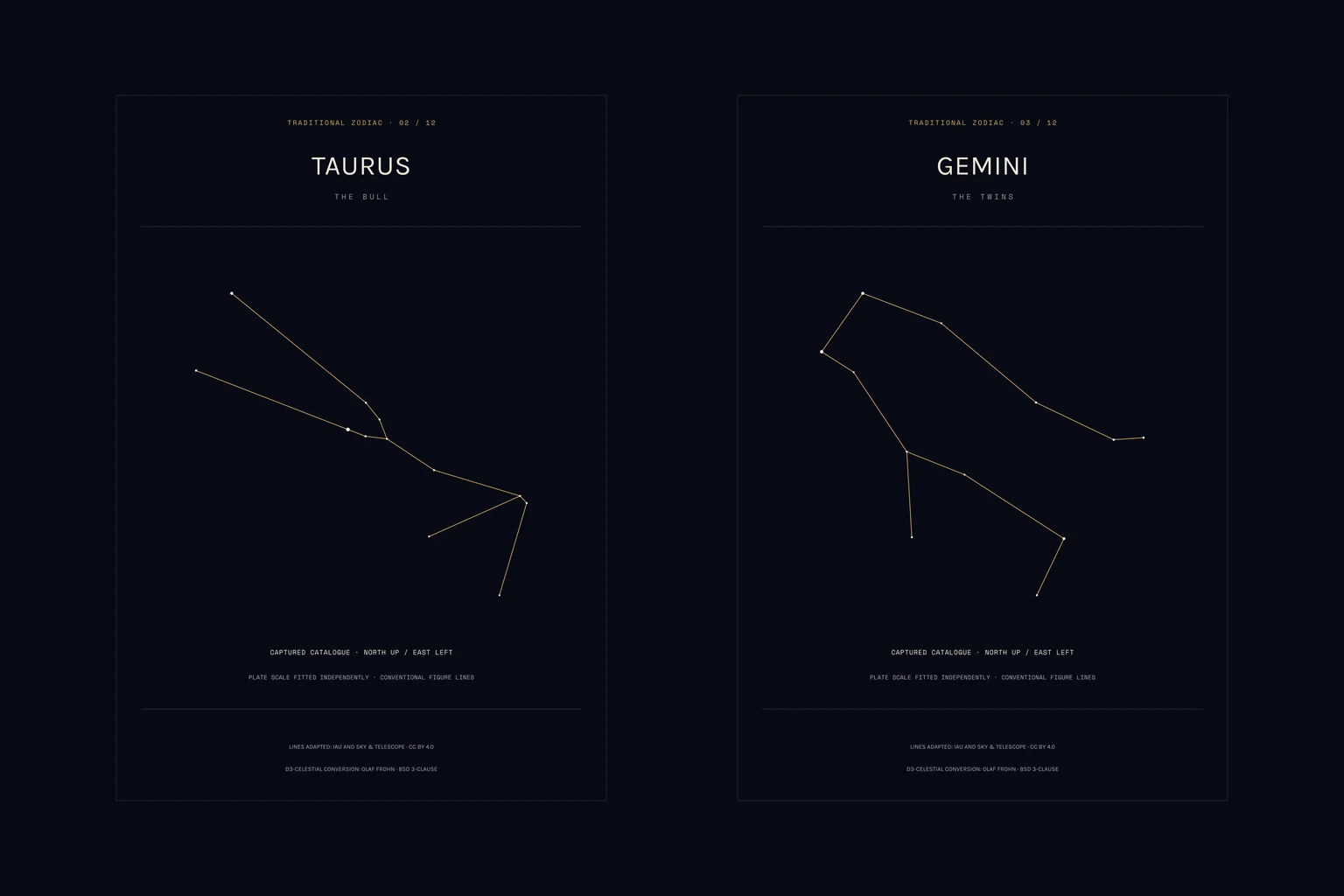
May zodiac sign: Taurus and Gemini
The May zodiac signs are Taurus, until 20 May, and Gemini, from 21 May. Taurus runs 20 April to 20 May and Gemini runs 21 May to 20 June.
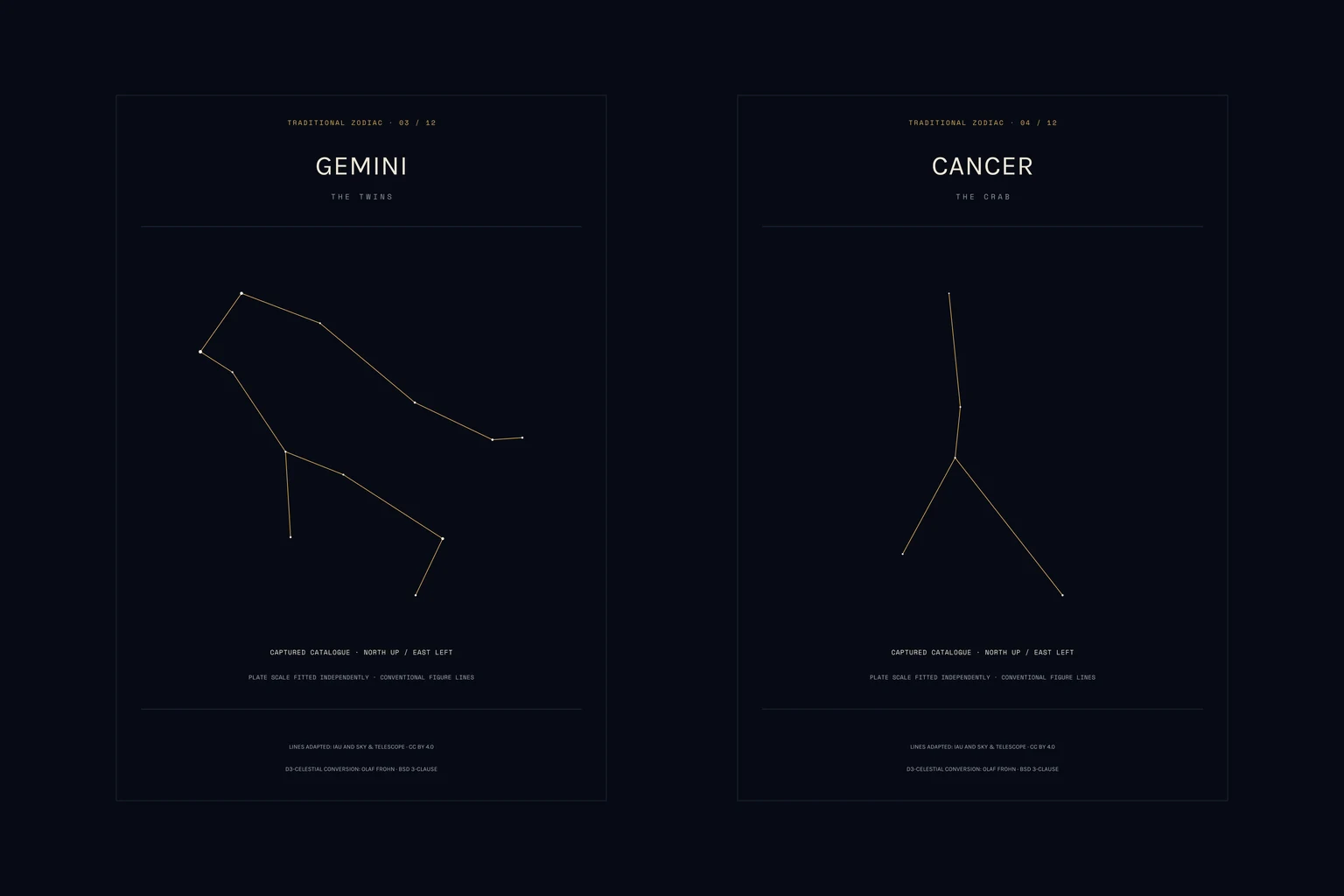
June zodiac sign: Gemini and Cancer
The June zodiac signs are Gemini, until 20 June, and Cancer, from 21 June. Gemini runs 21 May to 20 June and Cancer runs 21 June to 22 July.
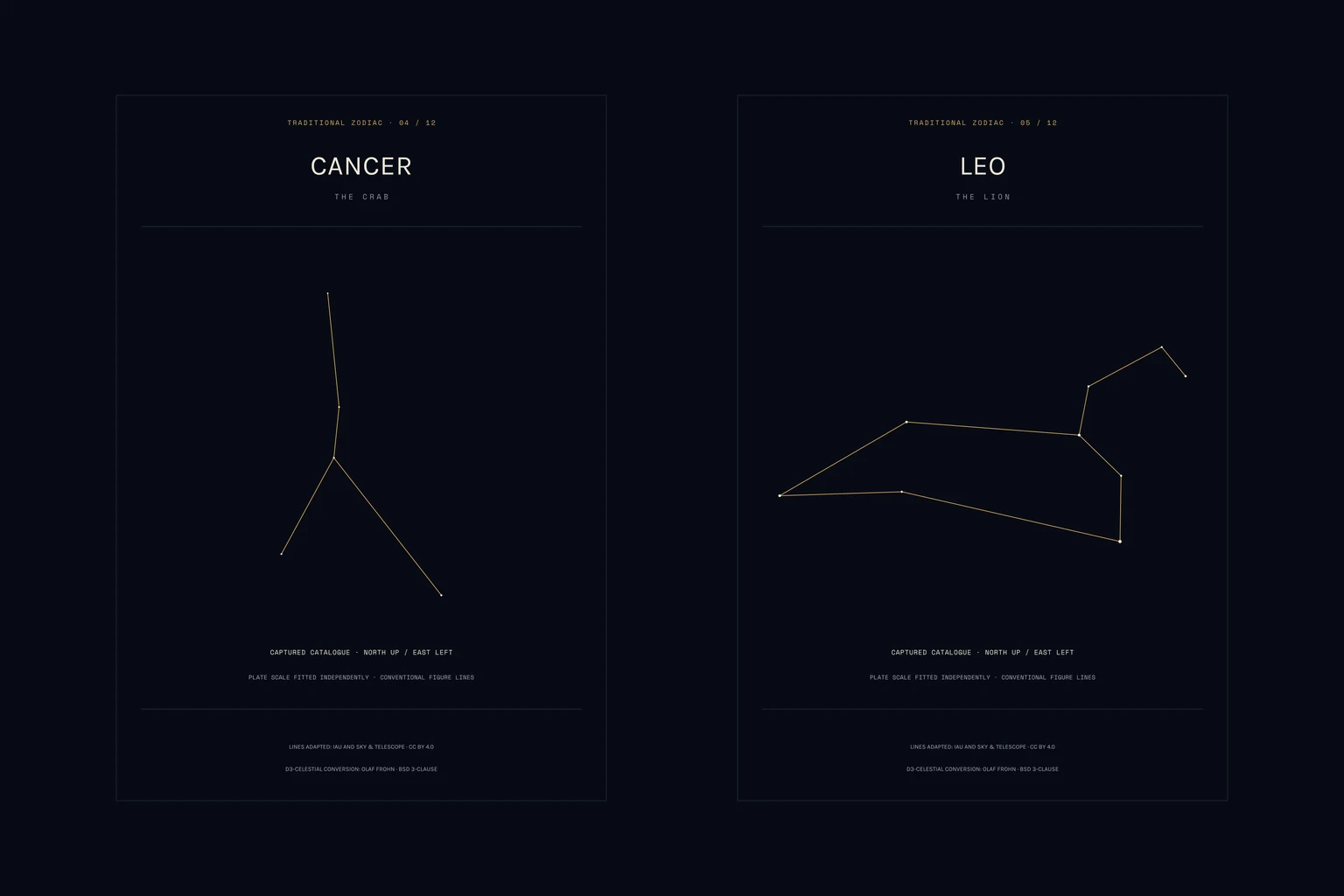
July zodiac sign: Cancer and Leo
The July zodiac signs are Cancer, until 22 July, and Leo, from 23 July. Cancer runs 21 June to 22 July and Leo runs 23 July to 22 August.
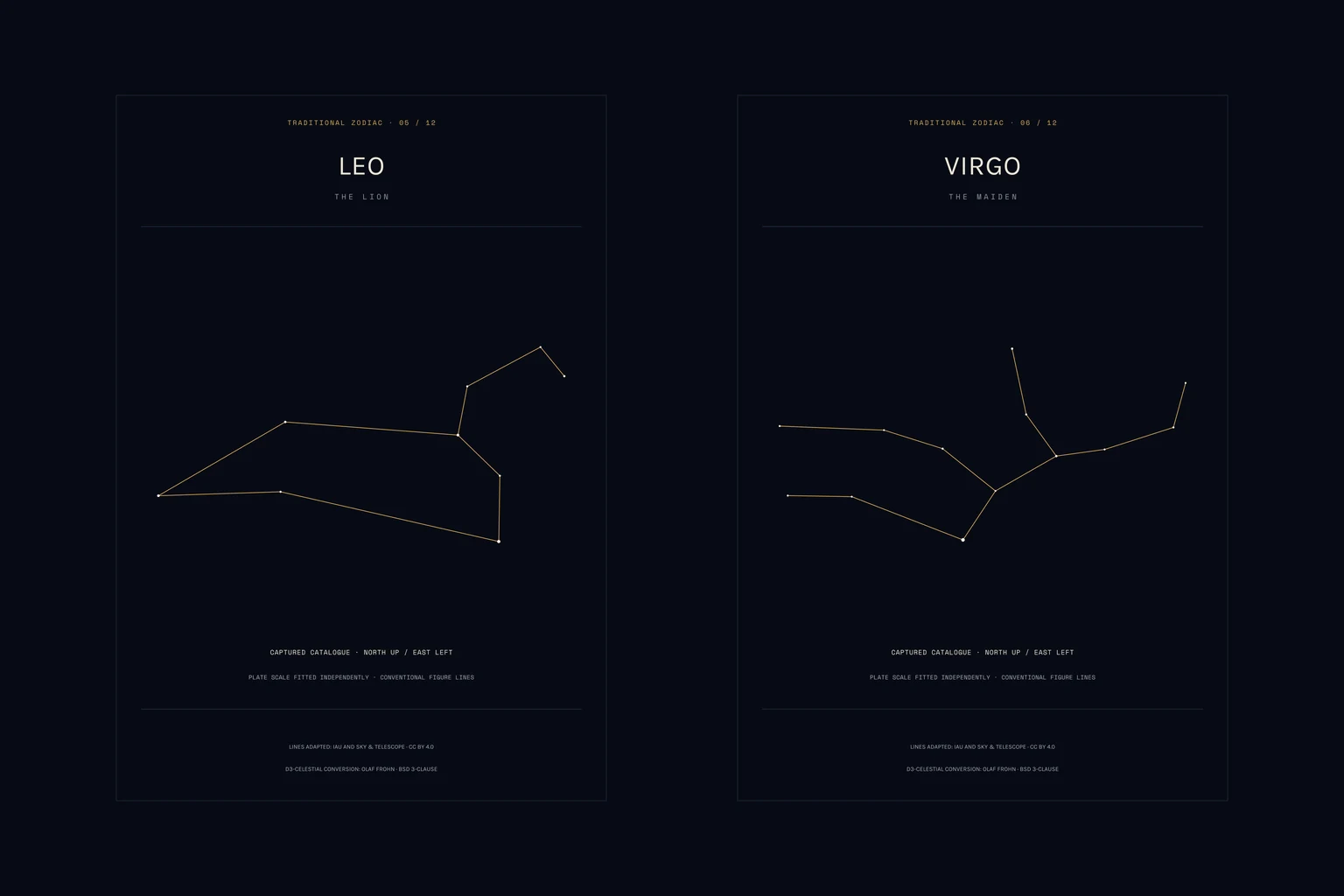
August zodiac sign: Leo and Virgo
The August zodiac signs are Leo, until 22 August, and Virgo, from 23 August. Leo runs 23 July to 22 August and Virgo runs 23 August to 22 September.
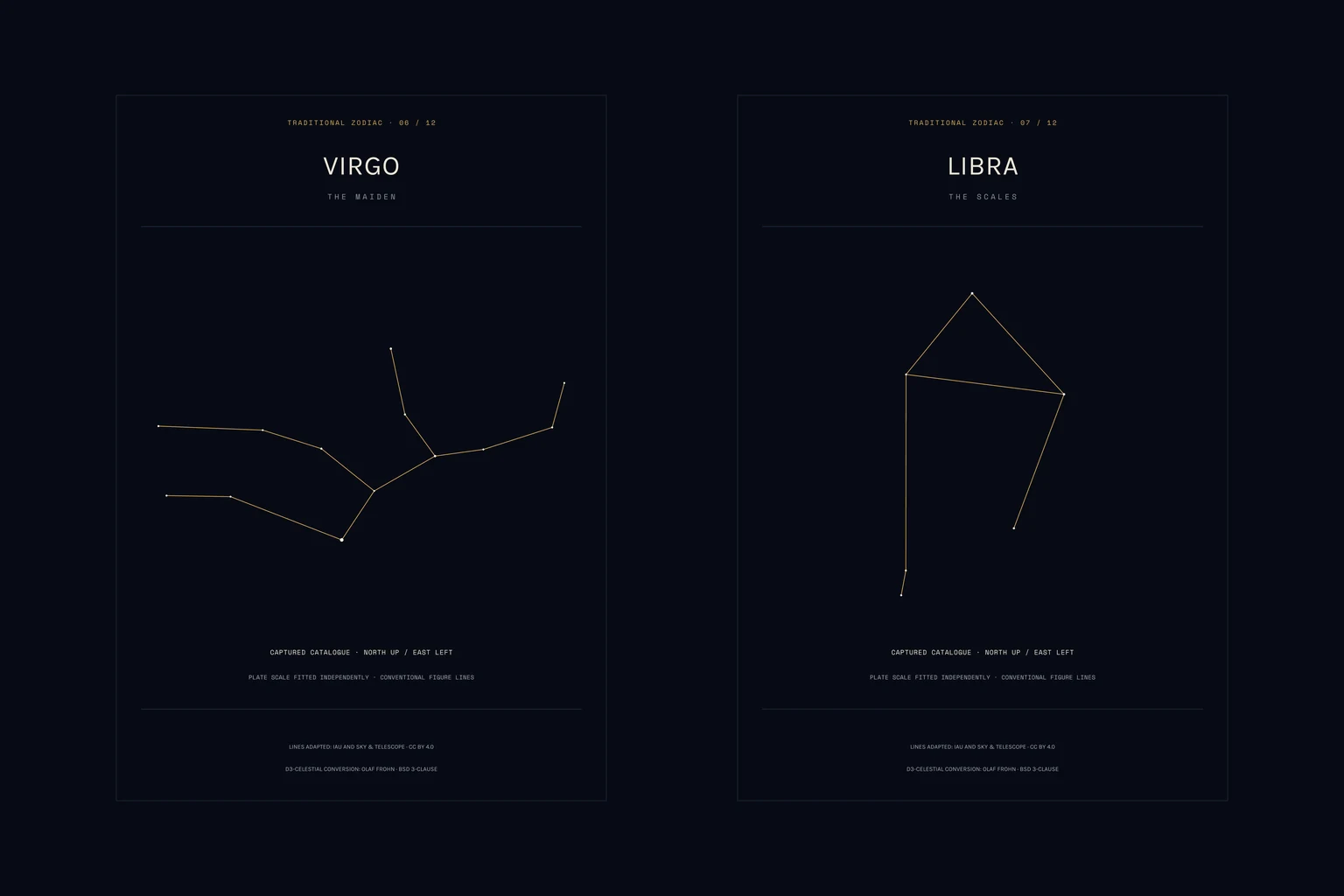
September zodiac sign: Virgo and Libra
The September zodiac signs are Virgo, until 22 September, and Libra, from 23 September. Virgo runs 23 August to 22 September and Libra runs 23 September to 22 October.
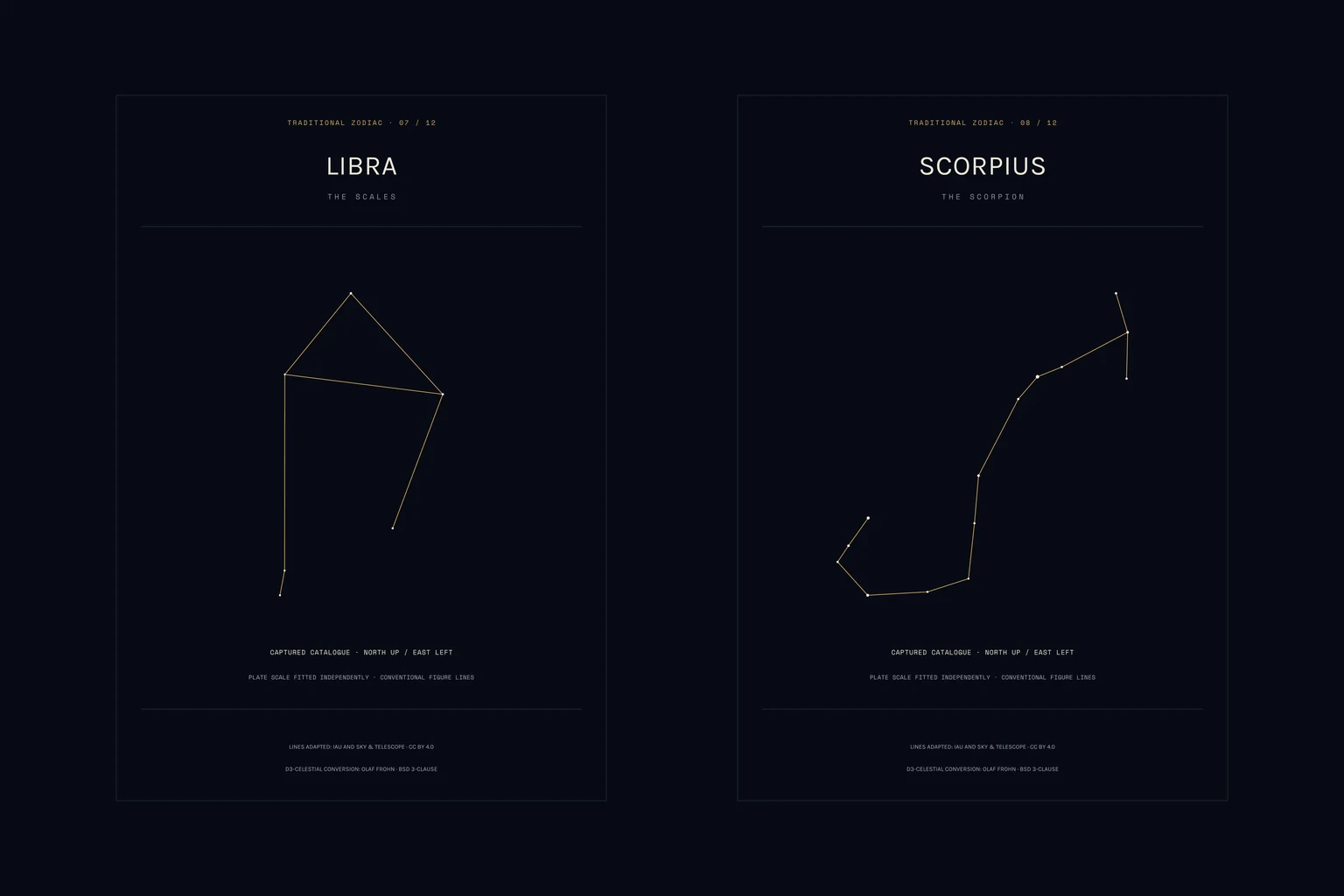
October zodiac sign: Libra and Scorpio
The October zodiac signs are Libra, until 22 October, and Scorpio, from 23 October. Libra runs 23 September to 22 October and Scorpio runs 23 October to 21 November.
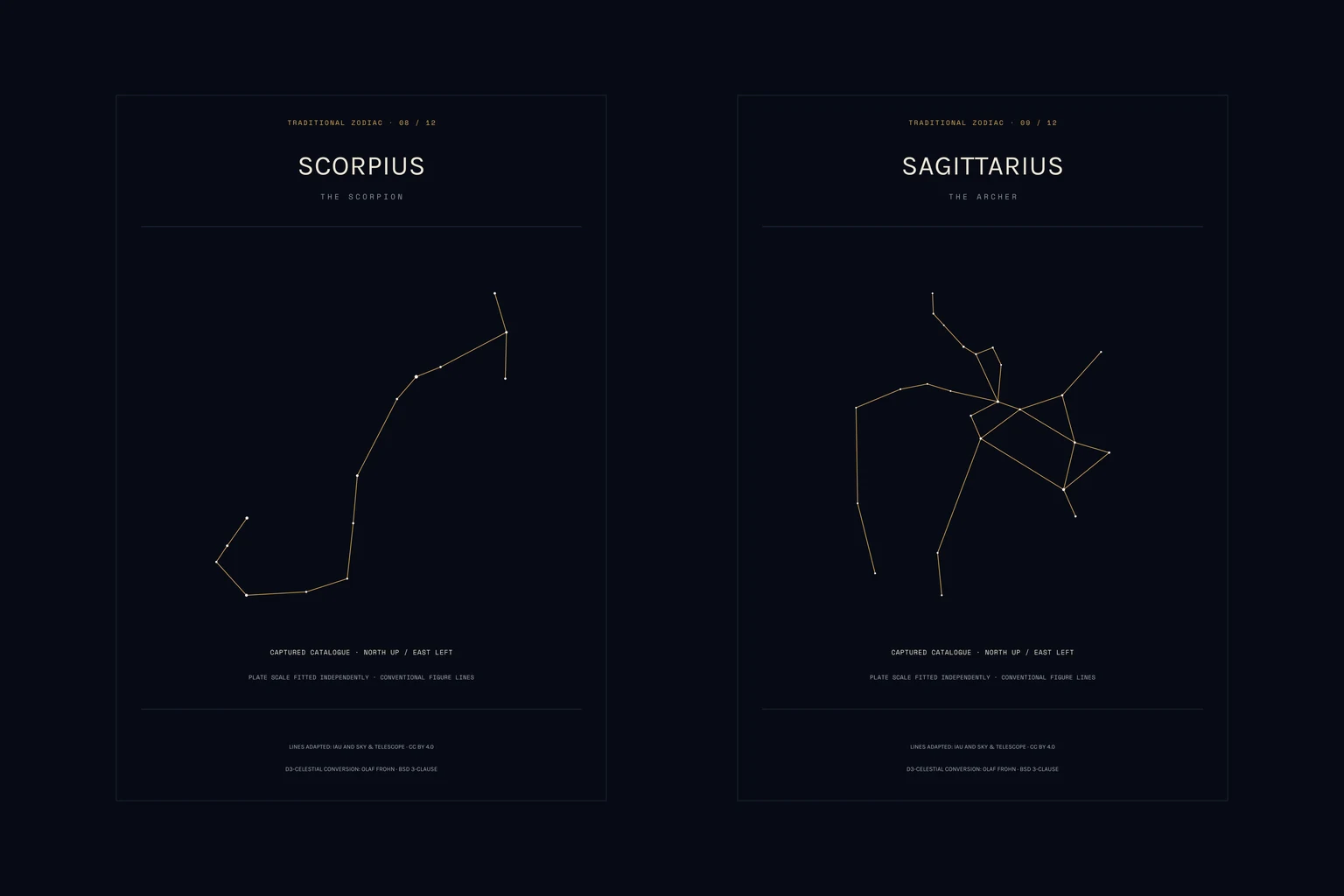
November zodiac sign: Scorpio and Sagittarius dates
The November zodiac signs are Scorpio, until 21 November, and Sagittarius, from 22 November. Scorpio runs 23 October to 21 November and Sagittarius runs 22 November to 21 December.
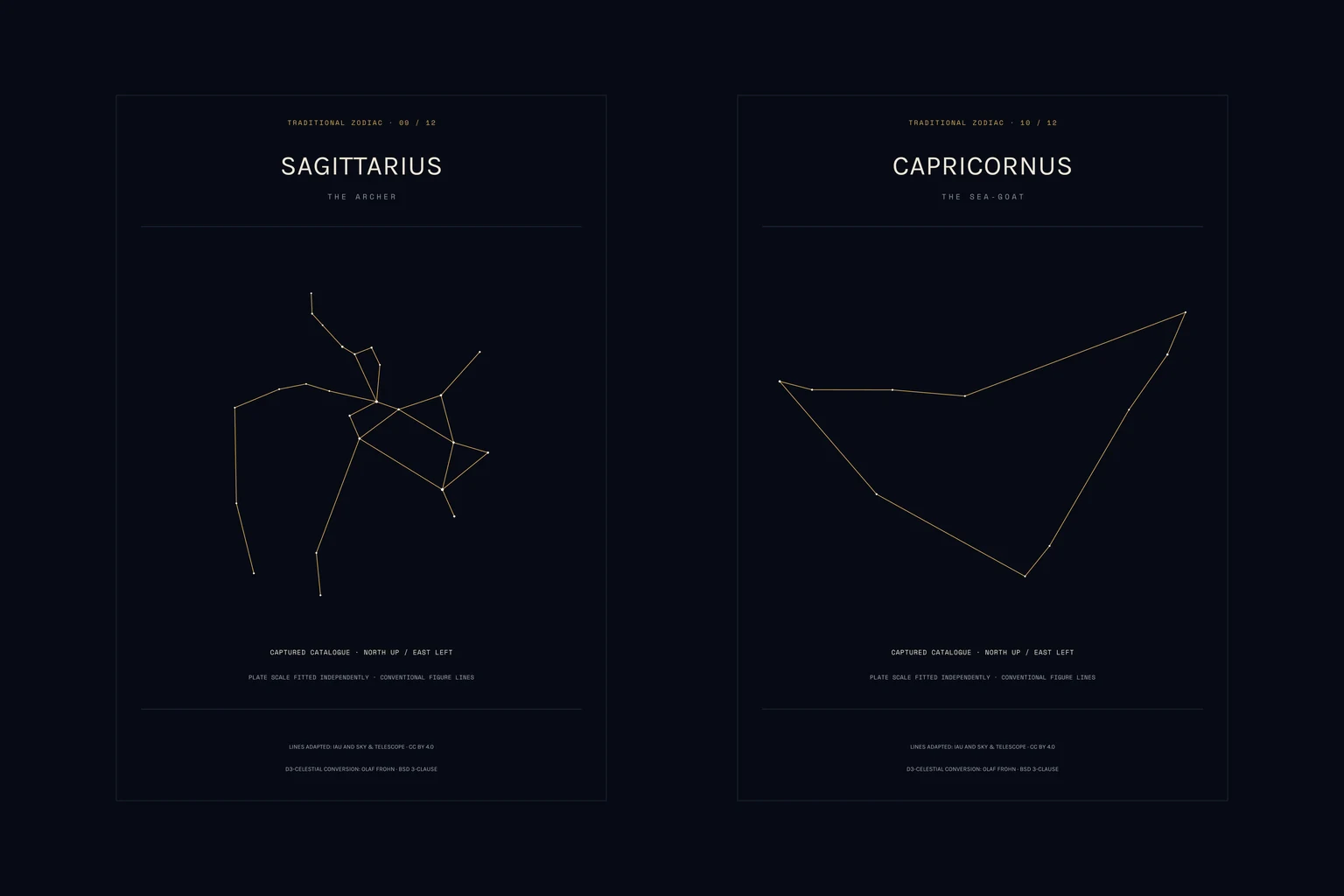
December zodiac sign: Sagittarius and Capricorn dates
The December zodiac signs are Sagittarius, until 21 December, and Capricorn, from 22 December. Sagittarius runs 22 November to 21 December and Capricorn runs 22 December to 19 January.
What shape are stars?
What shape are stars? Almost perfect spheres of hot gas, held together by their own gravity. The points you see, and the five-pointed shape we draw, come from our eyes, the air and the…
Zodiac elements: fire, earth, air and water signs
The zodiac elements are four groups of three signs each. Fire is Aries, Leo and Sagittarius; earth is Taurus, Virgo and Capricorn; air is Gemini, Libra and Aquarius; water is Cancer,…
On the wall
Search this library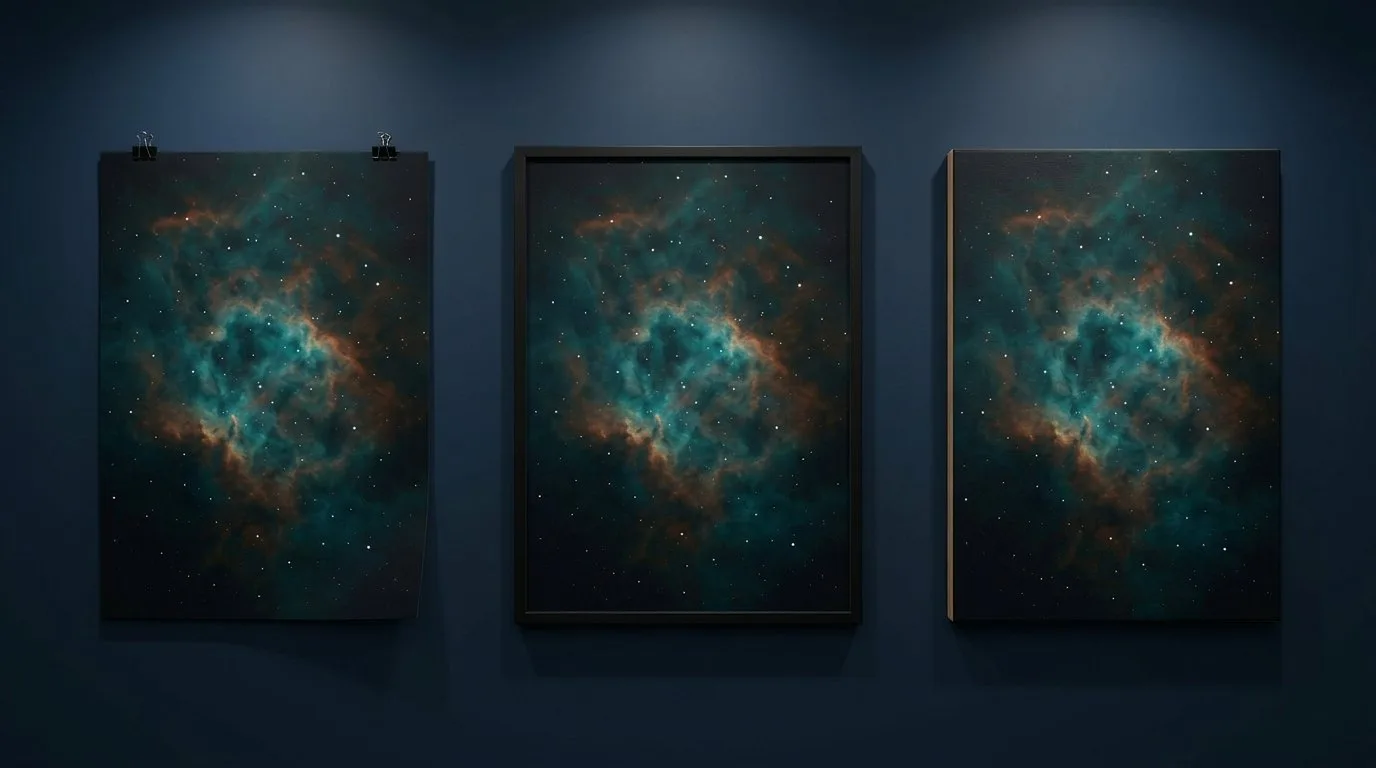
Canvas vs framed print vs poster: how to choose
Canvas, framed print or poster? Canvas is glare-free and made for big, atmospheric images; a framed print is crisp and ready to hang; a poster is the keenest on price. Choose by room, by…
What DPI do you need to print a photo?
We grade pixel resolution at your chosen size: 300 dpi or more is excellent, at least 140 and below 300 dpi is acceptable, and below 140 is blocked. The grade cannot detect missed focus,…
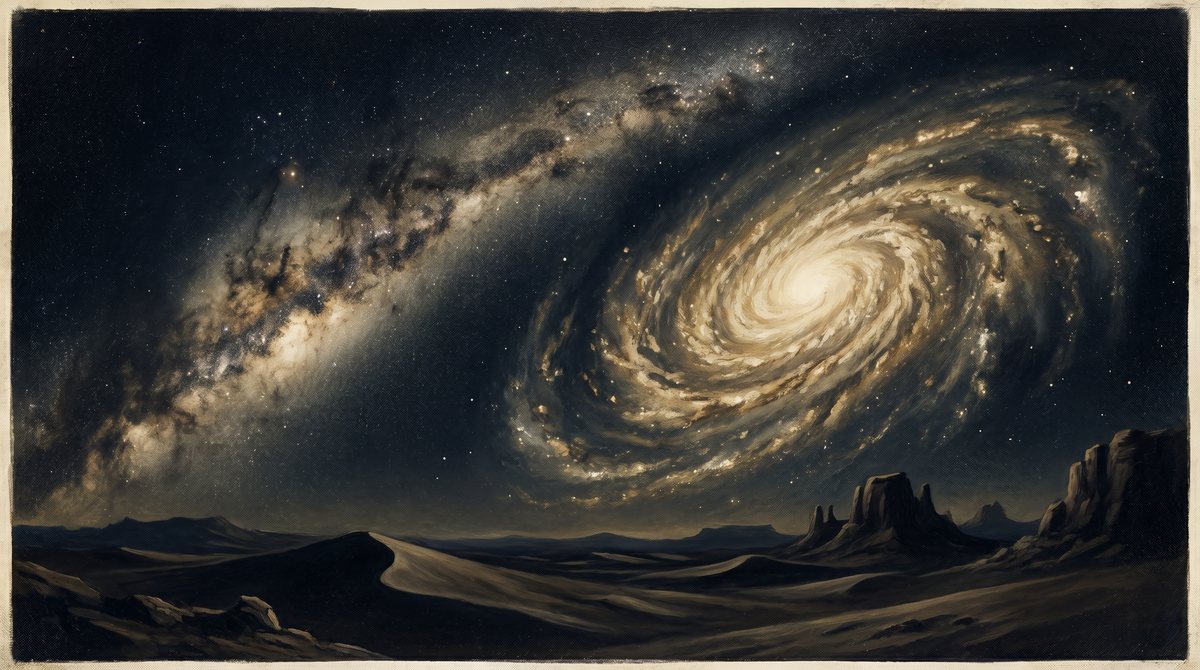
A beginner's guide to astronomy art
Astronomy art runs from photoreal nebulae to graphic retro posters. Knowing the main genres makes it far easier to choose prints that work together on a wall.
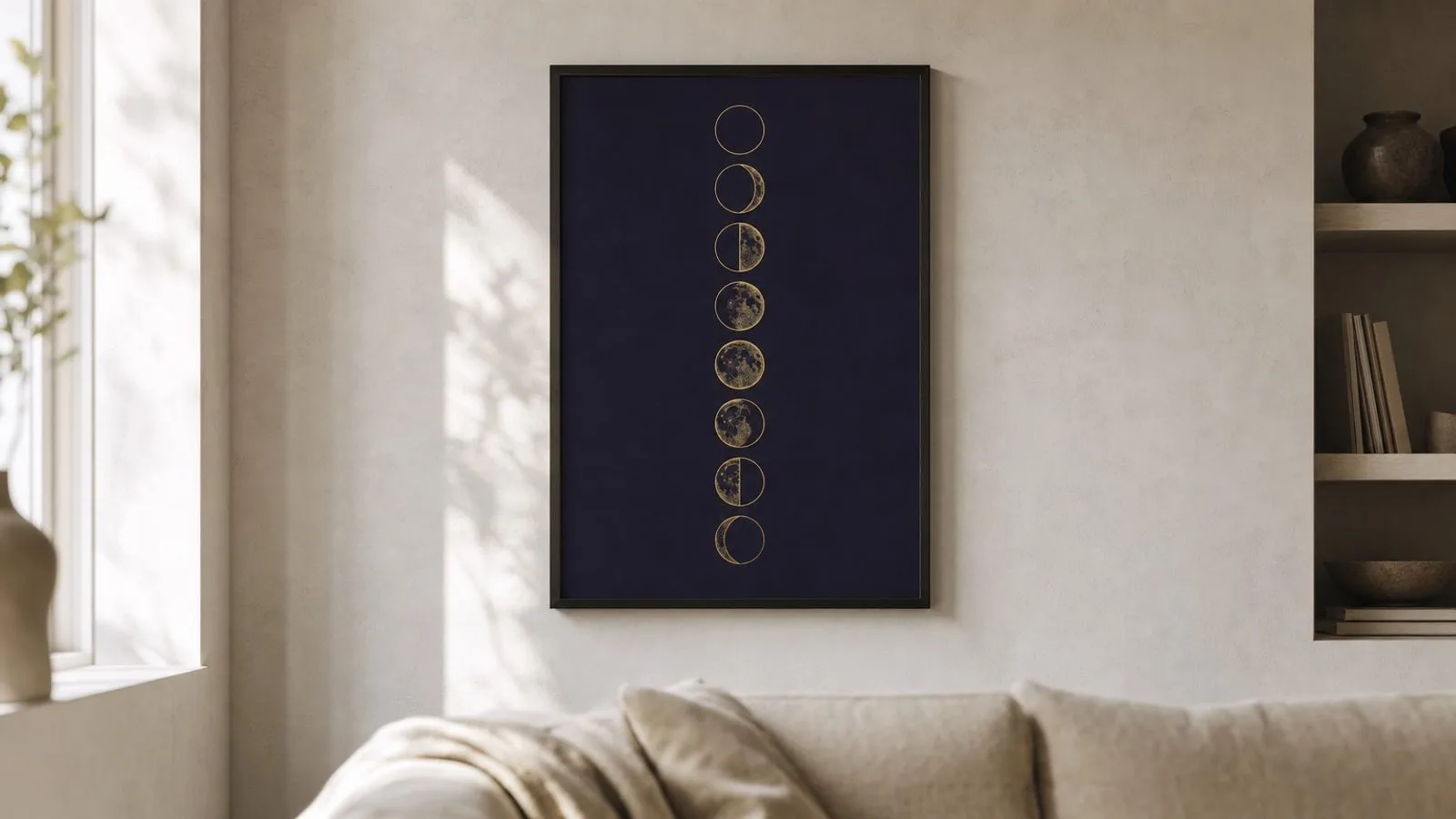
Is the Moon phase chart accurate? A plain check
Is the moon phase chart accurate? A moon phase print works because it is a sequence: new moon to full and back, a shape the eye can follow and the sky can confirm. That is also why the…
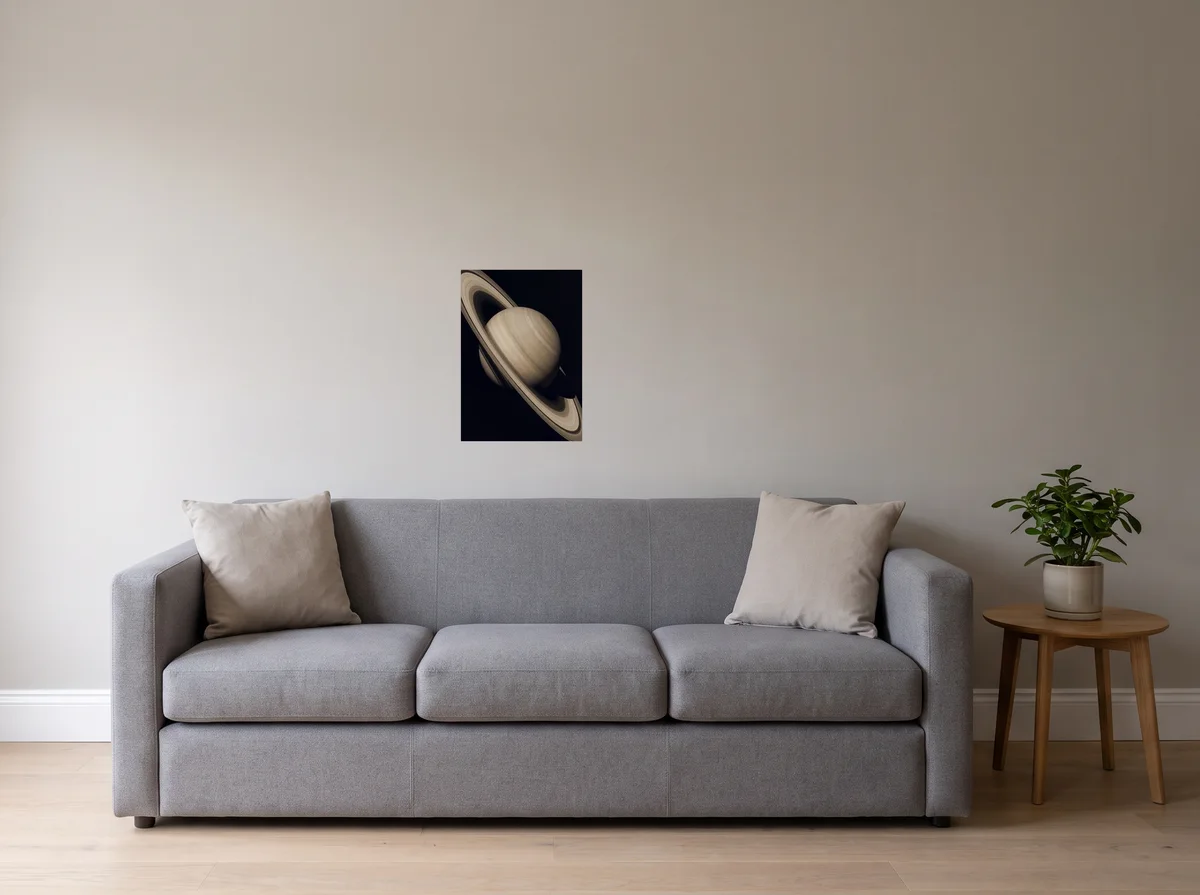
What is the perfect size for wall art?
There isn't a single perfect size. The right one is set by the wall, not the picture. The common guidance is to fill roughly two-thirds to three-quarters of the available width.

What is the 2/3 rule for wall art?
The 2/3 rule says a picture hung above a piece of furniture should be about two-thirds as wide as the furniture beneath it. It is a decorating rule of thumb, not a standard anyone enforces.
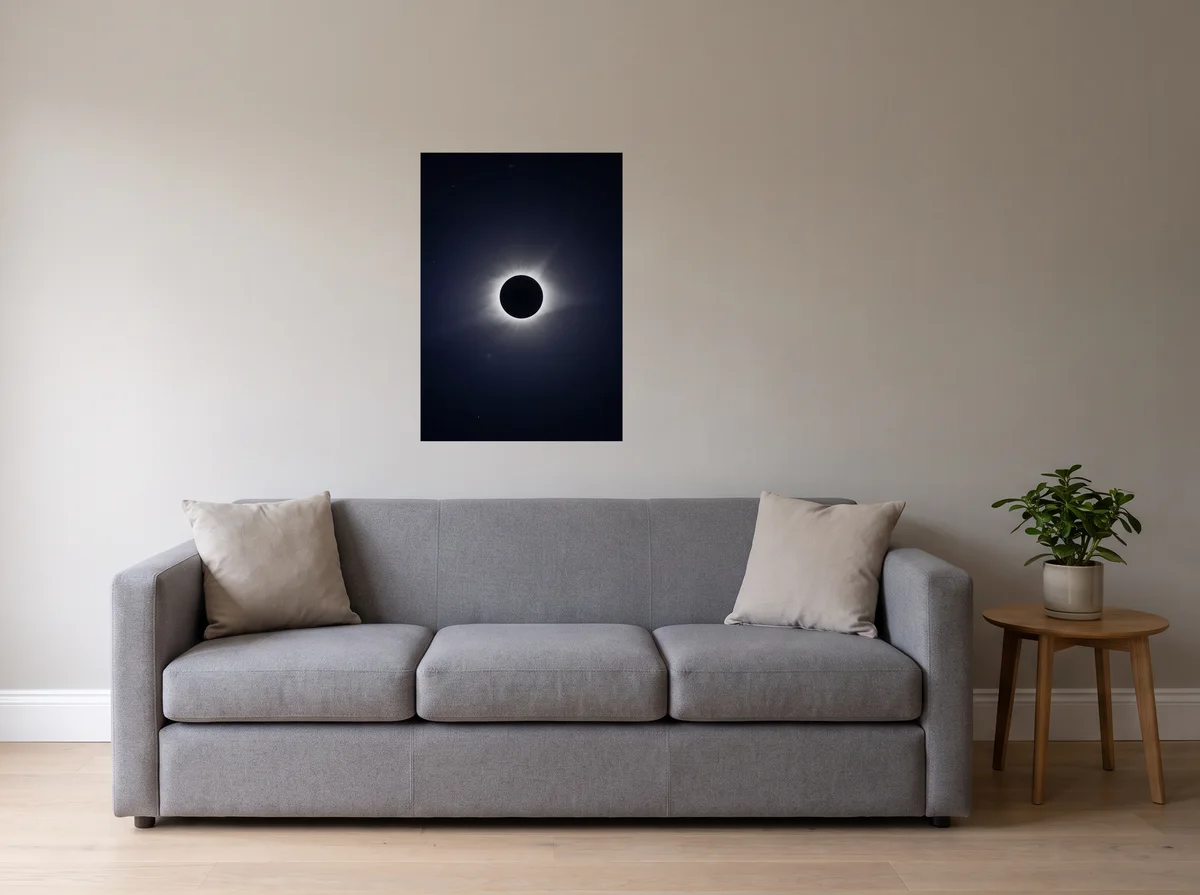
Can wall art be too big for a wall?
Yes. A print is too big when there's no clear margin left around it, and the giveaway is that the room starts to feel smaller, not more dramatic.
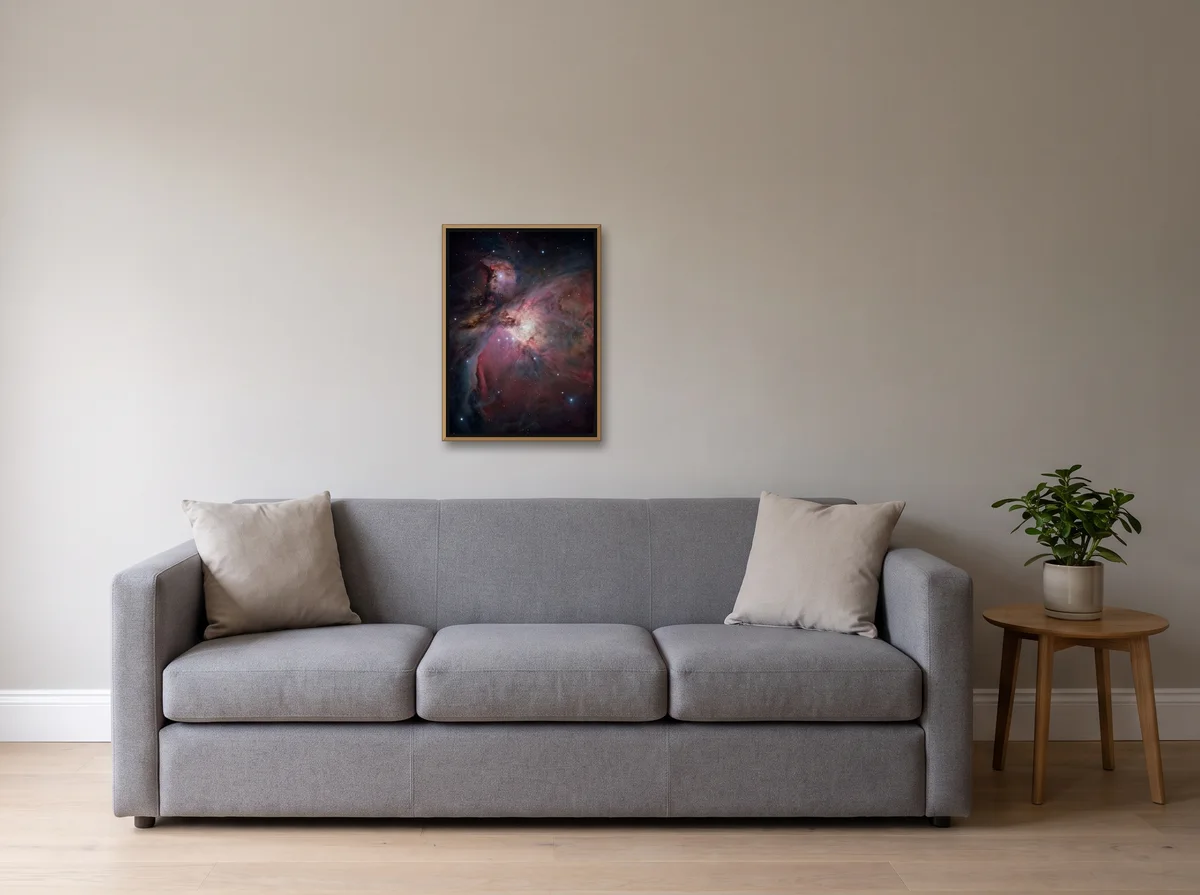
Does canvas look better framed or unframed?
Neither is objectively better. Unframed canvas suits modern rooms and images that carry to the edge; a frame suits formal settings and gives the picture a defined boundary.

On the wall: start here
Size, finish and resolution. What a poster, a framed print and a canvas each do to the same picture.
The collection
Search this library
The best gifts for astronomers and space lovers
Gifts for astronomers work best when they fit what the recipient wants to do: explore the sky, decorate a room or remember a particular night. Start with their experience and interests,…
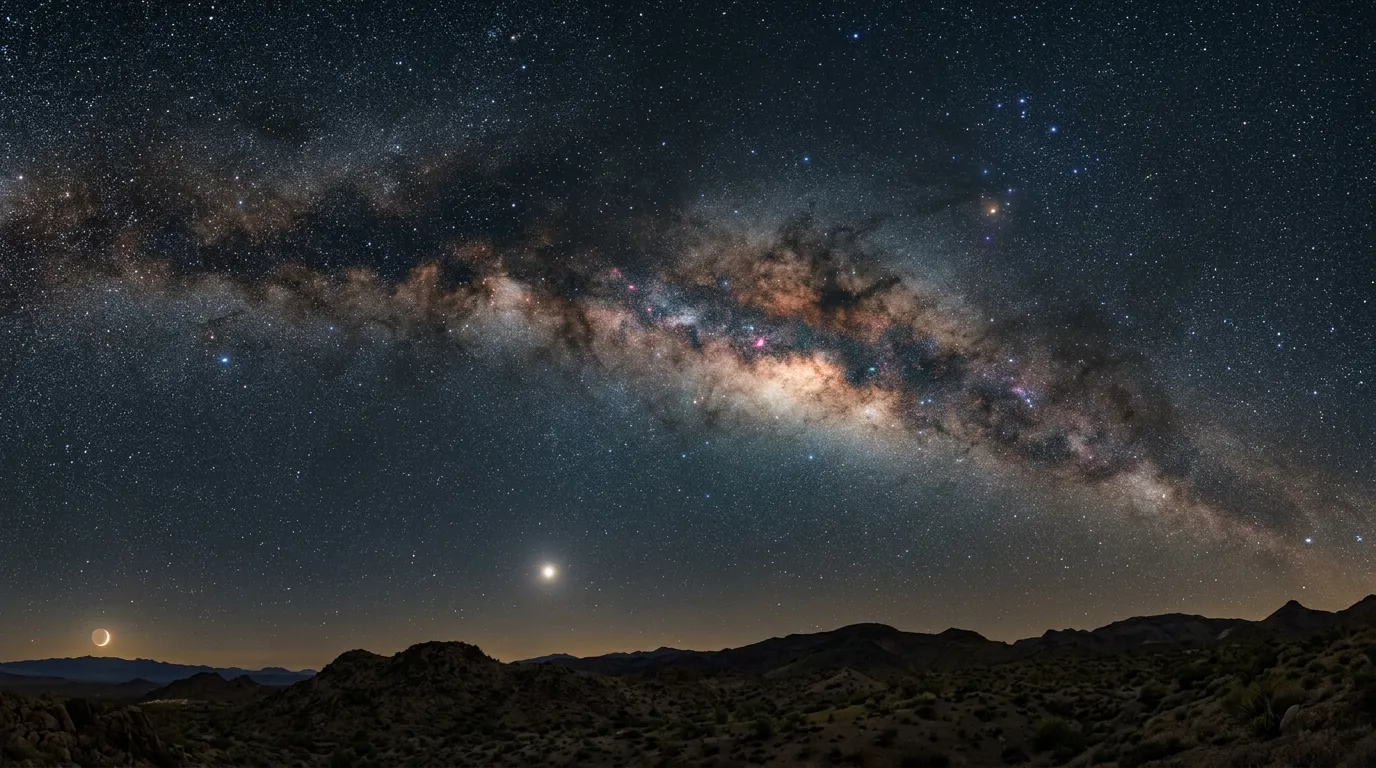
The collection: start here
Subject by subject: the Moon, the planets, galaxies, nebulae, blueprints and the retro travel posters.
The observatory journal
Search this library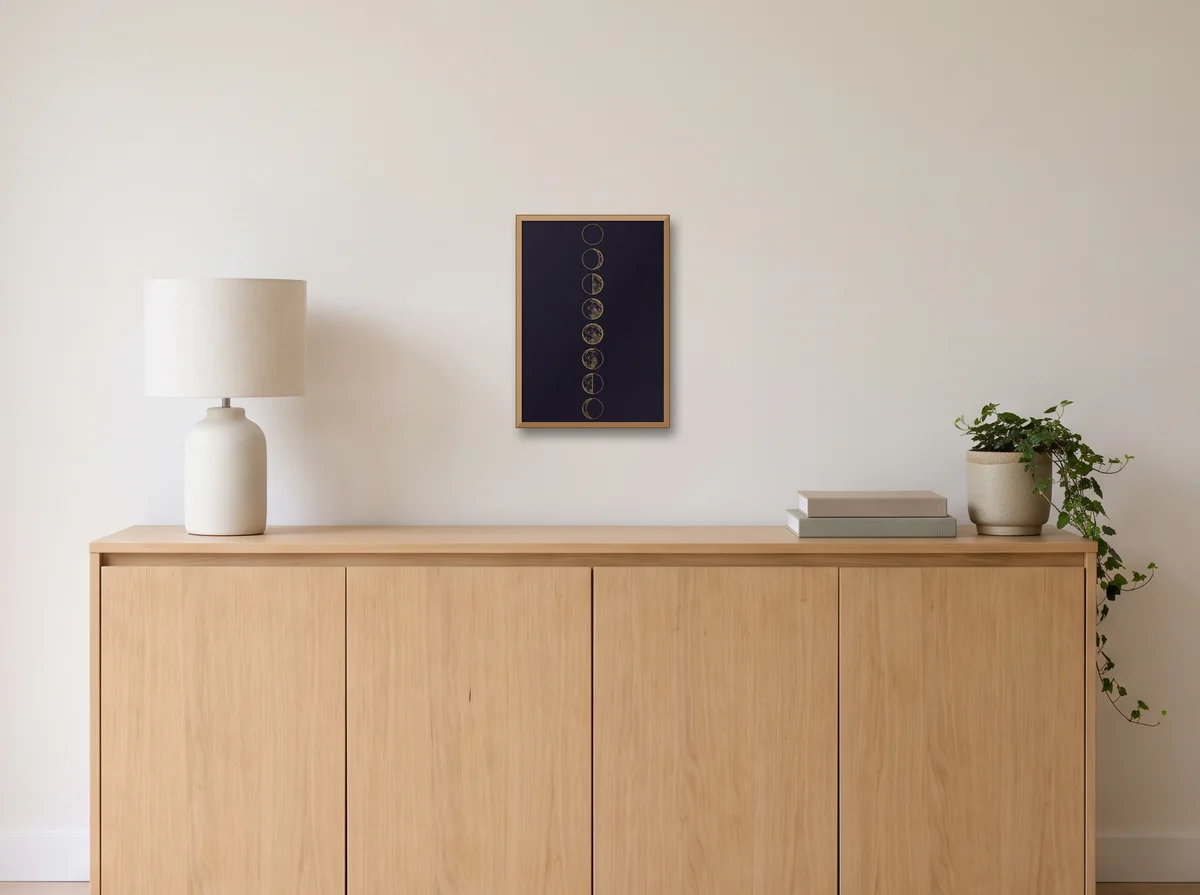
Moon phase today and the next full Moon
Tonight's Moon, how much of it is lit, and when the next full and new Moons arrive in London time. Type any date from 1900 to 2100 to see the Moon on your birthday.