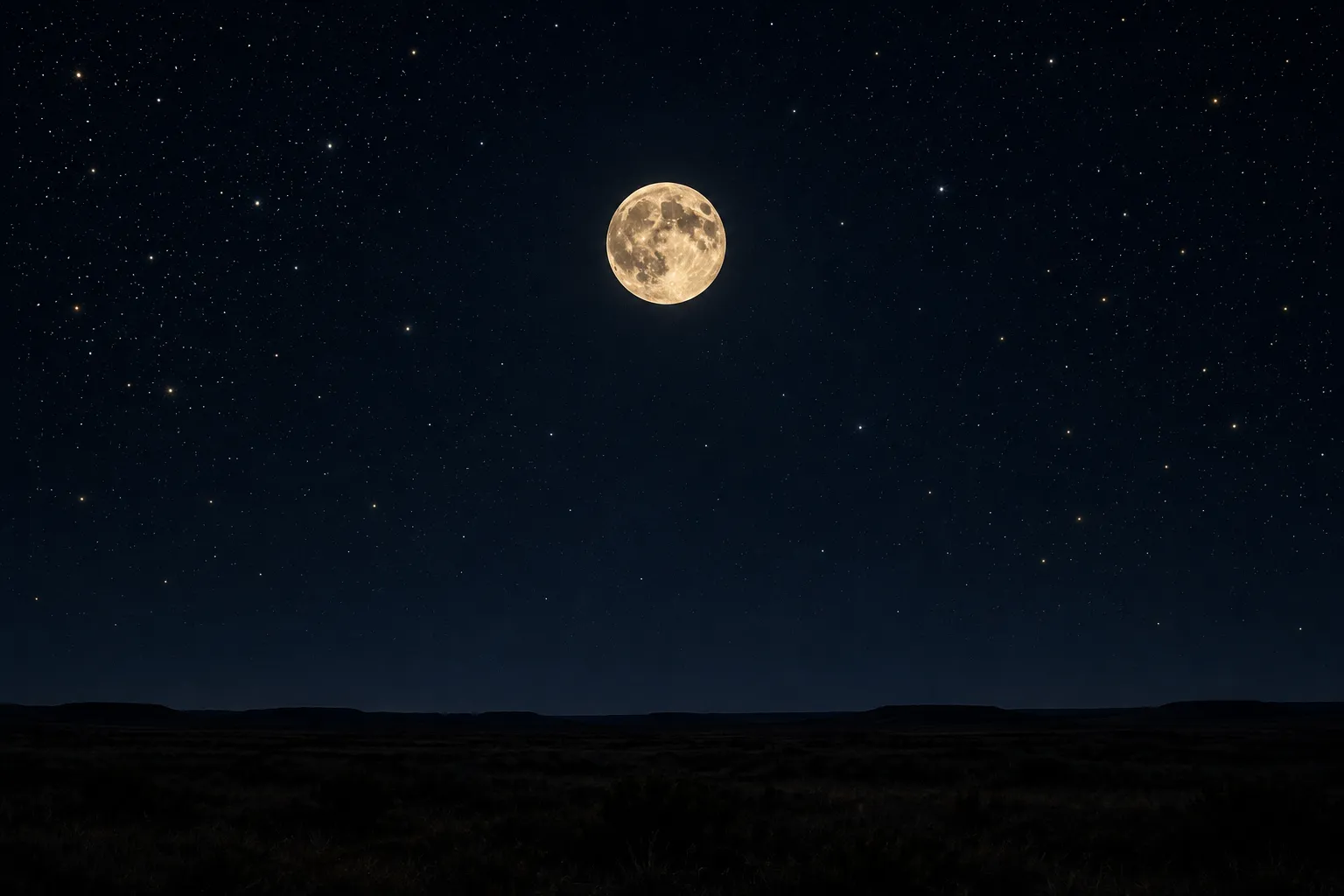
To the eye the Hunter's Moon looks full for about a day either side of that moment, so both evenings around Monday 26 October 2026 are worth a look.
There are thirteen full moons in 2026, not twelve, because May holds two: the Flower Moon on the 1st and a blue moon on the 31st. Every date below is the moment the Moon is exactly full, in London time.
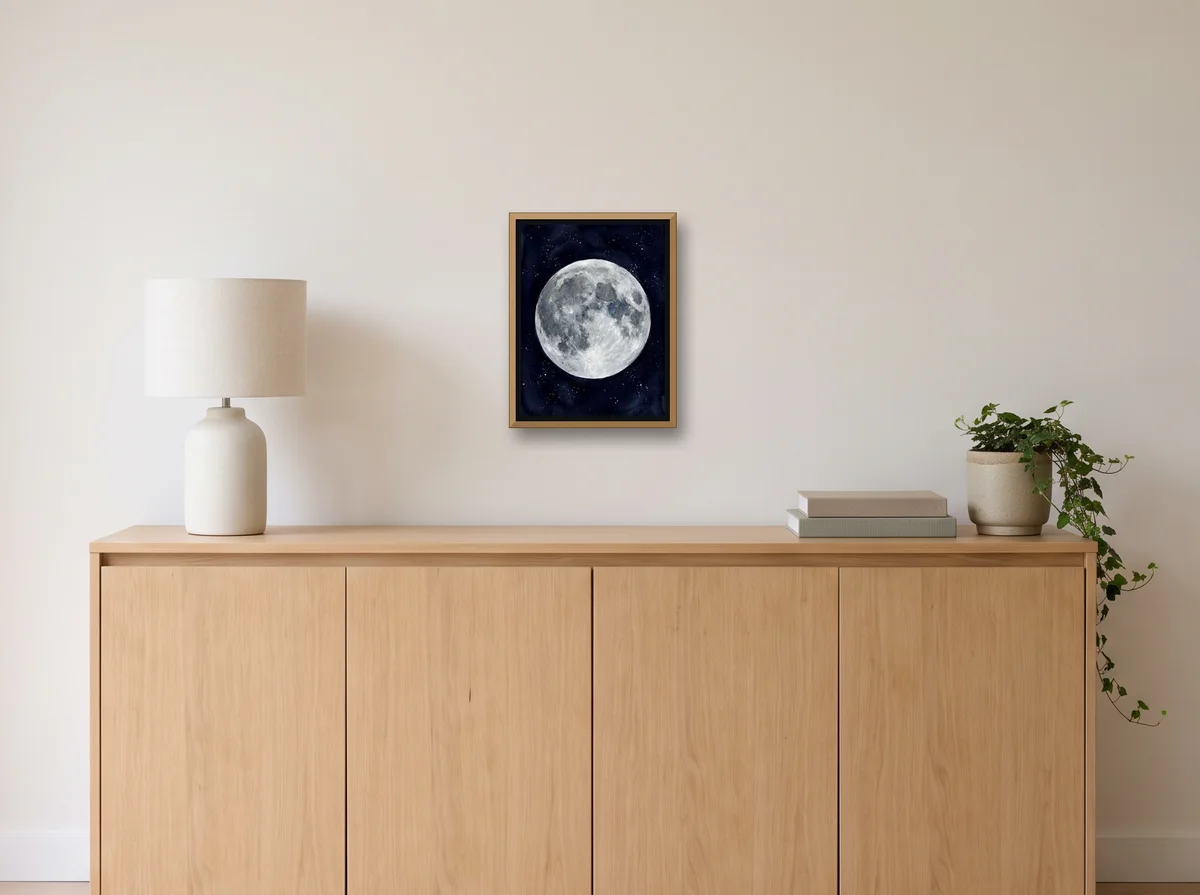
For the full Moon on its own, Watercolour Moon shows it in loose watercolour wash, grey and silver pooling into the maria. The rest of the moon prints are on the moon wall art page.
Times are London local, computed by NASA’s Six Millennium Catalog of Phases of the Moon and checked against the Royal Observatory Greenwich full moon calendar for 2026. Both agree to the minute.
Every full moon in the UK, 2026
- Wolf Moon: Saturday 3 January 2026, 10:03am GMT
- Snow Moon: Sunday 1 February 2026, 10:09pm GMT
- Worm Moon: Tuesday 3 March 2026, 11:38am GMT (a total lunar eclipse, not visible from the UK)
- Pink Moon: Thursday 2 April 2026, 3:12am BST
- Flower Moon: Friday 1 May 2026, 6:23pm BST
- Blue Moon: Sunday 31 May 2026, 9:45am BST (blue moon)
- Strawberry Moon: Tuesday 30 June 2026, 12:57am BST
- Buck Moon: Wednesday 29 July 2026, 3:36pm BST
- Sturgeon Moon: Friday 28 August 2026, 5:18am BST (a partial lunar eclipse)
- Harvest Moon: Saturday 26 September 2026, 5:49pm BST
- Hunter's Moon: Monday 26 October 2026, 4:12am GMT
- Beaver Moon: Tuesday 24 November 2026, 2:53pm GMT
- Cold Moon: Thursday 24 December 2026, 1:28am GMT
Every full moon in the UK, 2027
Times are London local, computed by NASA’s Six Millennium Catalog of Phases of the Moon. The Royal Observatory has not yet published a 2027 calendar, so these have one source for now.
- Wolf Moon: Friday 22 January 2027, 12:17pm GMT
- Snow Moon: Saturday 20 February 2027, 11:23pm GMT (a penumbral lunar eclipse)
- Worm Moon: Monday 22 March 2027, 10:44am GMT
- Pink Moon: Tuesday 20 April 2027, 11:27pm BST
- Flower Moon: Thursday 20 May 2027, 11:59am BST
- Strawberry Moon: Saturday 19 June 2027, 1:44am BST
- Buck Moon: Sunday 18 July 2027, 4:45pm BST
- Sturgeon Moon: Tuesday 17 August 2027, 8:29am BST (a penumbral lunar eclipse)
- Harvest Moon: Thursday 16 September 2027, 12:04am BST
- Hunter's Moon: Friday 15 October 2027, 2:47pm BST
- Beaver Moon: Sunday 14 November 2027, 3:26am GMT
- Cold Moon: Monday 13 December 2027, 4:09pm GMT
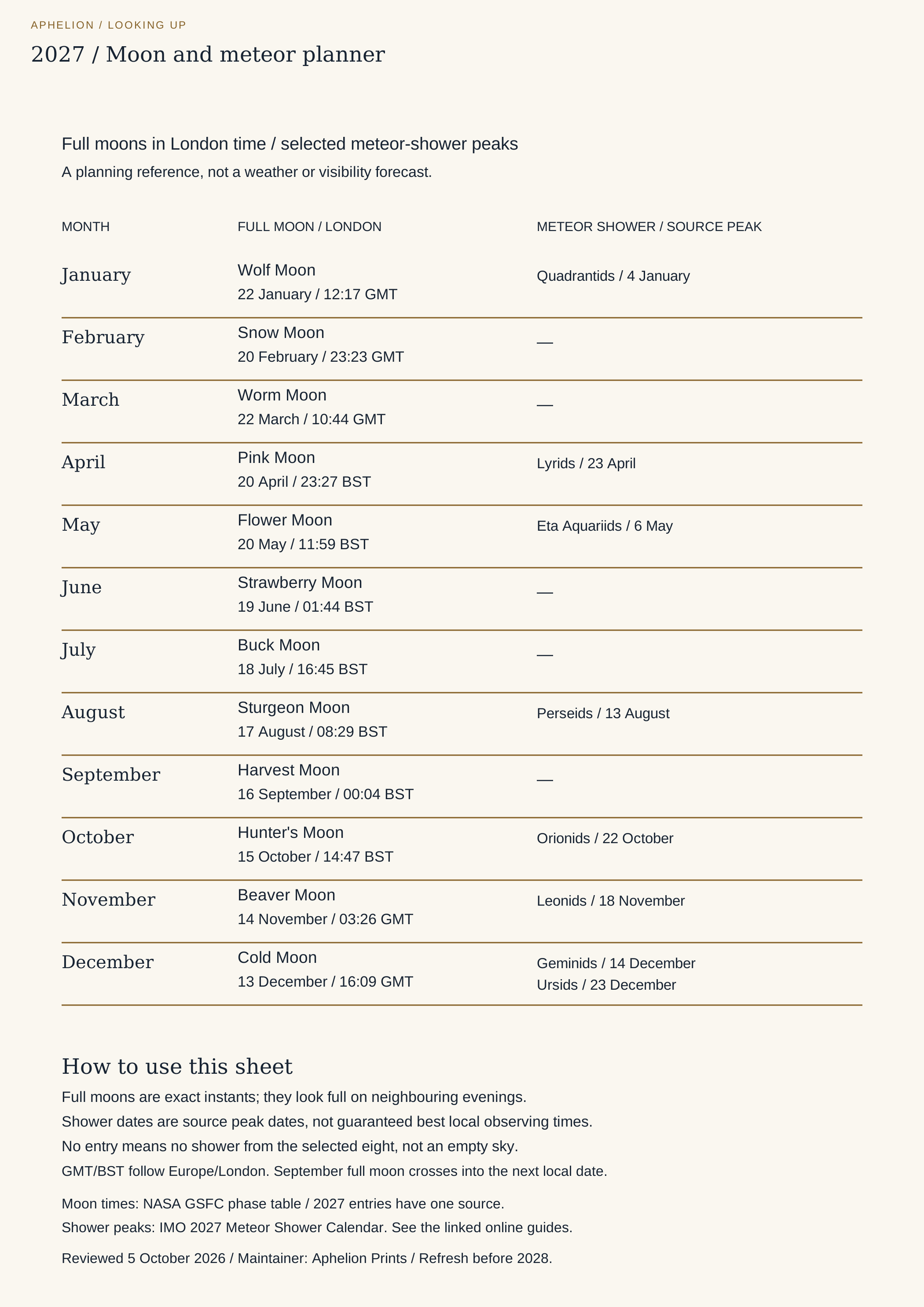
A printable 2027 Moon and meteor planner
The free A4 sheet brings together the twelve full-moon instants above and eight selected 2027 meteor-shower peak dates. It's a dated planning reference, not an all-events calendar: no weather forecast, visibility guarantee or eclipse timetable is included.
The planner comes as an A4 PDF for printing, a high-resolution PNG (300 dpi) or a scalable SVG; print the PDF at 100% on A4 paper. The full-moon list above and the linked shower tables provide the same information as readable text.
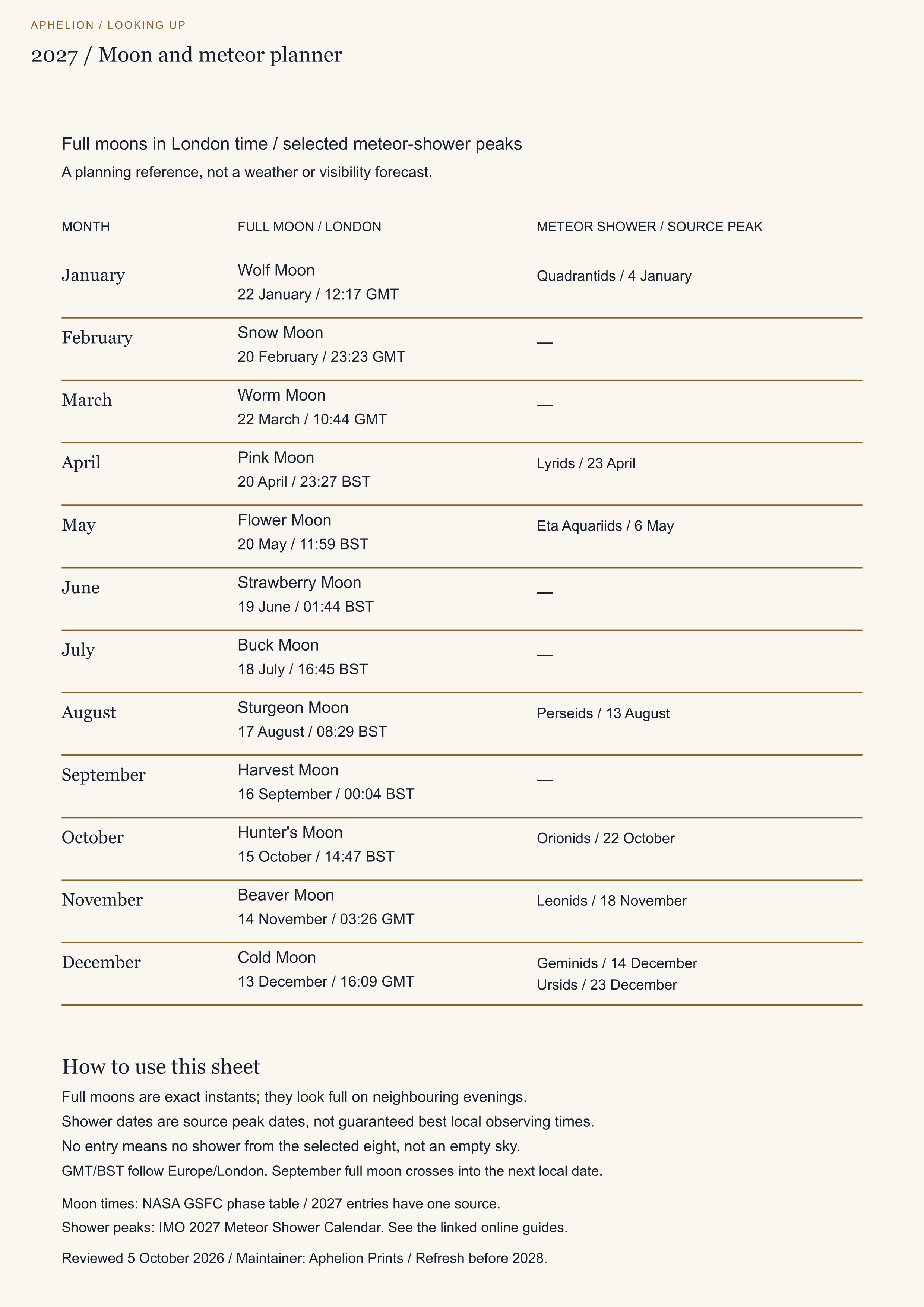
Sources and maintenance: the 2027 full moons are from NASA GSFC’s phase table and retain the single-source label used above. Shower dates come from the IMO 2027 Meteor Shower Calendar. Aphelion Prints maintains this sheet; reviewed 5 October 2026. This edition covers 2027. A later year needs a new source review and dated sheet; do not carry these dates forward. London’s clock change matters: the September full moon occurs after local midnight, on 16 September, even though its UTC date is 15 September.
Why the full moons have names
The names are folk names for months. They don't describe the Moon. Royal Museums Greenwich puts the tradition this way: Many of the Moon’s nicknames have come to us from Native American culture
, because the lunar cycle mattered as much for keeping time as the solar year. Each page above quotes that source for the name it covers.
Nothing about the Moon changes from one name to the next. A Strawberry Moon and a Wolf Moon are the same object at the same phase; what changes is the time of year, and with it how high the Moon rides and how long it stays up. That part is real, and it's why a June full moon looks orange from a British garden and a December one doesn't.
These names are calendar and seasonal conventions. They aren't different types of Moon. The Harvest Moon is tied to the autumn equinox, the Hunter’s Moon follows it, and Blue Moon has monthly and seasonal definitions.
Why a named full moon moves every year
A phase cycle is roughly 29.5 days, so it does not fit calendar months evenly. The full moon carrying the same calendar or seasonal name can fall earlier or later the following year. A month can contain two full moons, as May does in 2026; the 2026 and 2027 lists above show the actual comparison.
Types of full moon: supermoon, blue moon, blood moon
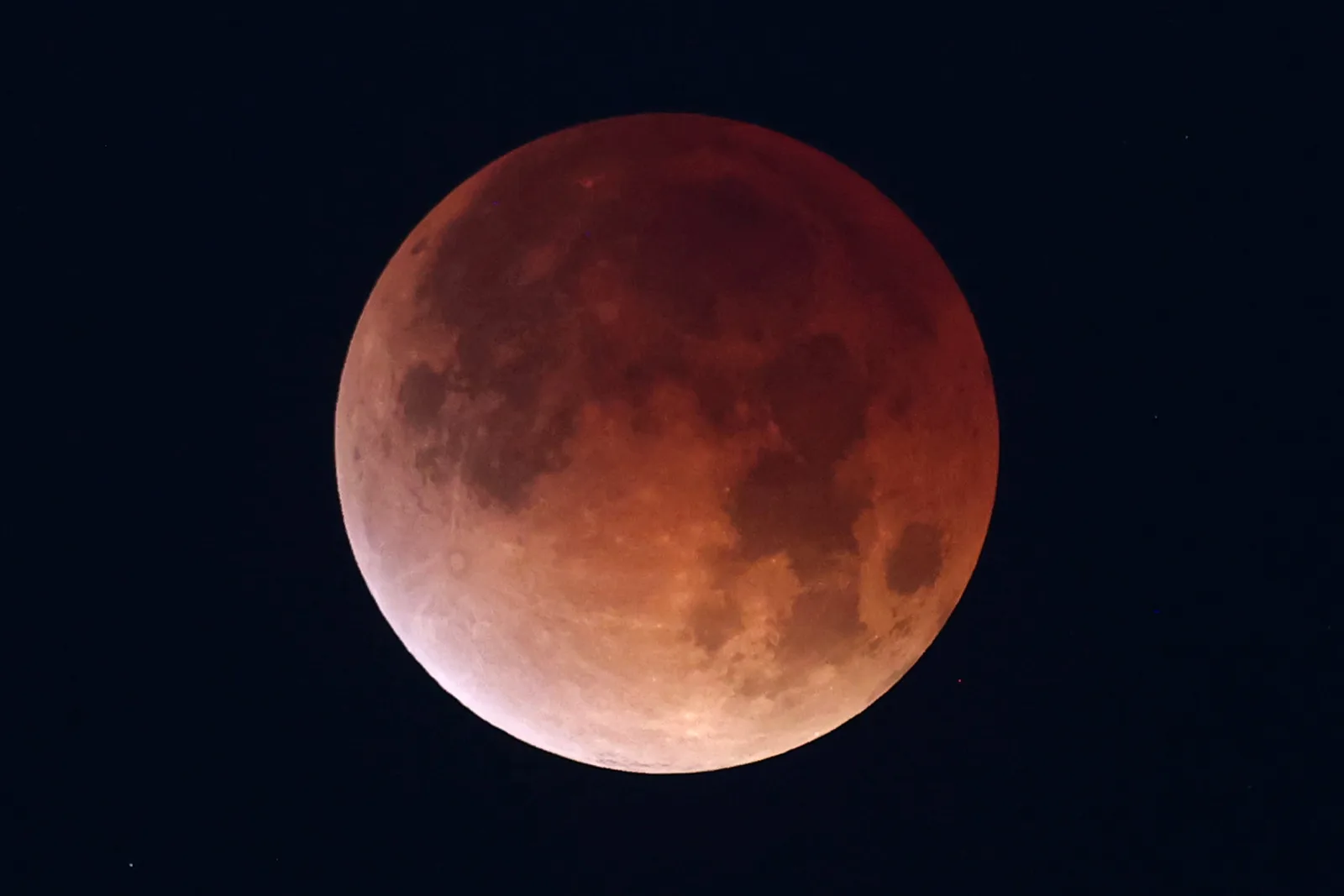
These are nicknames for full moons that happen to coincide with something else. A supermoon is a full moon near perigee, the closest point of the Moon’s orbit; NASA puts it at up to about 14% bigger and 30% brighter than a full moon at its furthest, which is hard to tell by eye. A blue moon is an extra full moon in a month or a season, and it isn’t blue. A blood moon is a full moon during a total lunar eclipse, turned red by sunlight bent through Earth’s atmosphere.
The exact minute, and why it rarely matters
A full moon is a geometry moment, not a night: the instant the Moon sits opposite the Sun. The times above are that instant. To the eye the Moon looks full for roughly a day either side, so a moon listed as full at four in the morning is worth looking at on both the evenings around it.
We publish the minute anyway: if the dates are right, everything else here is easier to trust. Meteor watchers can see which shower peaks fall near a full moon in UK meteor showers and the Moon. If you want the phases themselves explained, start with the eight phases of the Moon, and Looking up collects the rest of the night-sky guides.
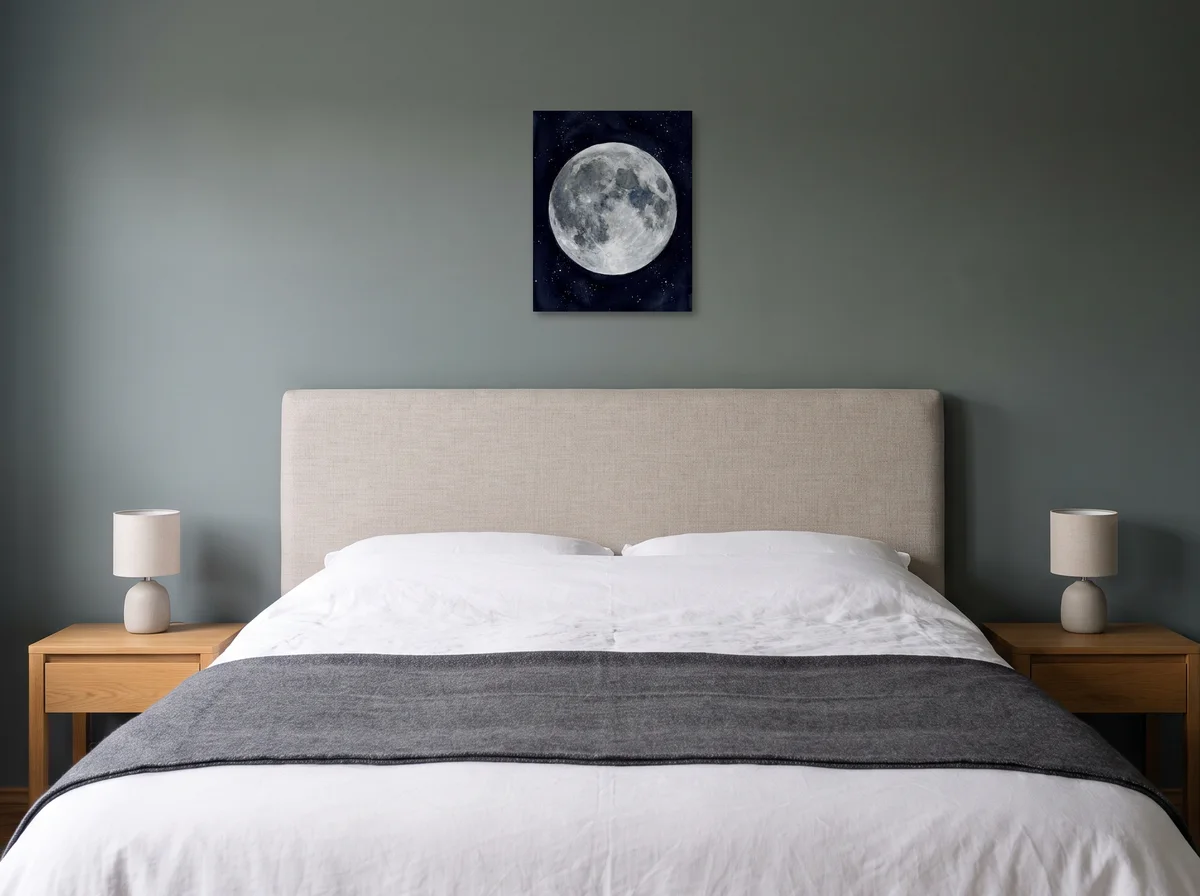
Putting a moon on the wall
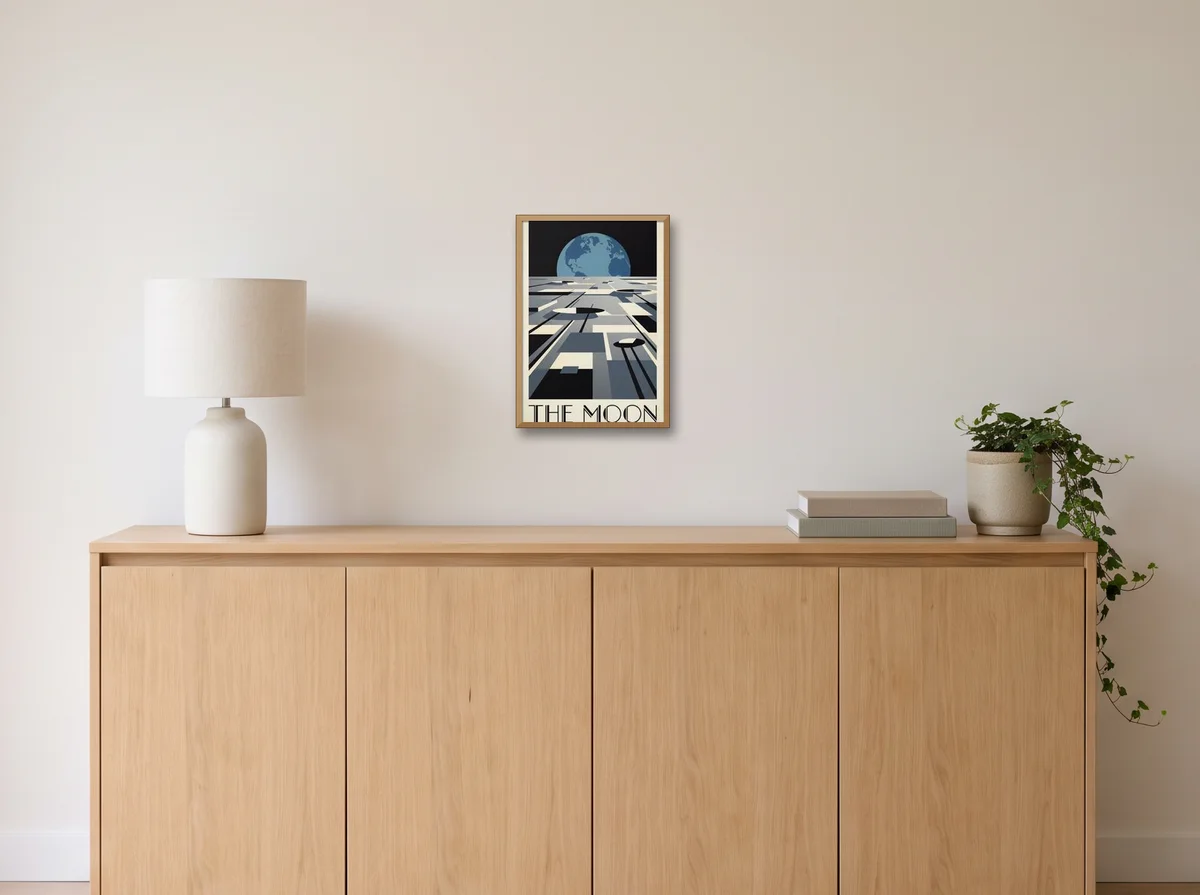
A moon phase print is one of the few decorative objects where the picture can be wrong: the phases in the wrong order, a terminator on the wrong side, a crescent that could not exist. How to tell an accurate moon phase print is the checklist, and it applies wherever you buy one. Our own moon and lunar wall art is the range it describes.
Written by Craig Fearn, Aphelion Prints. Last updated .