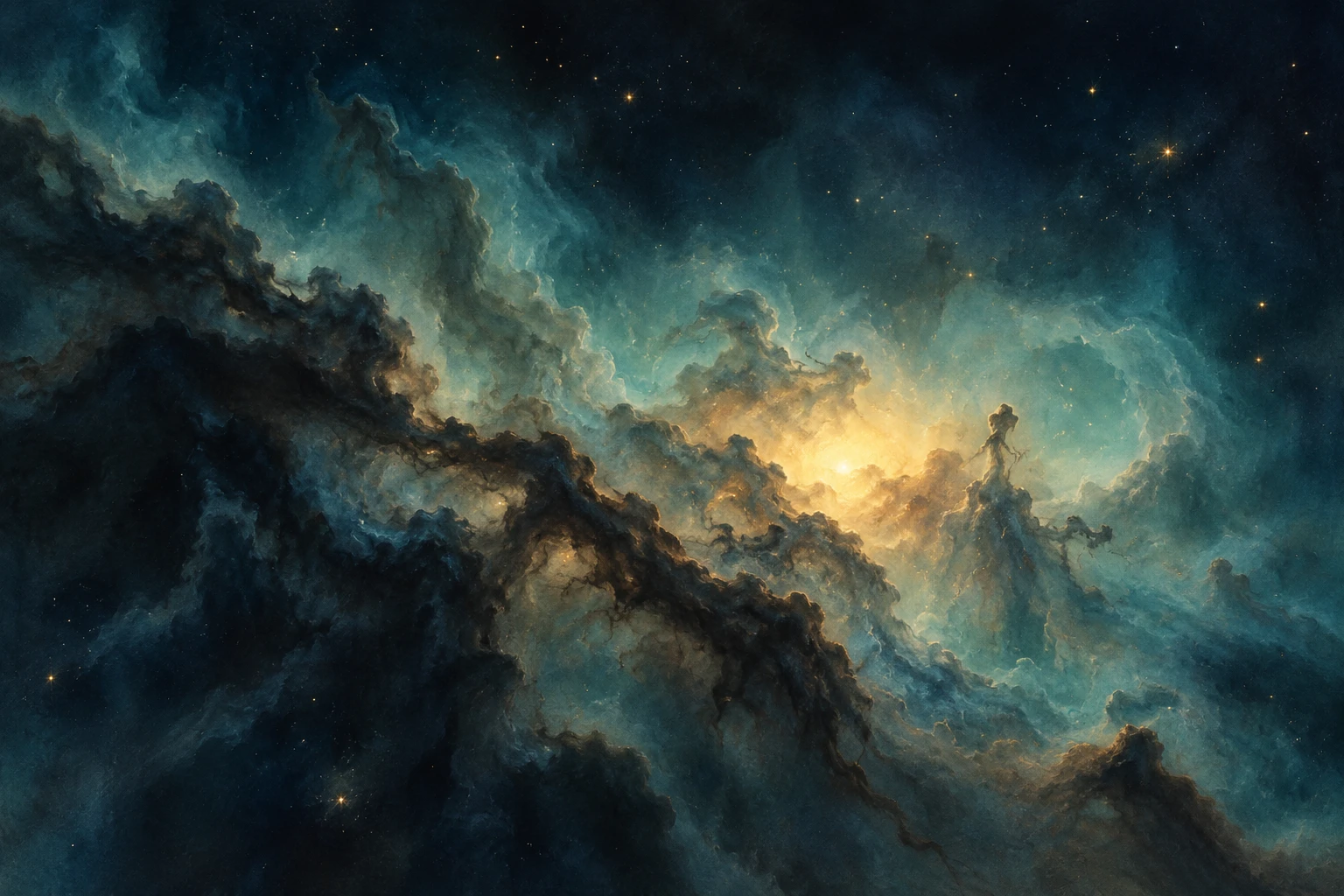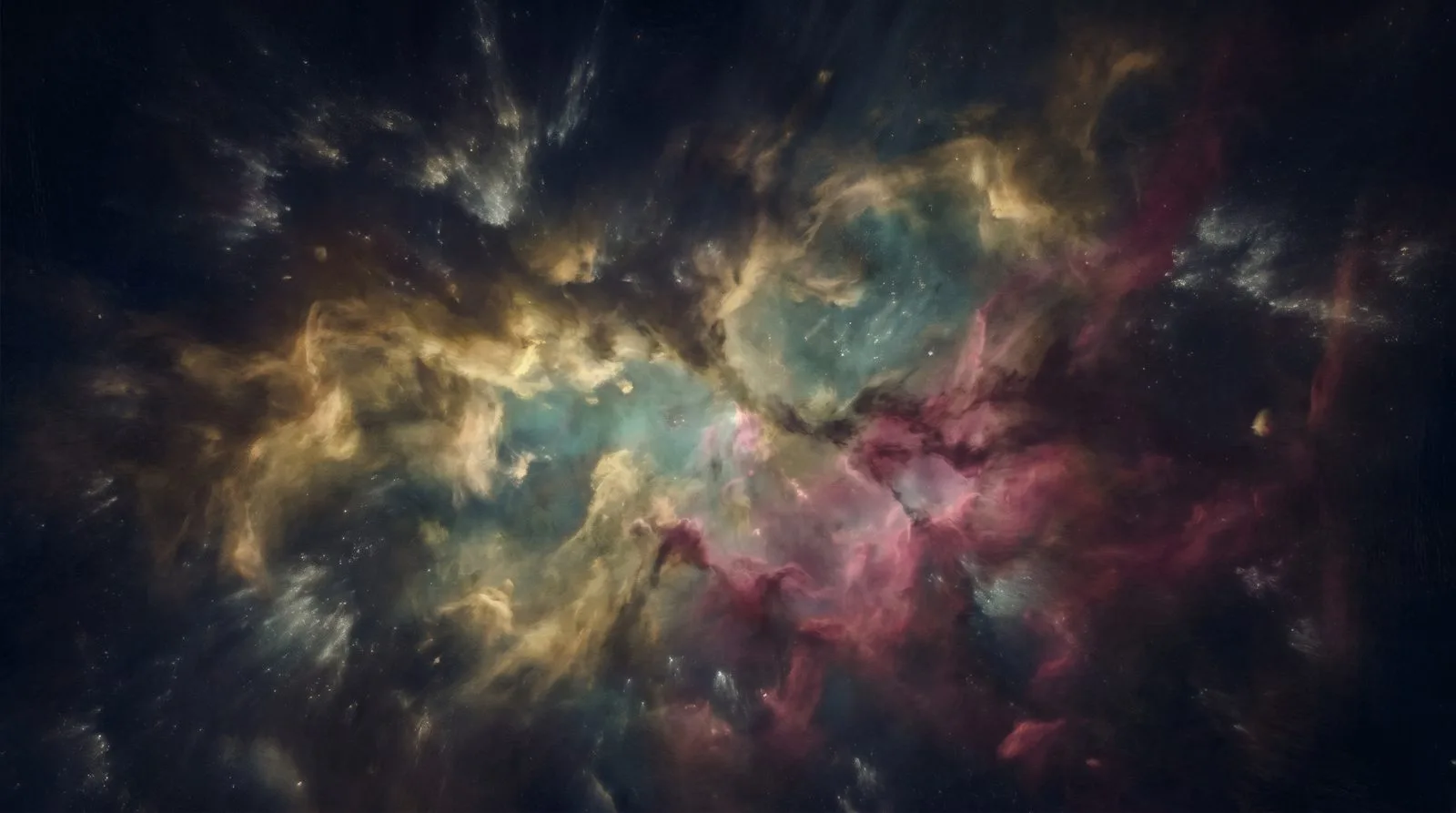
Illustration for this guide: a nebula of the kind described below.
Nebula meaning, in one sentence
NASA puts it as plainly as it can be put: Nebulae are giant clouds of gas and dust in space.
Everything else (the colours, the pillars, the names) follows from what the gas is doing and what is lighting it. If you want them on a wall rather than explained, the nebula prints show the same kinds of object.
What is a nebula?
A nebula is an interstellar cloud of gas and dust (mostly hydrogen and helium, with traces of heavier elements) drifting in the space between the stars. Some are the cradles in which new stars condense and ignite. Others are what dying stars shed, their outer layers pushed back into the dark. The word itself comes from the Latin for cloud, and for centuries it named any faint, fuzzy smudge in the sky that refused to resolve into a point of light.
Nebulae are vast but tenuous. A typical one spans many light-years, yet the gas inside it is barely there: NASA gives a density "as low as 0.1 atoms per cubic centimeter", against "about 10 million trillion molecules" in the same volume of the air we breathe. What we see is not solidity but light: gas made to glow, starlight scattered off dust, or a silhouette pressed against a brighter background. They come in four main types, each lit a different way, and NASA draws the same four lines: emission nebulae "emit their own light", reflection nebulae "reflect the light from nearby stars", dark or absorption nebulae "don't emit or reflect light, but block light coming from behind them", and planetary nebulae "form during the death of low-mass to medium-mass stars".
The four main types of nebula
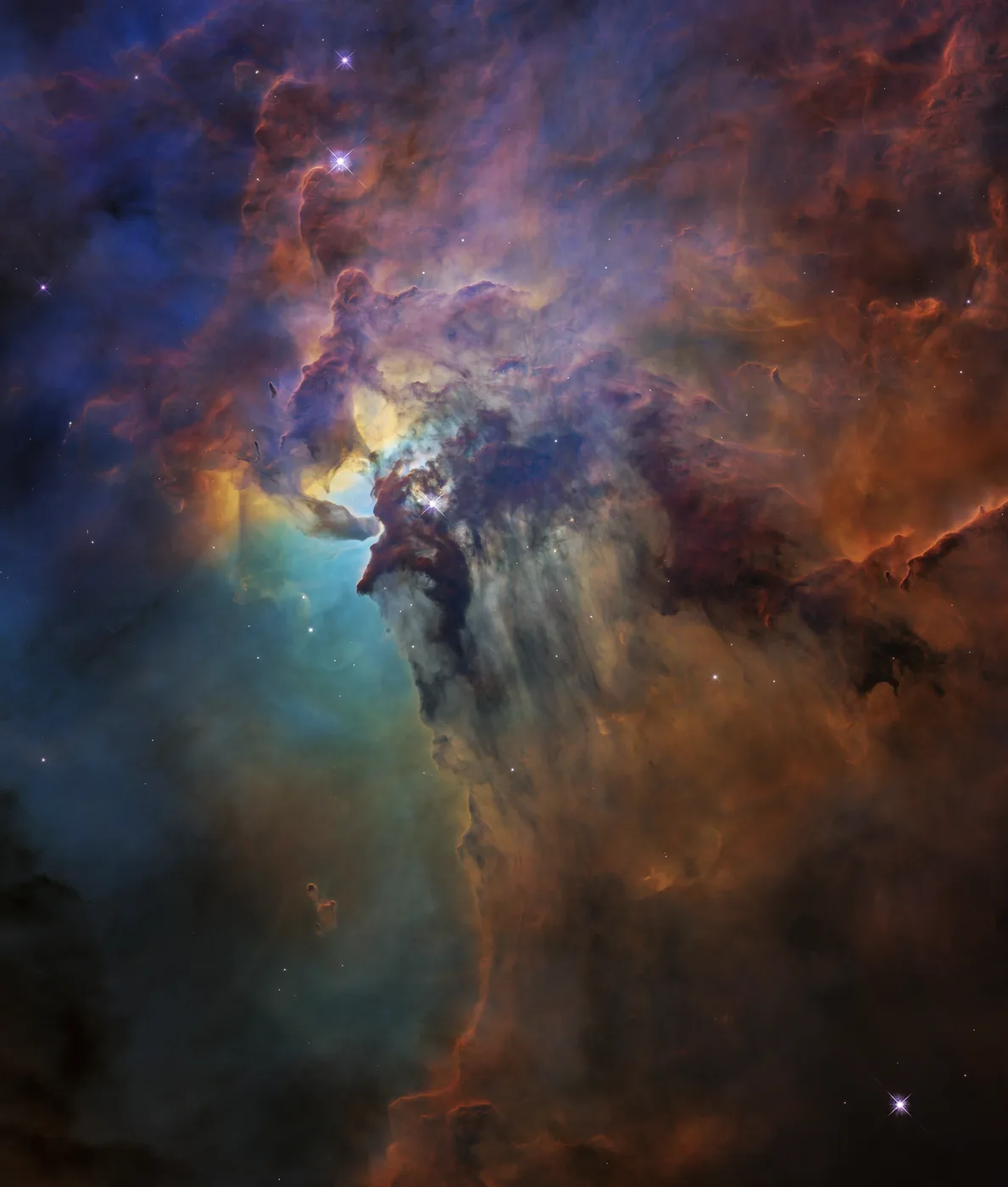
Emission nebulae
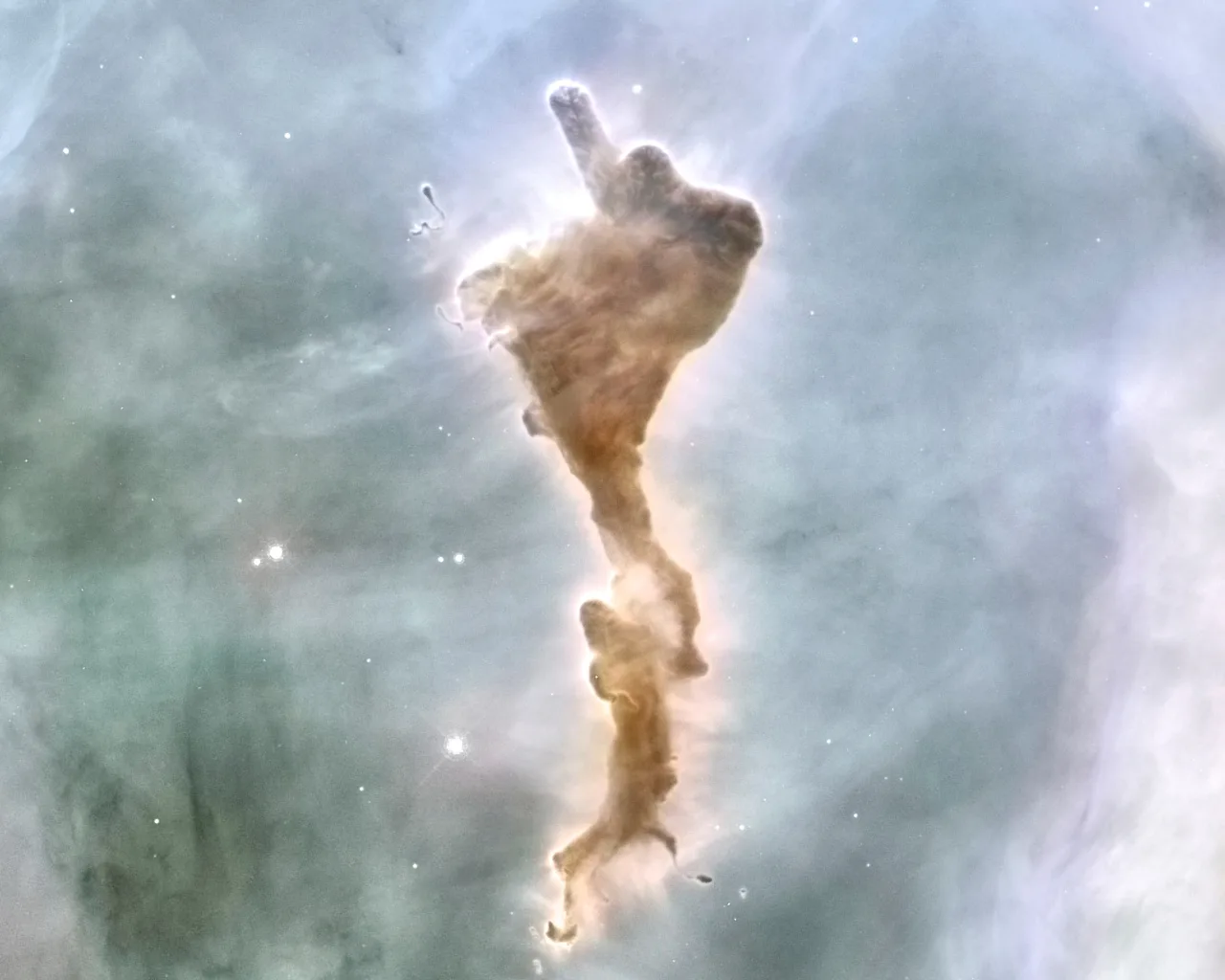
An emission nebula glows by its own light. Hot young stars buried within it pour out ultraviolet radiation, which strips electrons from the surrounding hydrogen. As those electrons recombine, the gas re-emits the energy as light, most famously the deep red of glowing hydrogen. The Orion Nebula is the classic example, a glowing stellar nursery visible to the naked eye below Orion's belt. The star-forming pillars of the Carina Nebula belong to the same family, sculpted ridges of gas being eaten away by the radiation of the stars they helped create.
Reflection nebulae
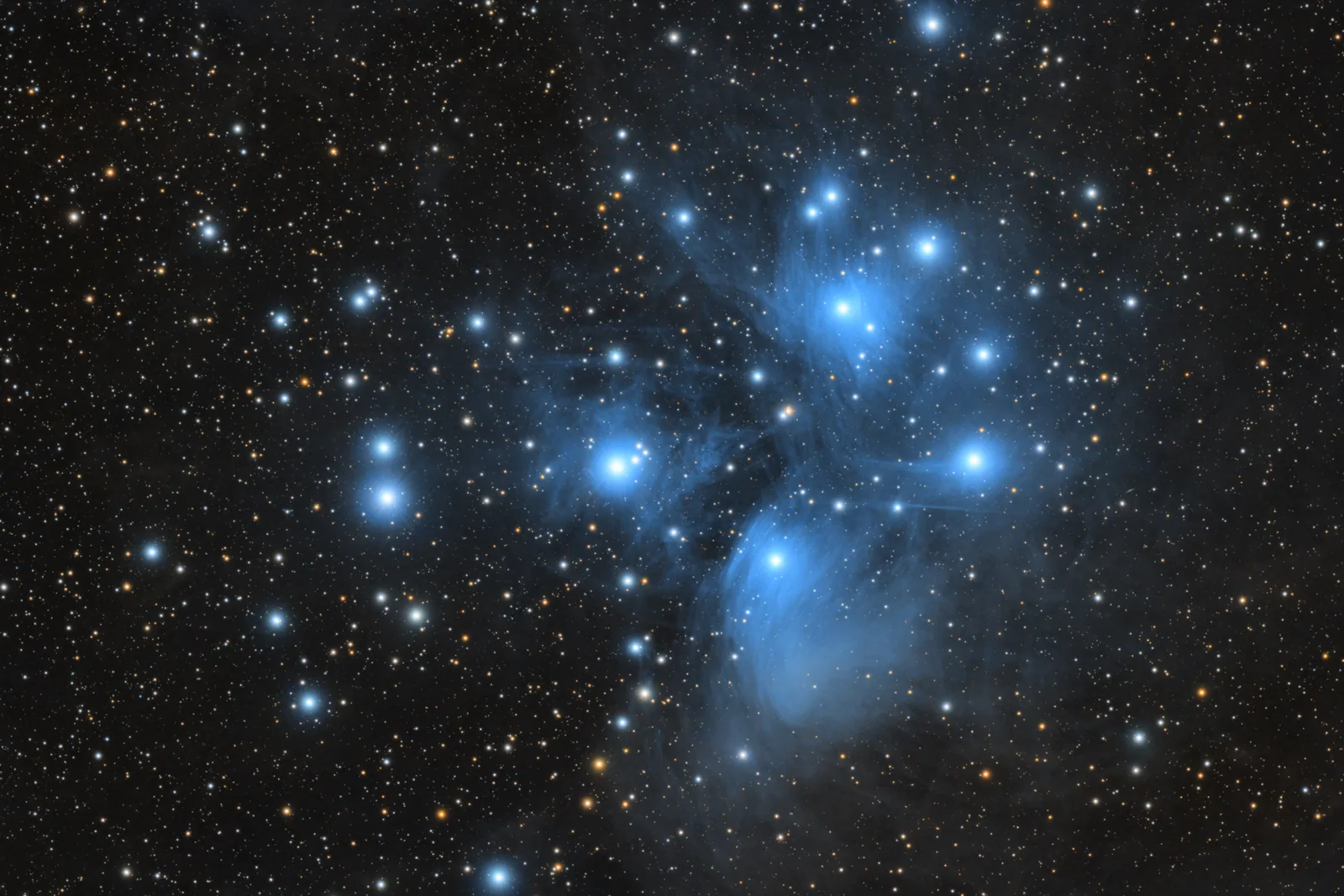
A reflection nebula does not glow on its own. Its dust scatters the light of nearby stars, the way fine particles in the air scatter sunlight: which is why these nebulae tend to look blue. The dust around the Pleiades, the bright cluster known as the Seven Sisters, is the best-known example: a soft blue haze around hot young stars. NASA notes that the nebulosity there is an independent cloud drifting through the cluster, not gas left over from the birth of those stars.
Dark nebulae
A dark nebula has no light of its own and reflects none. It is a cloud of cold, dense dust so thick that it blots out the stars behind it, appearing as a starless patch or a shadow against a brighter background. The Horsehead Nebula in Orion is the iconic example, a column of dark dust silhouetted against the red glow of an emission nebula behind it. Dark nebulae are not empty; they are often the densest, coldest places where new stars are about to form.
Planetary nebulae
A planetary nebula has nothing to do with planets: the name is a historical accident, coined when early astronomers saw small round discs through their telescopes. NASA puts it the same way on the page above, that "these nebulae keep the name, but we know they have nothing to do with planets". It is in fact a shell of gas cast off by a dying Sun-like star in its final stage, lit from within by the exposed, ultra-hot stellar core. The Ring Nebula and the Helix Nebula are the textbook examples: glowing shells marking the end of a Sun-like star.
Supernova remnants
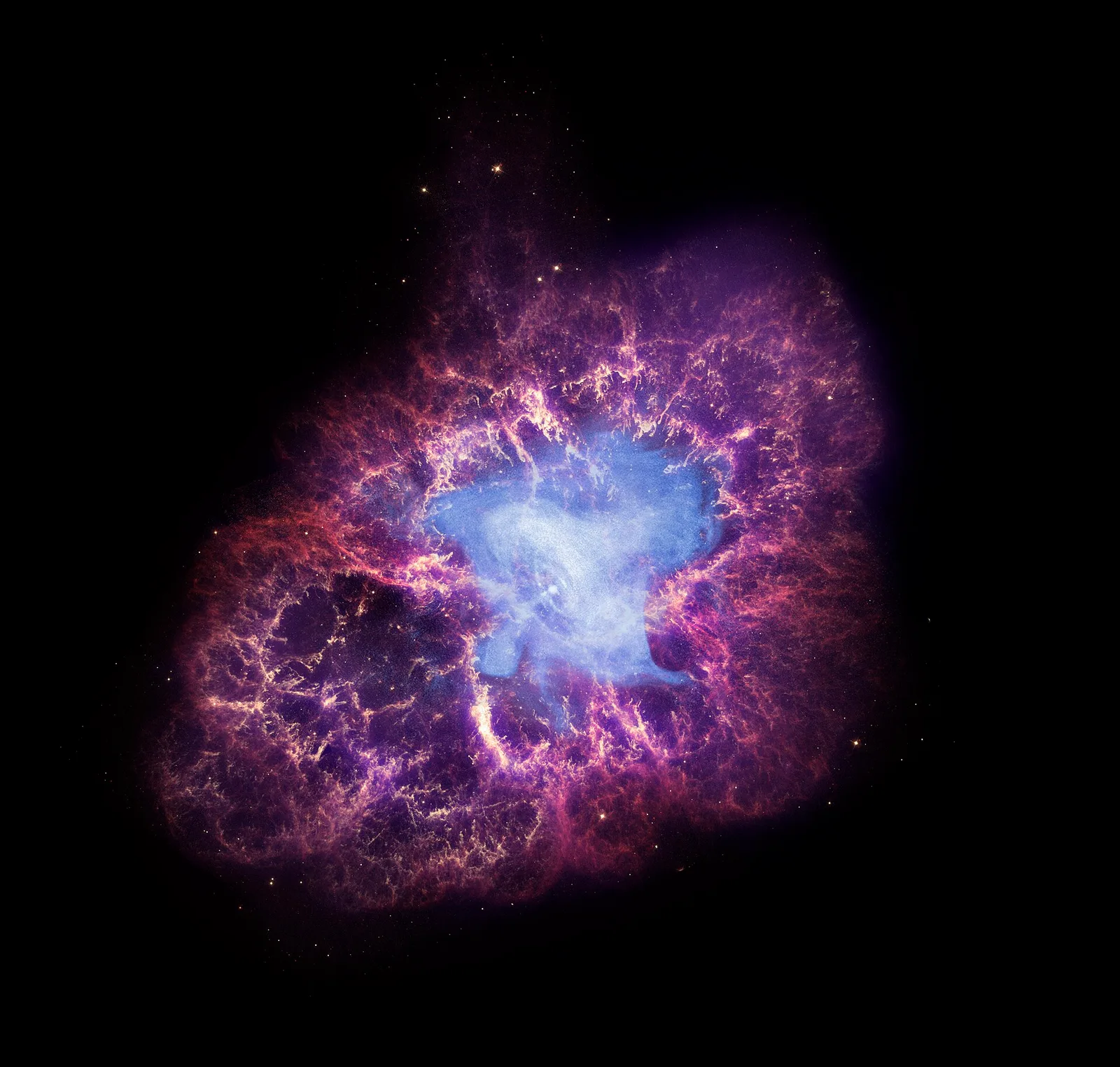
Not every dying star goes quietly. When a massive star runs out of fuel, it collapses and explodes as a supernova, blasting its outer layers into space at enormous speed. The expanding wreckage forms a supernova remnant: a tangled, fast-moving cloud enriched with the heavy elements forged in the explosion. The Crab Nebula is the one usually shown. NASA records that "the supernova explosion itself was seen on Earth in 1054 CE and was bright enough to view during the daytime". These remnants seed the galaxy with the carbon, oxygen and iron from which later worlds are built.
Star birth and star death
Read those types together and a pattern emerges. Nebulae sit at both ends of a star's life. Emission and dark nebulae are mostly about beginnings: clouds collapsing under their own gravity until the cores grow hot enough to ignite. Planetary nebulae and supernova remnants are about endings: the gas a star returns to space as it dies. That returned gas, enriched with new elements, drifts and cools and one day collapses into the next generation of stars. That has been going on for billions of years, and it is where the heavier elements in everything around you came from.
For the stages between those clouds, follow the life cycle of a star. Its two example paths explain why a Sun-like star leaves a white dwarf while a massive star can leave a neutron star or black hole, with the shed gas and surviving core kept distinct.
Nebulae as wall art
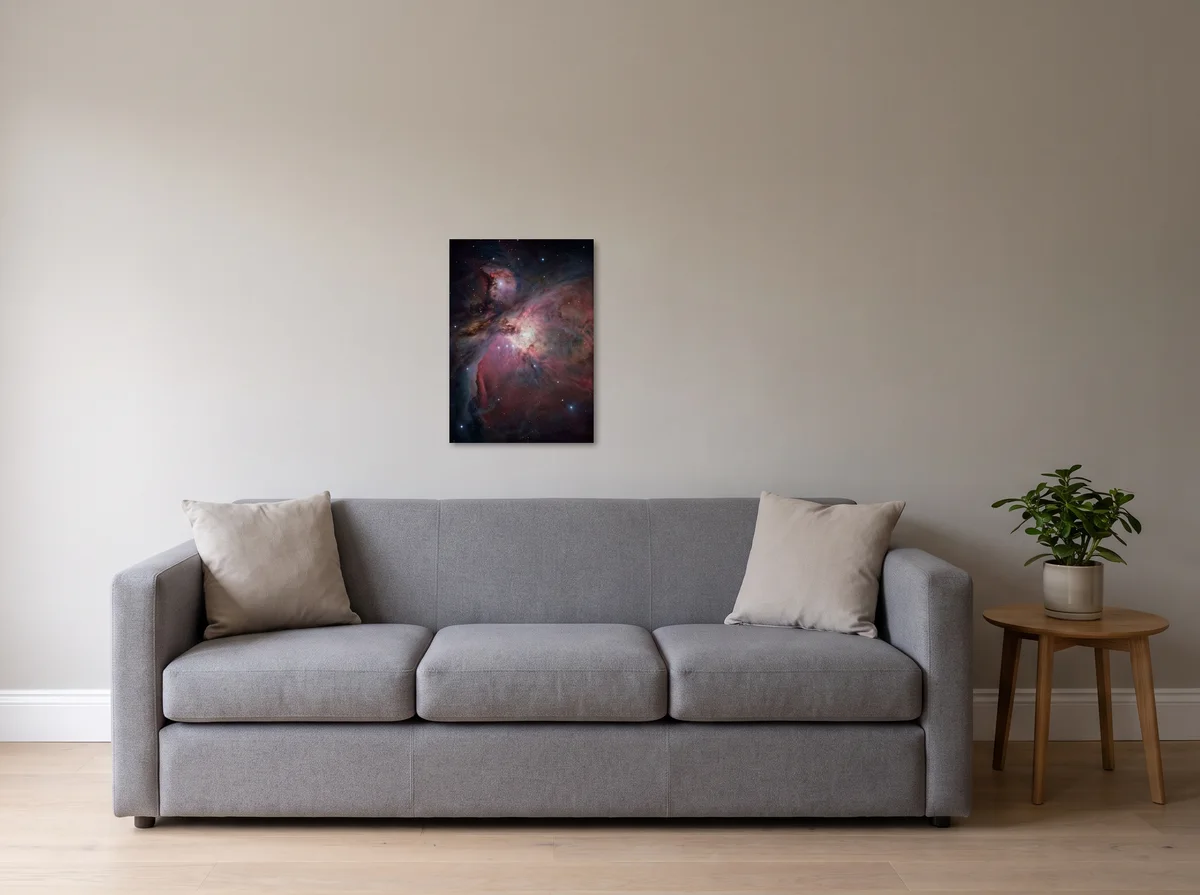
Nebulae suit a wall for a plain reason: the reds and golds of glowing hydrogen, the cold blue of scattered starlight and dust in silhouette against something brighter are strong shapes at any size. Our nebula prints collection draws on the real structures astronomers study: the towering ridges of the Cosmic Cliffs and the luminous heart of the Orion Nebula. If your eye drifts further out, our galaxy prints trace the larger islands of stars these clouds belong to.
More of this kind of thing sits in Looking up. The two closest to this page ask whether nebula photographs are real and how anyone photographs a galaxy.