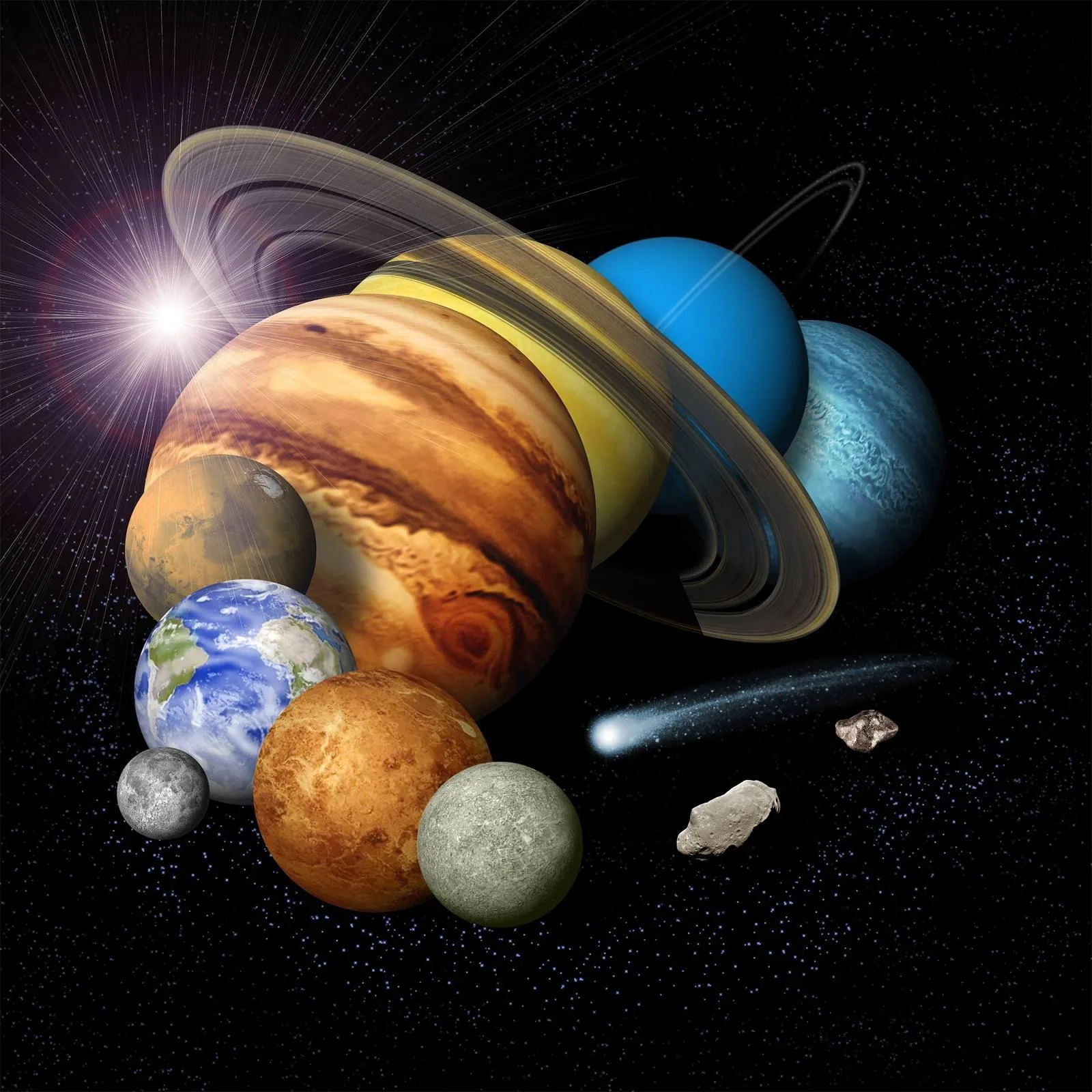
Image: an artist’s montage of the eight planets, not to scale. Credit: NASA/JPL.
Like most pictures of the planets, it is not to scale. What the real proportions look like is further down this page.
Everyone learns the order once and then half-remembers it. So: Mercury, Venus, Earth, Mars, Jupiter, Saturn, Uranus, Neptune. Four rocky worlds close in, four giants far out. That split is not an accident - NASA explains that when the solar system formed about 4.6 billion years ago, only rocky material could survive the heat near the Sun, while ices and gases settled in the cold outer regions and built the giants.
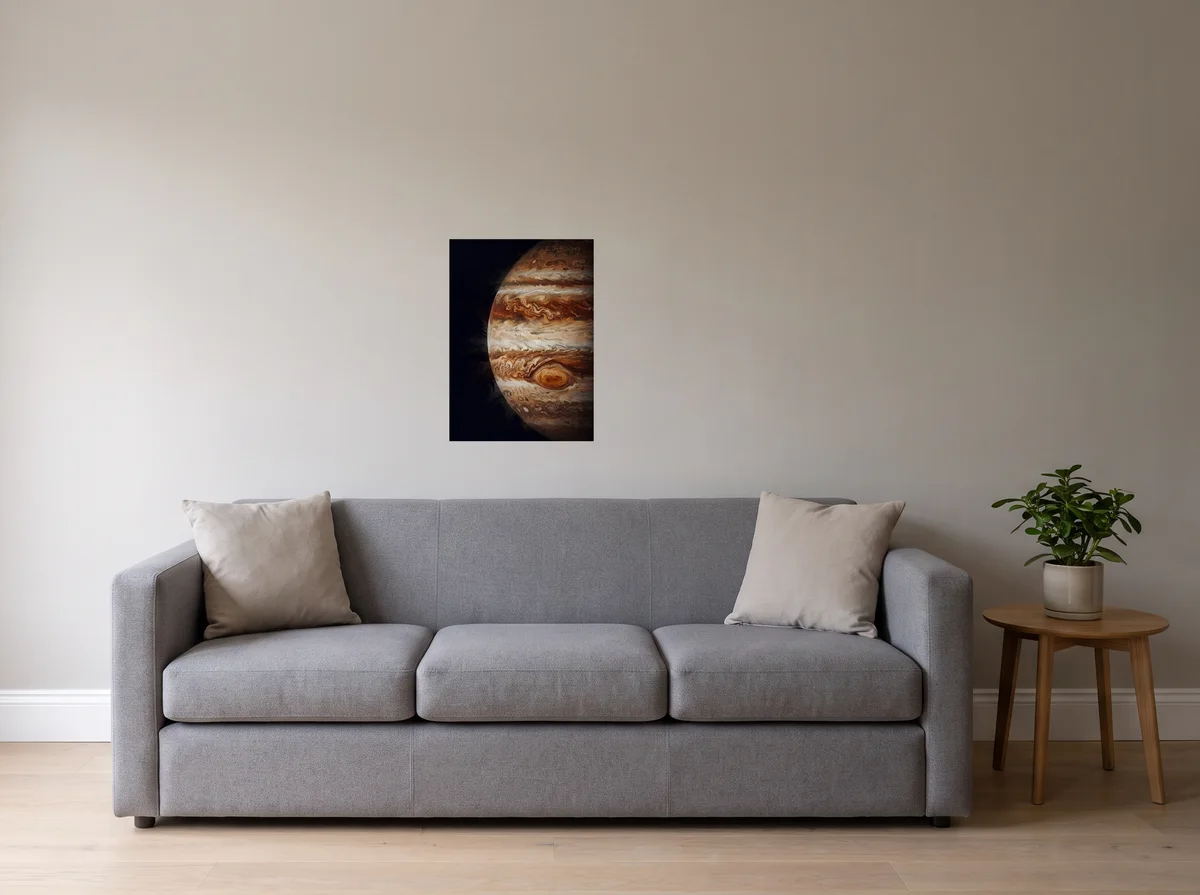
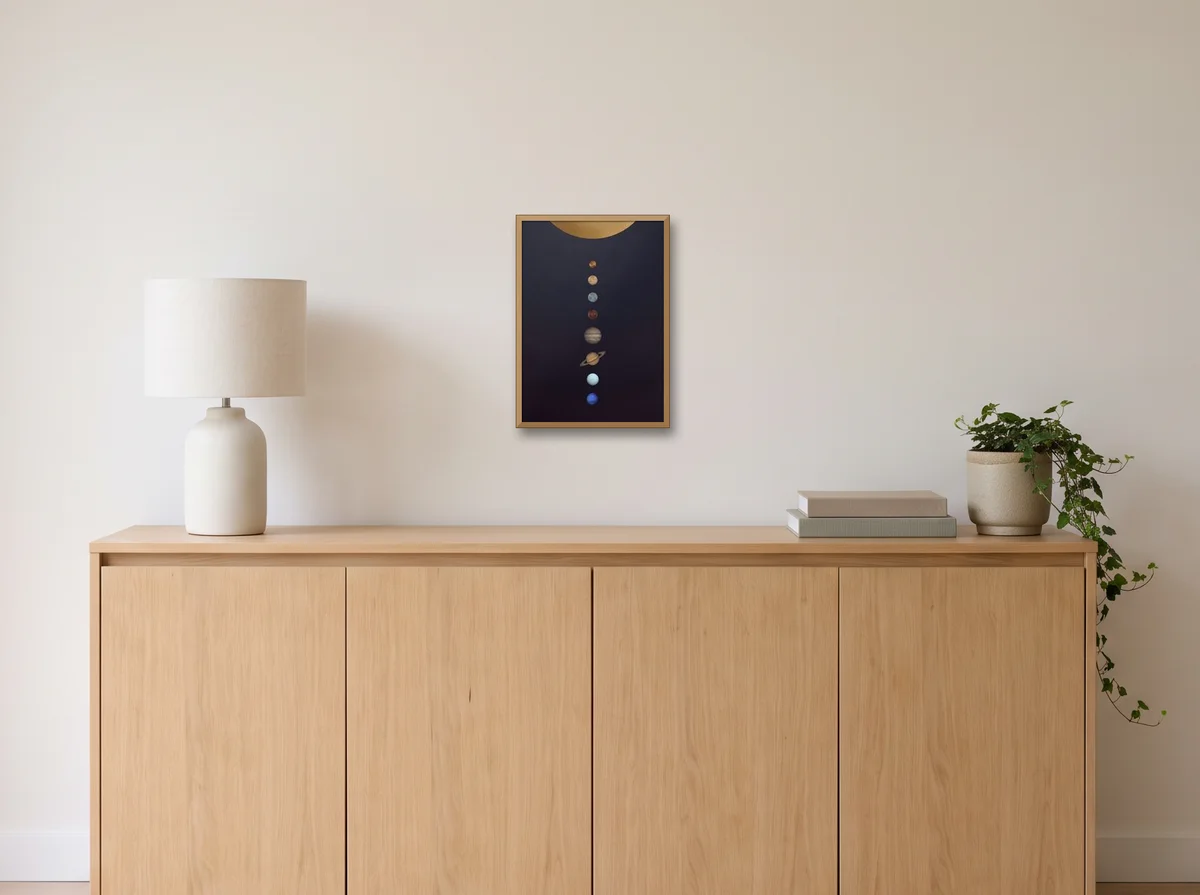
If you’d like the order on a wall, The Solar System, Minimal charts all eight, and Saturn and Jupiter each get a print to themselves.
The eight planets, in order
Each planet below carries its NASA-published figures (all sourced from NASA's planet fact pages, September 2026). Distances are averages; orbits are ellipses, not circles.
1. Mercury - closest to the Sun
A cratered ball of rock with a radius of 2,440 km, a little more than a third the width of Earth. It orbits at 0.4 astronomical units (58 million km) - sunlight reaches it in 3.2 minutes. It is also not the hottest planet, which surprises people; see Venus.
2. Venus - the runaway greenhouse
Venus orbits at 0.72 AU (108 million km), and sunlight takes about six minutes to arrive. NASA calls it Earth's twin for its size, and the hottest planet in the solar system - its thick atmosphere traps heat so well that it out-bakes Mercury, which is closer in.
3. Earth - the reference point
Exactly one astronomical unit from the Sun: 150 million km, eight minutes of sunlight travel time. Every distance on this page is measured in multiples of our own orbit, which is worth remembering when someone says Neptune is "far".
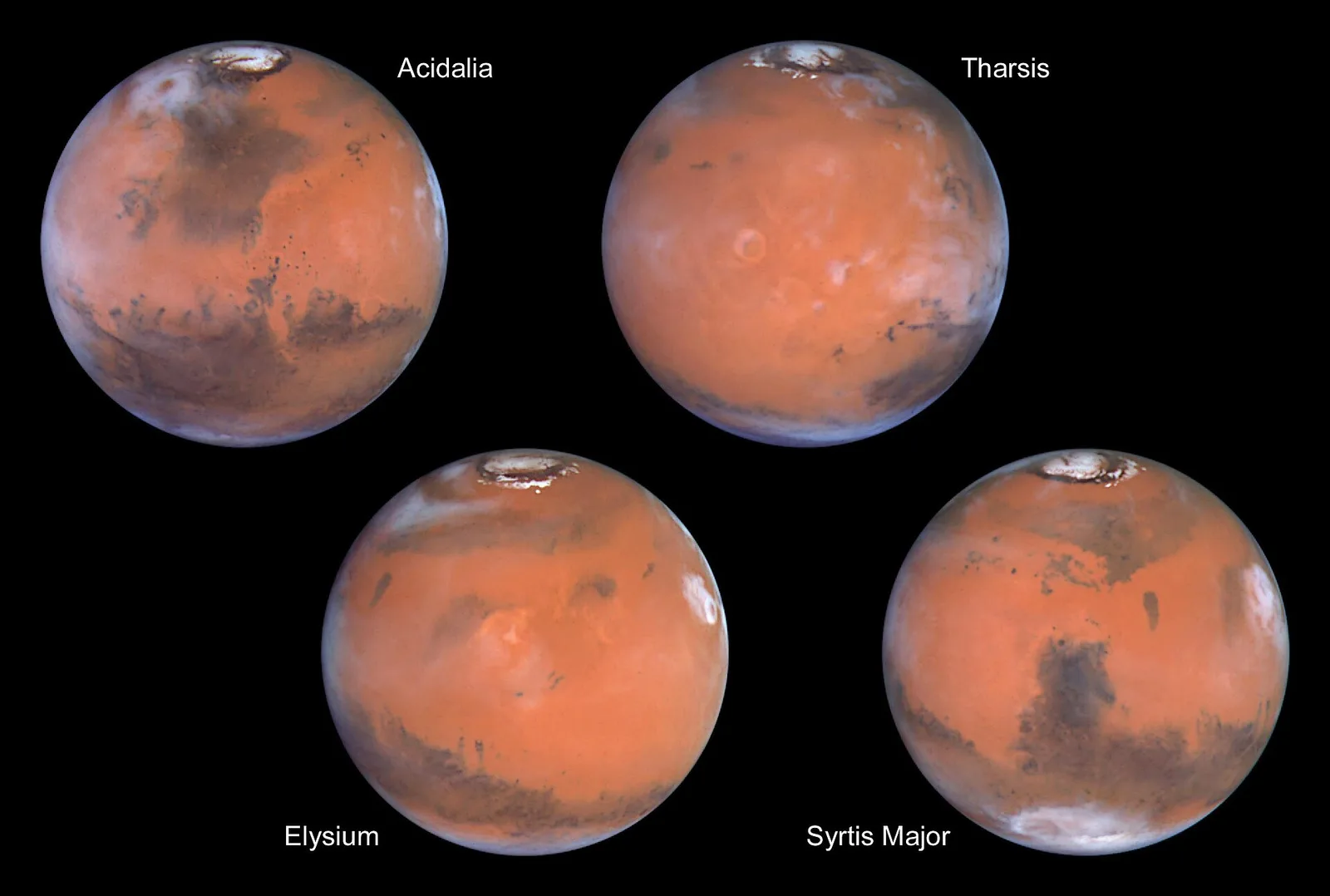
4. Mars - the last rocky one
Radius 3,390 km, about half the width of Earth, at 1.5 AU (228 million km). Sunlight takes 13 minutes to get there. Beyond Mars the character of the system changes completely.
5. Jupiter - the giant that could hold a thousand Earths
Radius 69,911 km: NASA measures it as 11 times wider than Earth, with room for 1,000 Earths inside a hollow Jupiter. It orbits at 5.2 AU (778 million km); sunlight now takes 43 minutes to arrive.
6. Saturn - the one with the rings
9.5 AU out (1.4 billion km) - 80 minutes of sunlight travel. Four of the solar system's planets have rings, but NASA notes none are as spectacular as Saturn's.
7. Uranus - the sideways ice giant
19 AU from the Sun (2.9 billion km). Sunlight takes 2 hours 40 minutes to reach it. An ice giant, not a gas giant: past Saturn the planets are built from different, colder material.
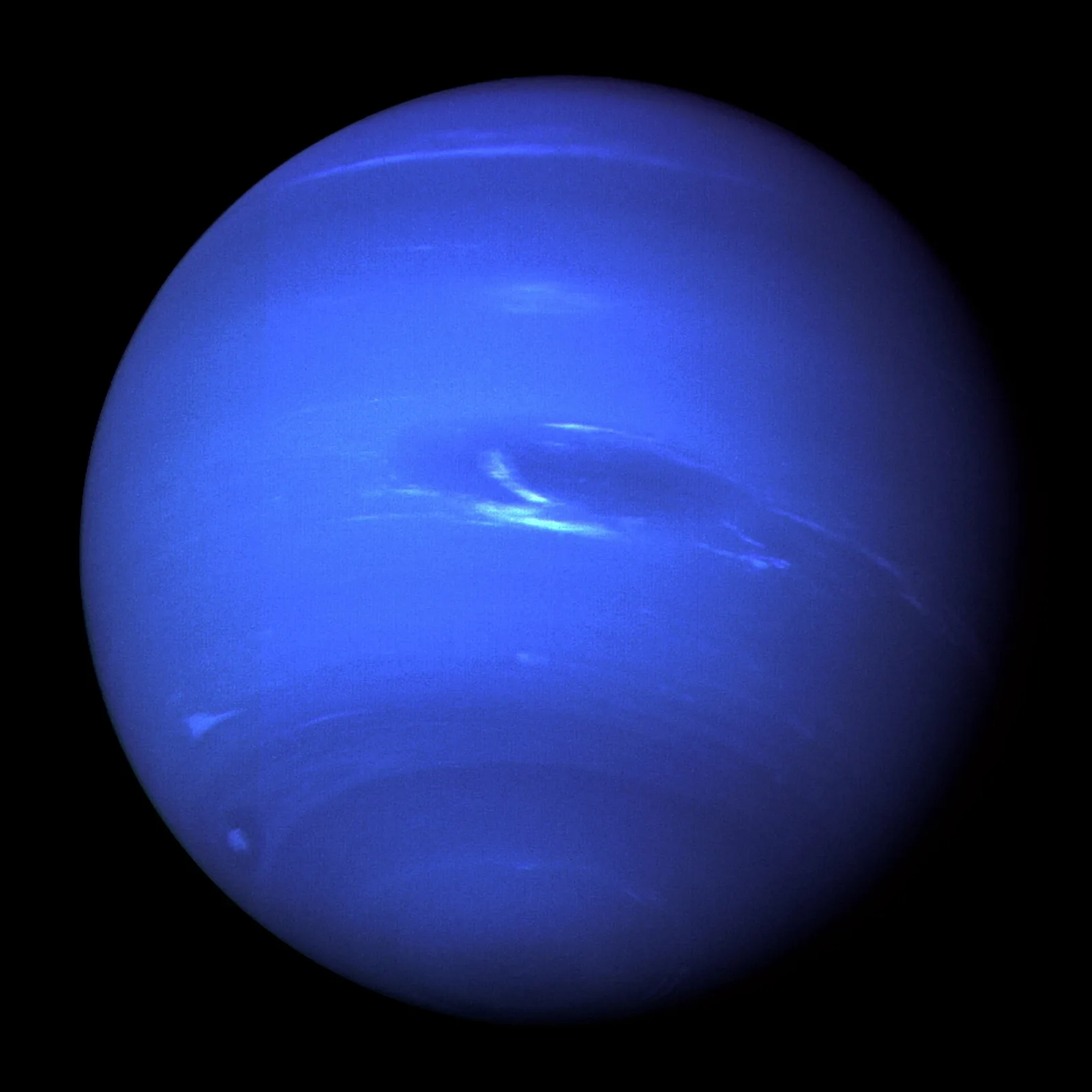
8. Neptune - the edge of the planets
30 AU (4.5 billion km). Sunlight, which reached Mercury in three minutes, takes four hours to get here. Past Neptune lie the Kuiper Belt and the dwarf planets - Pluto's demotion left eight.
An easy trick for remembering the order
The order sticks faster as a sentence than as a list. The widely used mnemonic is My Very Educated Mother Just Served Us Noodles: Mercury, Venus, Earth, Mars, Jupiter, Saturn, Uranus, Neptune. Older versions ended in Nine Pizzas, with Pluto on the end - since the 2006 reclassification the last word has to stand for Neptune instead.
How far each planet is from the Sun
One astronomical unit (AU) is the Earth’s own distance from the Sun, which makes it the easiest yardstick for the rest. Every figure below is NASA’s own, in both units, linked to the planet’s facts page. Where NASA rounds, so does this table.
| Planet | Average distance from the Sun | In AU |
|---|---|---|
| Mercury | 58 million km | 0.4 AU |
| Venus | 108 million km | 0.72 AU |
| Earth | 150 million km | 1 AU |
| Mars | 228 million km | 1.5 AU |
| Jupiter | 778 million km | 5.2 AU |
| Saturn | 1.4 billion km | 9.5 AU |
| Uranus | 2.9 billion km | about 19 AU |
| Neptune | 4.5 billion km | 30 AU |
The jump from Mars to Jupiter is the one worth staring at: 228 million km to 778 million, which is more than the whole inner solar system over again. That gap is why a solar system drawn truly to scale is nearly all empty paper.
How the planets got their names
The five planets visible to the naked eye have been watched for as long as anyone has looked up, and they carry Roman names for a plainly practical reason. NASA puts it: These come from the Roman names. And that’s because the early astronomers in Europe wrote in Latin, and Latin was the language of the Roman Empire.
Uranus and Neptune are different: both were unknown in antiquity, so their names were chosen, not inherited. NASA again: These are Greek or Roman names. These planets weren’t seen by the Greeks or Romans, but because the discoverers wanted their planets to fit in with the existing theme of the mythology.
A convention, in other words, kept up on purpose by people who could have called them anything.
Earth is the exception that gives the game away. It is the one planet in the list with no god attached to it, because it was never a wandering light in the sky to be named after one. It was the ground.
The solar system drawn to scale
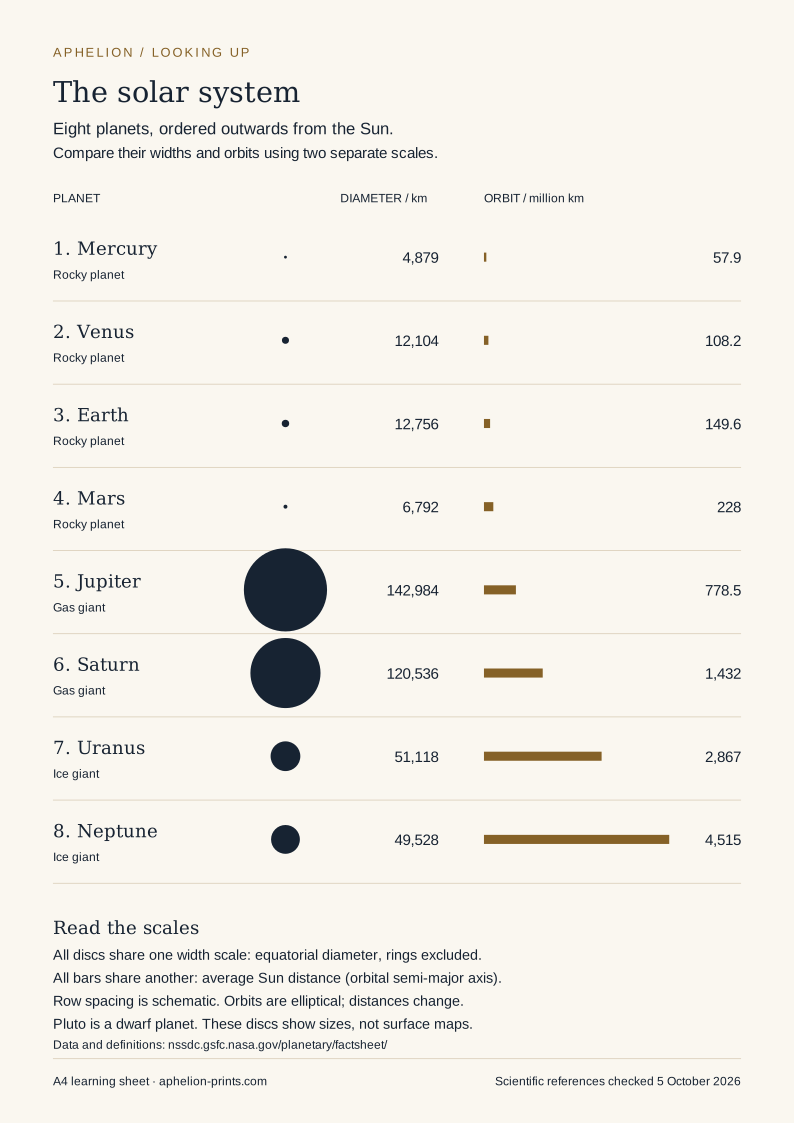
The learning chart below uses one scale for planet widths and another for orbital distances. Its eight labelled discs use NASA's equatorial diameters; the bars use the same source's average Sun distances, or semi-major axes. Equatorial width differs slightly from a planet's mean diameter, particularly for the flattened giant planets. The row spacing is schematic, and Saturn's rings are excluded from its diameter.
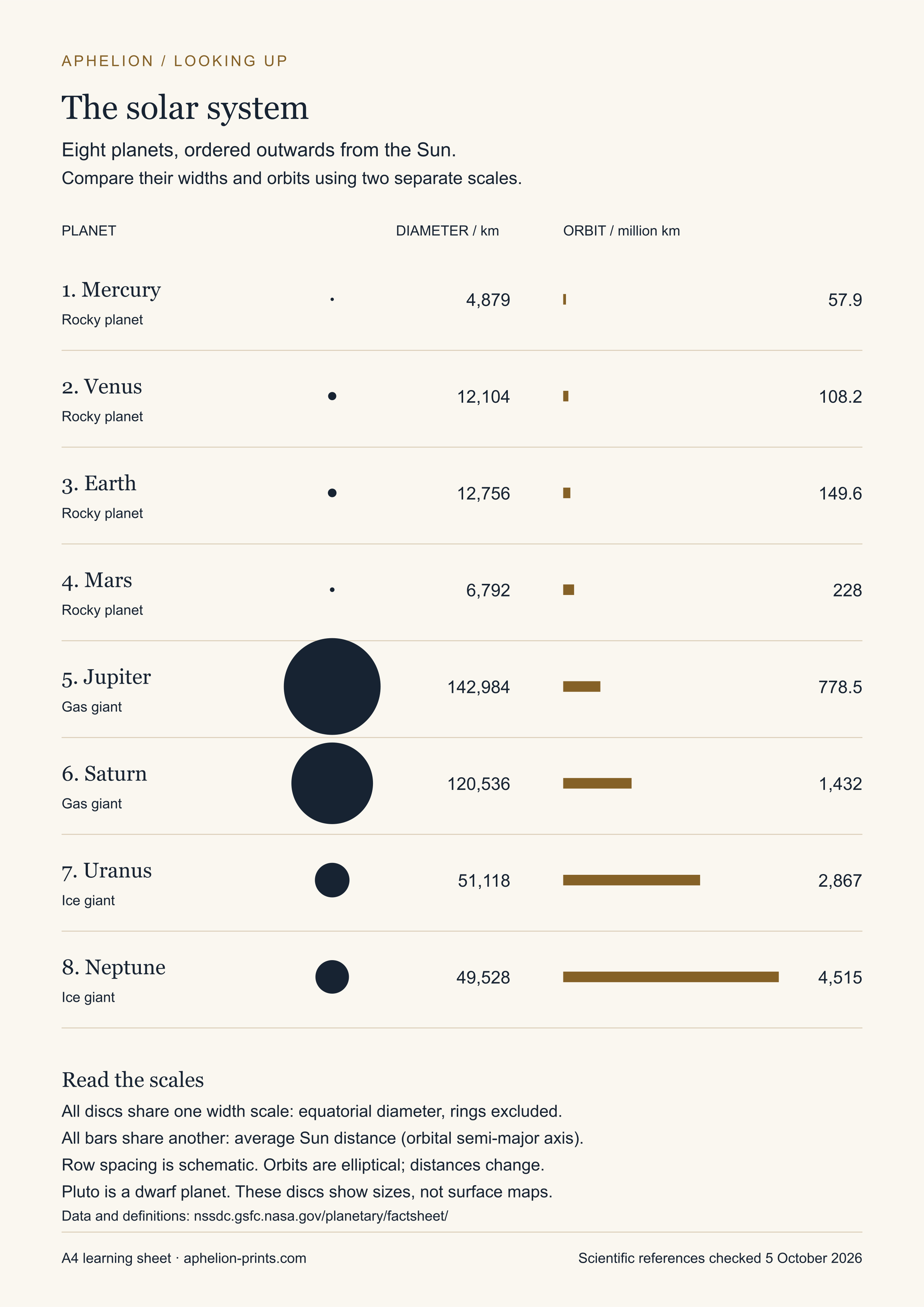
There's a free solar system learning sheet to go with this guide, sized for A4: print PDF, 300dpi PNG or scalable SVG. Print it from the PDF on A4 paper, at actual size.
Now the part most charts leave out. Almost every solar system poster arranges the planets in a tidy row at roughly similar sizes, because the true version is unusable as decoration: at a scale where Jupiter is a grapefruit, Earth is a grape seed and Neptune is four hours of light-speed away.
Two true-scale facts do the work. First, size: Jupiter's radius is 11 times Earth's, and NASA's own comparison is that a hollow Jupiter would hold 1,000 Earths. Second, distance: the rocky planets sit within 1.5 AU of the Sun, while Neptune sits at 30 - the giant planets are not the next chapter of the same neighbourhood, they are a different country.
This is the figure we feel strongly about, because we sell solar system art: a print that shows eight same-sized planets in a row teaches the wrong system. Ours is a chart of the neighbourhood, sized by character, not true scale, and we’d rather say so than pass it off as a scale diagram.
What about Pluto?
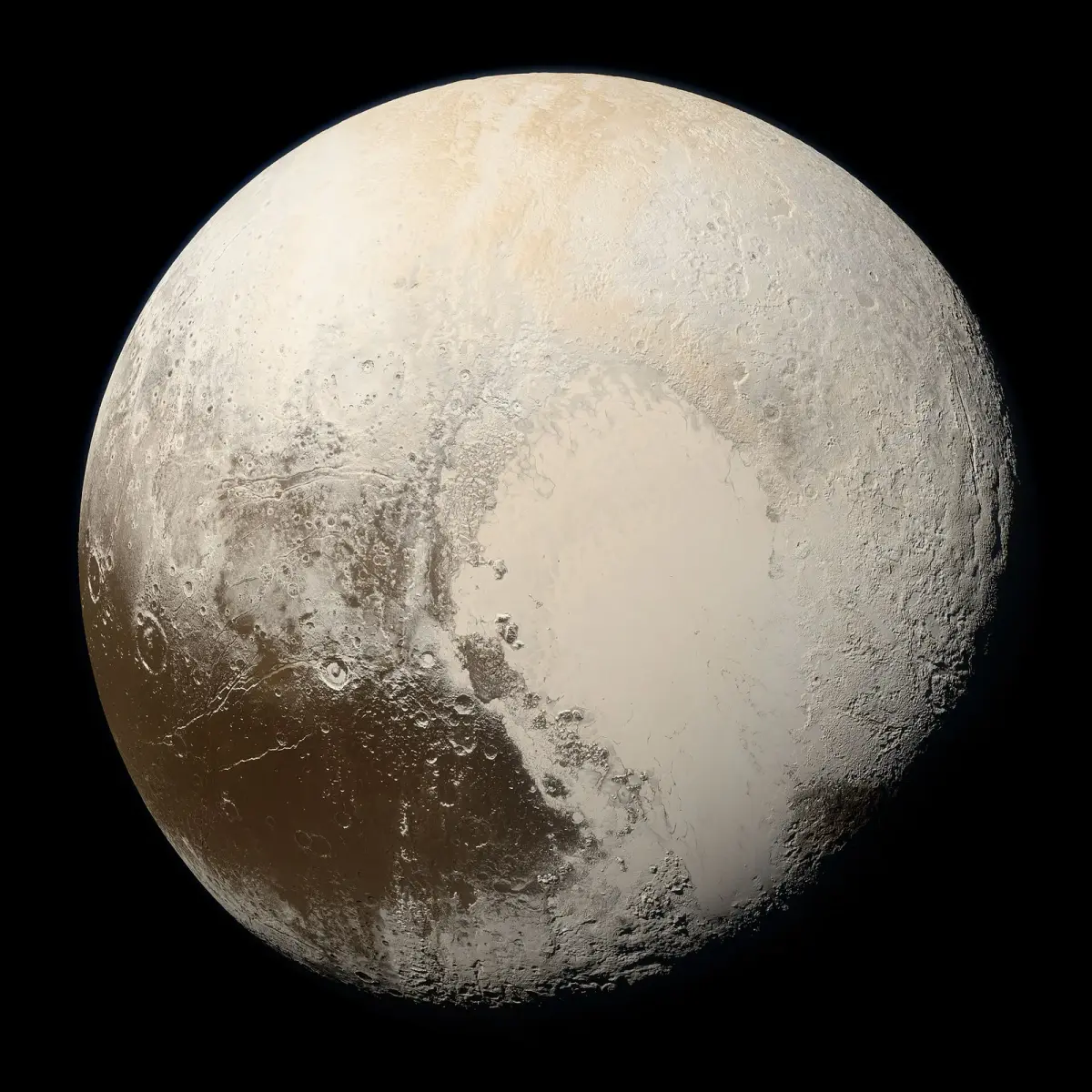
Pluto was the ninth planet from 1930 until 2006, when the International Astronomical Union adopted a formal definition of "planet" that Pluto does not meet: a planet must have cleared its orbital neighbourhood of similar-sized objects. NASA's own count is firm: eight planets, and five dwarf planets in order of distance from the Sun - Ceres, Pluto, Haumea, Makemake and Eris. We keep Pluto off the ordered list and say so plainly - sentiment is fine, but the order above is the one the textbooks now carry.
Seeing the order for yourself
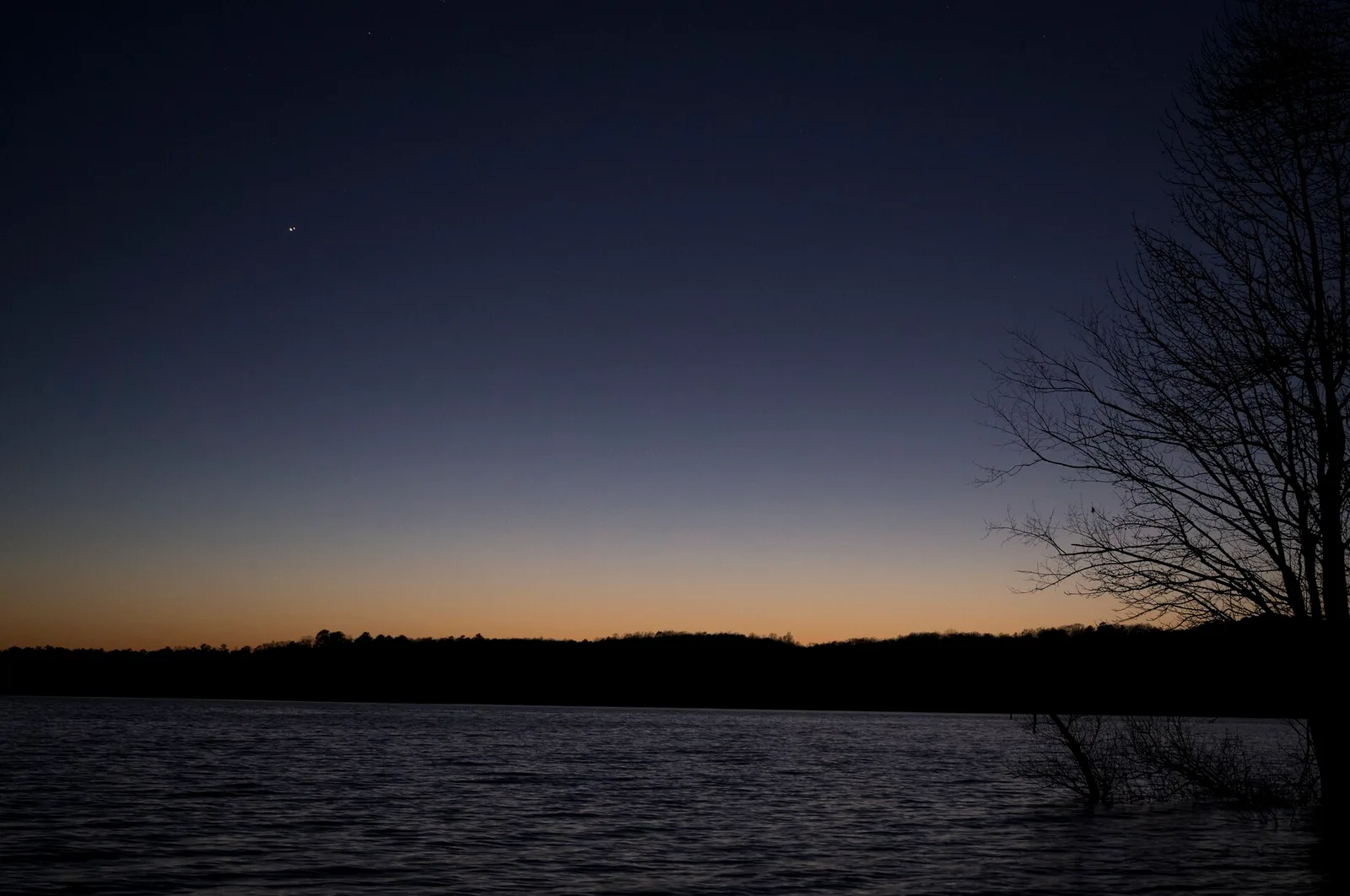
The rocky planets are where the naked-eye show is: Mercury hugging the horizon near sunrise or sunset, Venus brilliant at dusk or dawn, Mars visibly reddish when it is close. Jupiter and Saturn are also visible without a telescope. A telescope reveals finer details, including Jupiter's large moons and Saturn's rings, as NASA's skywatching FAQ explains. NASA's What's Up page publishes a monthly guide to what is visible and where.
For the starry background behind all of it - the constellations and the stars with names old enough to have meanings - read the star names guide, next in Looking up. The order itself, shown as a set, is what our solar system poster is.