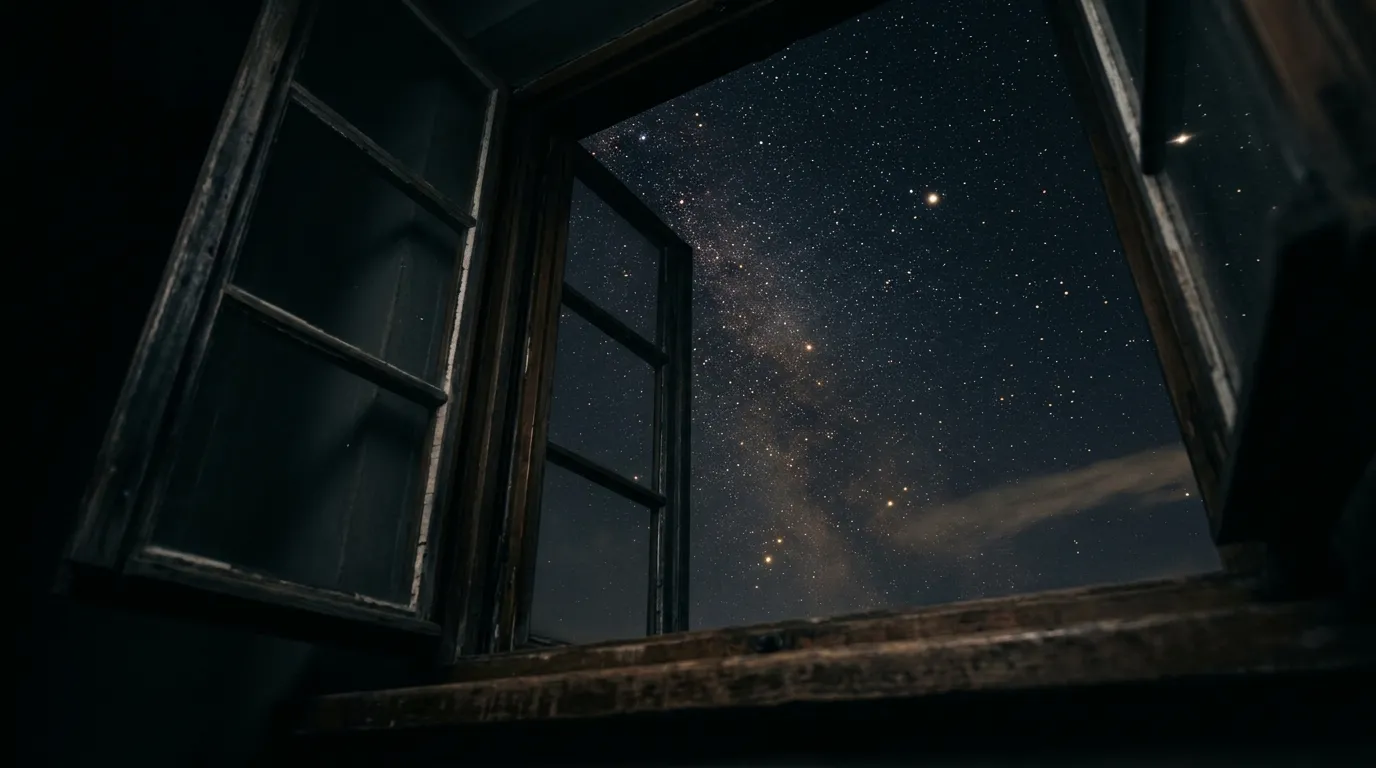
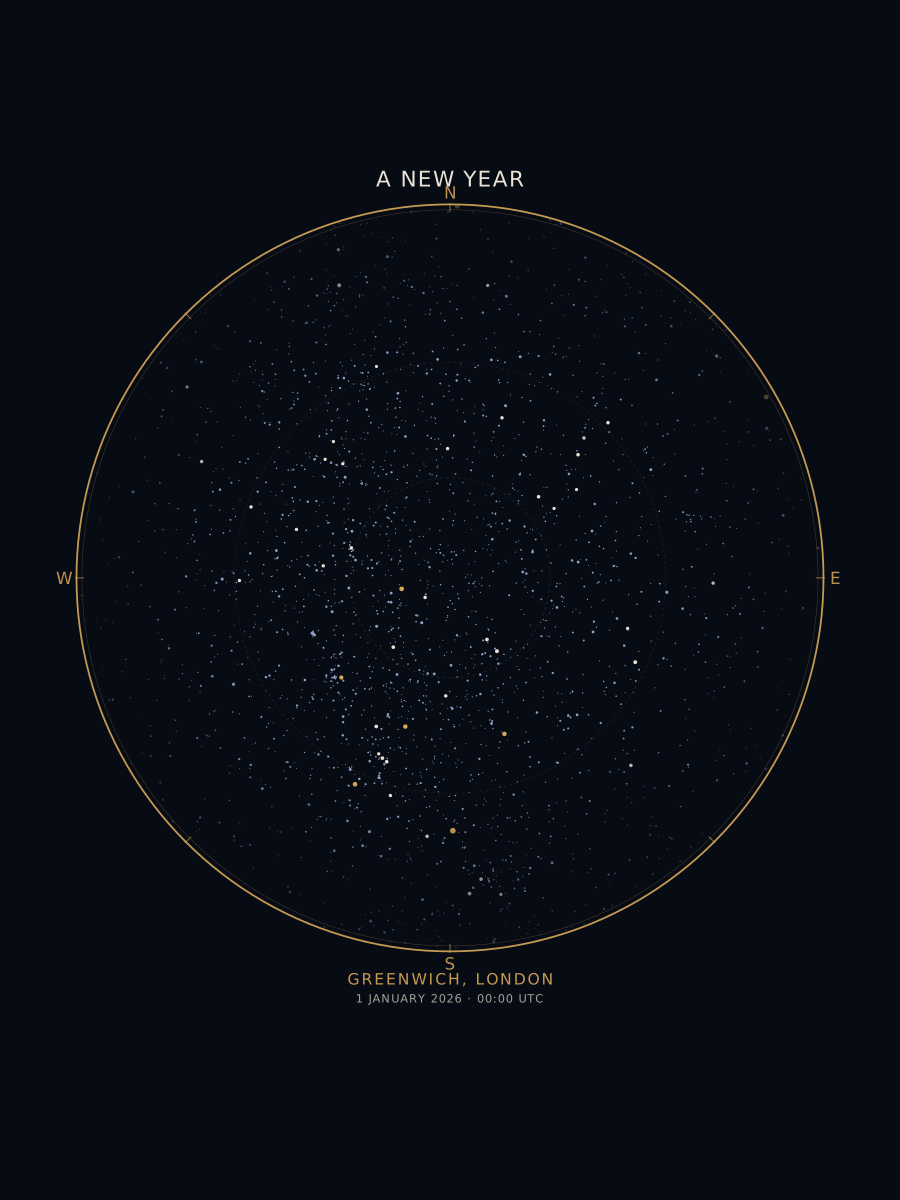
There are two ways a piece of sky becomes yours. One is a date: a star map print is the sky over a named place at a named hour, and it's the same sky whoever orders it, which is exactly what makes it specific to one night. The other is a photograph of your own, either restyled in one of ten styles or printed as it stands. These pages cover both, and they say what each one can and can't give you.
What each page answers
| Page | What it answers |
|---|---|
| What a star map shows | Why the date, time and place change the chart, and how to choose a moment |
| Star naming or a star map? | What a bought star name is, and what a calculated chart records |
| What is a star map print? | The projection, the 5,044 stars, and why east sits on the left |
| The sky on the day you were born | Where to find a birth time, and free ways to see that sky |
| How accurate a star map is | Time zones, star counts, and four checks before buying any chart |
| Constellation prints and star charts | Atlas-style plates of the northern sky and the zodiac figures |
| Your photo as cosmic art | Nebula Watercolour, Starry Night and Constellation Lines |
| A photo in a painted style | How a painted restyle works, step by step |
| A photo as line art | What the Line Art style draws, and what it can change |
| Four photo styles compared | Which kind of photograph each of four styles flatters |
| Photo to canvas, in full | Sizes, resolution, frames and cost for UK buyers |
| Your photo on canvas | The upload that checks your pixels against each canvas size |
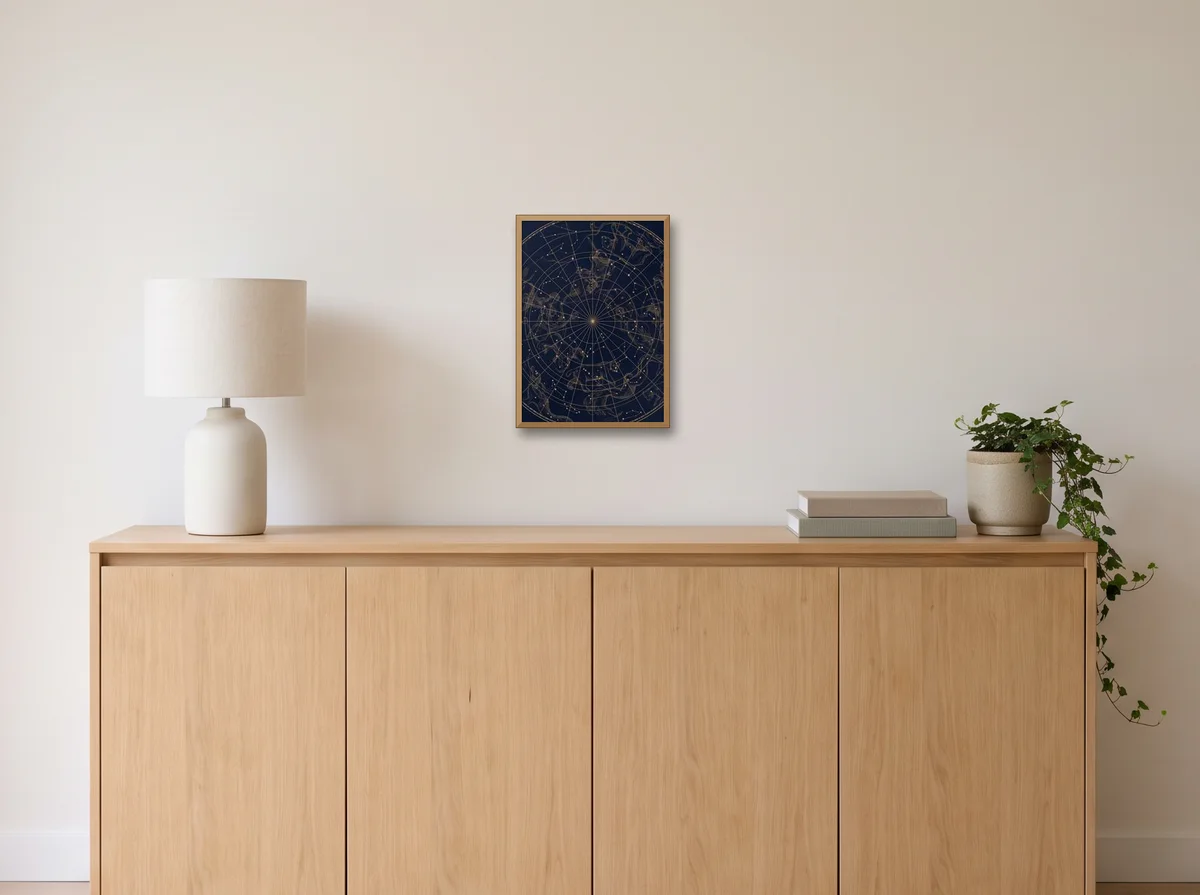
A date: the star map pages
Three pages explain the chart and two put it to the test. Start with the gift guide if the occasion is settled but the moment is not: it covers what changes when the time or place moves, and what to do when the time is unknown. The birth-sky page adds a detail that catches people out. In England and Wales a birth certificate does not normally record the time of birth, while a Scottish one does. Read the accuracy page before buying a chart from anyone. Ours plots the catalogue stars brighter than magnitude 6.0, roughly what an eye could see from a dark site, and a chart that boasts millions of stars is adding texture, not accuracy.
If the plan is to name a star, read the naming page first. The International Astronomical Union runs no commercial naming service, so a purchased name is a dedication kept in the seller's own register.
A photograph: restyled or printed as taken
With your own photo, the first choice is whether it should change at all. Restyling sends it through one of ten styles on Cosmic Canvas. The painted, line art and four-styles pages show what each look does to a picture, and the cosmic art page covers the three night-sky styles. Nothing is printed until you approve a free watermarked preview. The other route keeps the photo as it is: the canvas upload measures its pixels at each size and blocks any size that would print below 140 dpi, and the full guide adds frames and cost.
Next: on the wall
The stage that follows this one is on the wall: Size, finish and resolution. What a poster, a framed print and a canvas each do to the same picture.
Have a date without a place or birth time? A Moon-phase keepsake uses a clear noon UTC reference. Make a personalised Moon-phase print. Every date uses 12:00 UTC; the north-up surface and lighting are schematic.
Written by Craig Fearn, Aphelion Prints. Last updated .