AI-made illustration. The framed chart in the hero is decorative, not a computed map of a real event. The Greenwich example below is a calculated star map.
What does naming a star buy?
Commercial naming packages usually offer a dedication recorded in a provider's own register, with a certificate or other keepsake. Contents vary: some include a chart, a digital record or a gift box. Read the particular package description rather than assuming they all include the same things.
The distinction is the name's status. The International Astronomical Union's FAQ, under "Can I buy a star?", explains that the IAU does not offer a commercial naming service. Its detailed explanation of buying star names states that purchased commercial names have no formal astronomical validity.
A symbolic dedication can still mean something to its recipient. It is a personal gesture, rather than ownership of a star or a change to the name astronomers use. That is the expectation to settle before choosing the gift.
Who gives stars their astronomical names?
The IAU's Working Group on Star Names standardises proper names for research, drawing on historical and indigenous naming traditions. Public NameExoWorlds campaigns are a separate process from private gift purchases. A proper name also sits alongside a star's catalogue designations: one object can have several useful identifiers.
If the names themselves are what interests you, our guide to star names and their meanings looks at familiar examples such as Sirius, Aldebaran and the stars in Orion.
What does a personalised star map record?
A personalised map charts the stars above the horizon for a chosen place, date and time. Changing those inputs changes the chart. You can add a title or dedication, but that wording does not rename any of the stars.
It is a calculated chart, not a photograph. It does not reconstruct the weather, buildings or trees that might have blocked someone's view. Its point is to keep the sky's arrangement for a meaningful moment: a birth, a wedding, a first meeting or a date you choose together.
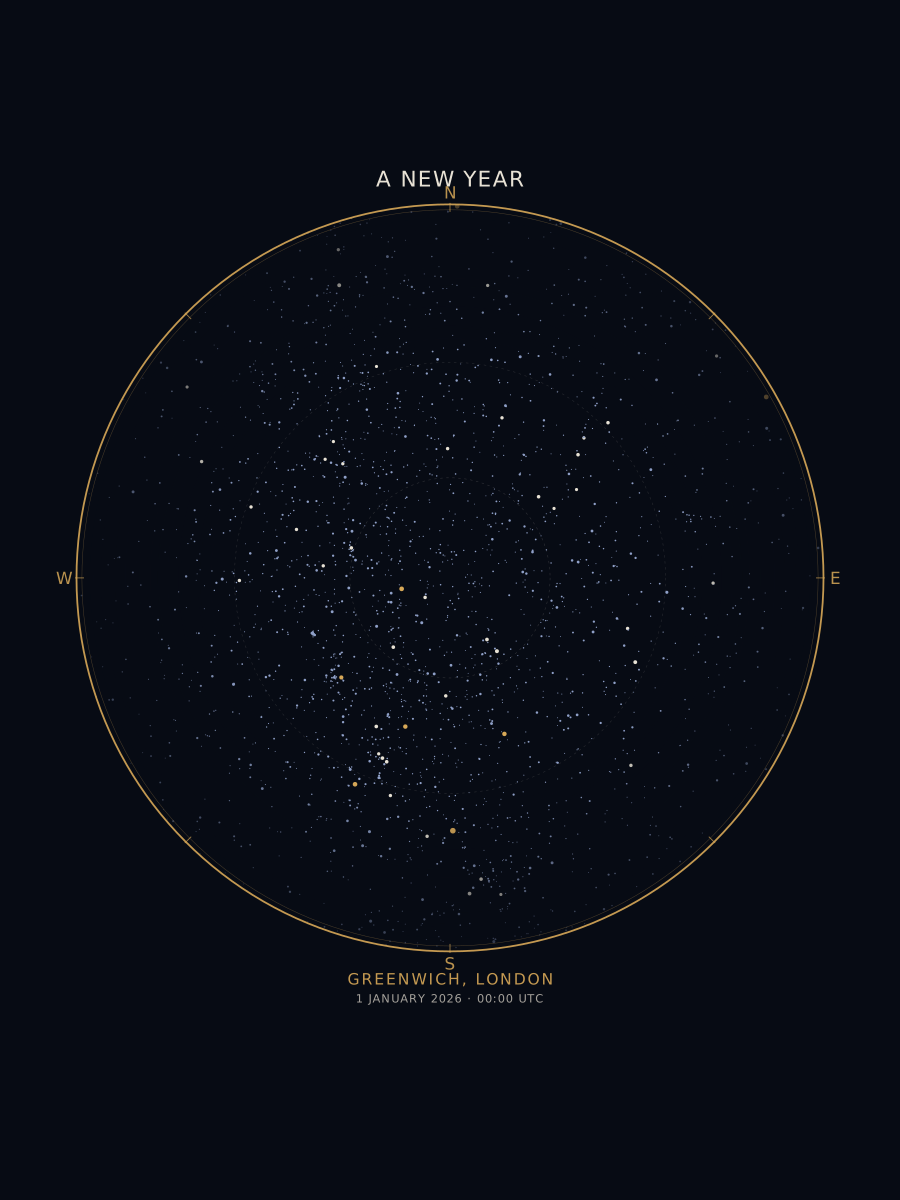
The star-map gift guide explains how to choose the place and moment, and how the date and time affect the result.
Compare the two keepsakes
On a small screen, scroll sideways to compare both options.
| Question | Symbolic naming package | Personalised star map |
|---|---|---|
| What is personalised? | A dedication and private register entry, with contents depending on the provider. | The chart's place, date and time, plus your chosen title. |
| Does it change an astronomical name? | No. A commercial dedication is not an IAU-recognised name. | No. The map does not rename or confer ownership of stars. |
| What does it record? | A symbolic dedication; check what any included chart shows. | The calculated arrangement of stars above a chosen horizon and moment. |
| What should you check? | What is supplied, how the private record works and how the provider describes recognition. | The inputs, the preview and the print format before ordering. |
Choose for the person, not the certificate
A naming dedication may suit someone who enjoys the symbolism of a particular star. A date-based map may suit someone who wants to keep a night connected to a shared memory. Neither has to be described as owning part of the sky to be a thoughtful gift.
For a map, decide whether the moment or the date is what matters. If you do not know a birth time, choose a time deliberately and label it honestly; it is a chart for that chosen moment, not proof of the exact sky at birth. A wedding date or anniversary can work without pretending that an uncertain time is certain.
You can preview your personalised star map before choosing a print. If neither kind of keepsake feels right, our space gifts collection offers other ways to give someone a little of the sky.