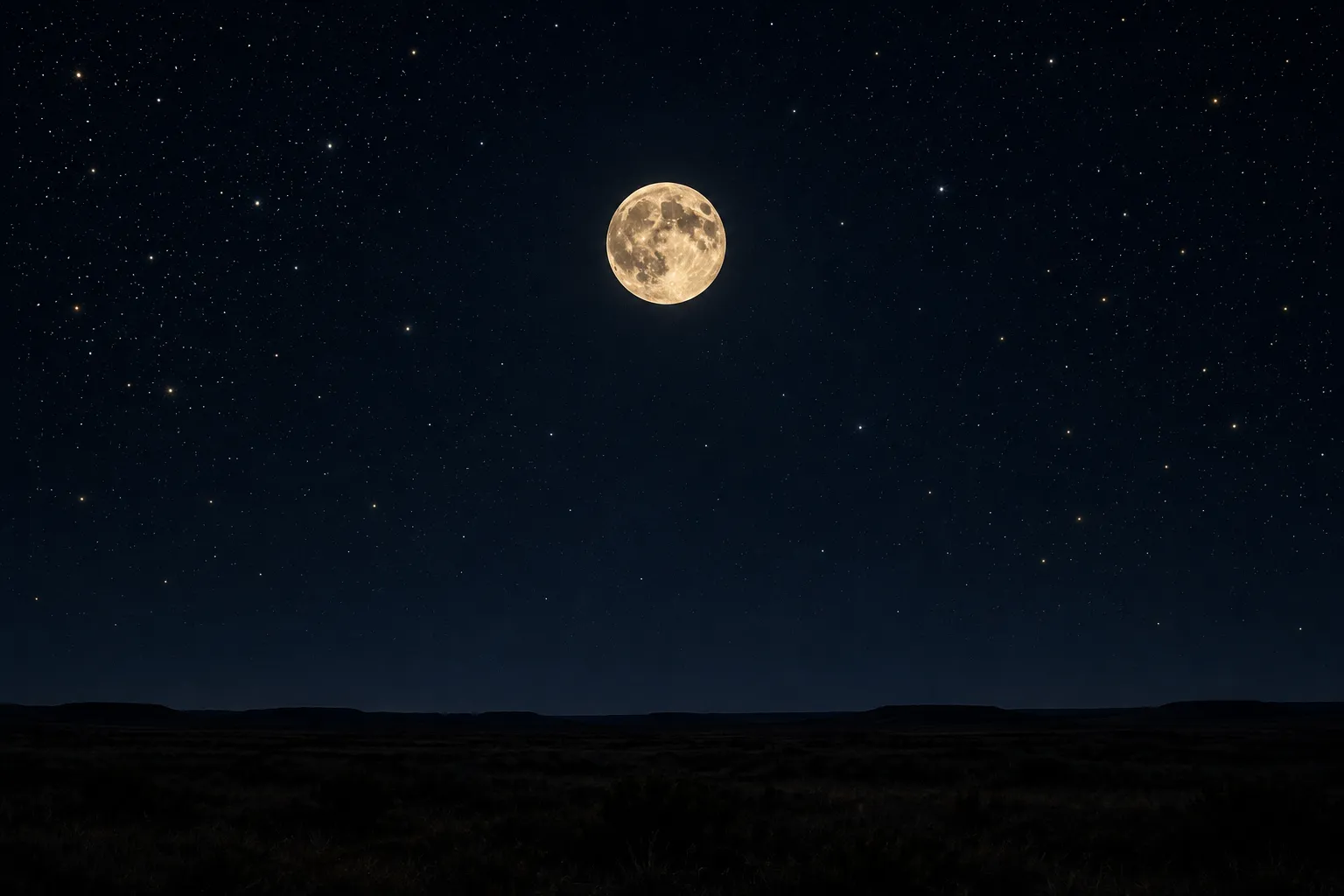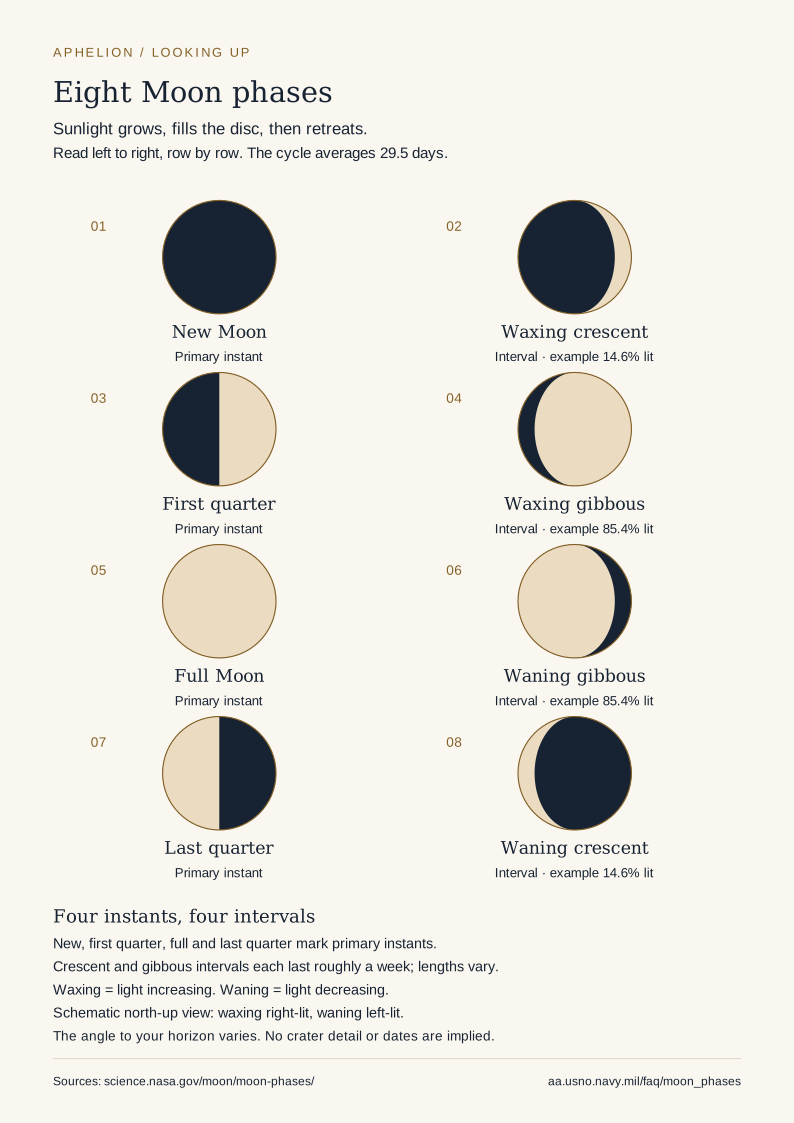
The Moon moves through eight phases in a cycle of roughly 29.5 days: new moon, waxing crescent, first quarter, waxing gibbous, full moon, waning gibbous, last quarter and waning crescent. Each is our changing view of one half of the Moon, lit by the Sun, as it travels around the Earth. Nothing about the Moon itself changes: only the angle from which we watch it.
The phases of the Moon, in order
The cycle begins in darkness and returns to it. Light grows along one edge, swells to a full disc, then thins away along the other: a slow, dependable arc you can follow across a month of clear nights.
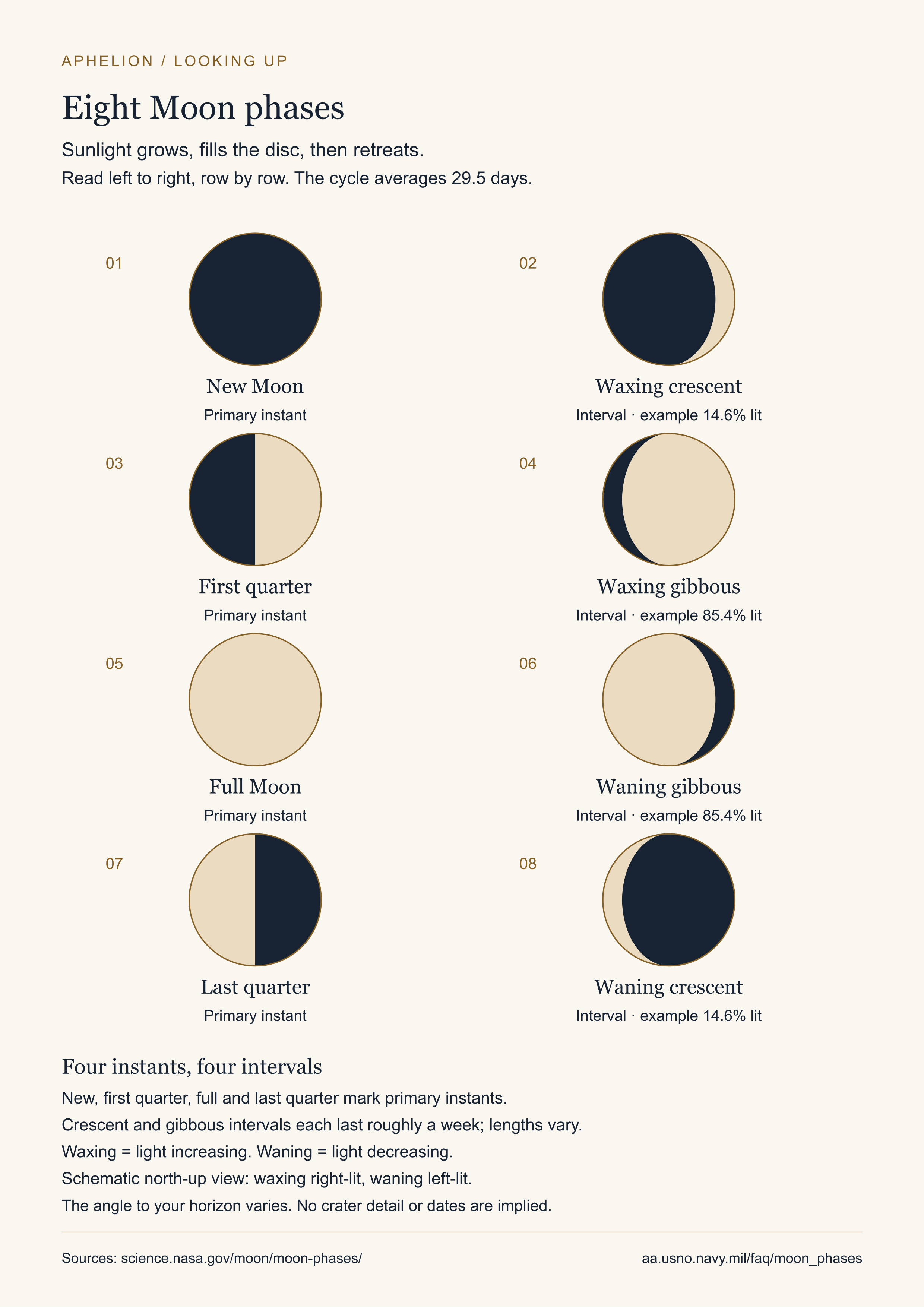
The moon-phase learning chart is a free A4 download. Choose the print PDF, the 300dpi PNG or the scalable SVG. Keep the PDF at actual size when you print it on A4.
The pale area is sunlight; the dark area is the night side. The curved boundary is calculated from a spherical Moon, with no invented crater texture. This north-up learning view shows waxing light on the right and waning light on the left. The Moon's angle relative to your horizon changes with location and sky position, so your view can be rotated.
New moon
The Moon is in the same general direction as the Sun, so its lit half faces away from us. The near side is in shadow and the Moon is, for a night or two, effectively invisible: lost in the Sun's glare. This is where the cycle resets.
Waxing crescent
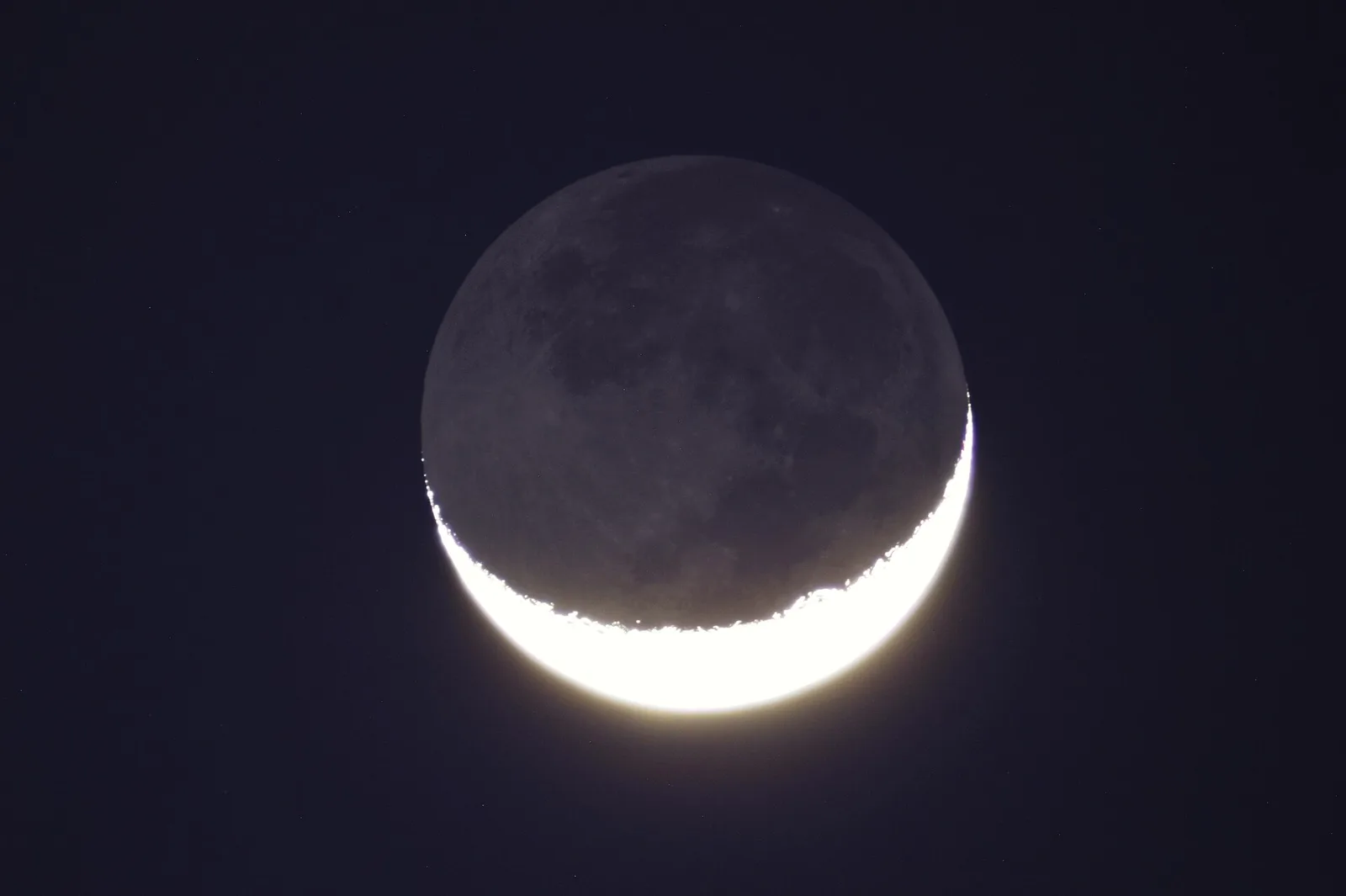
A thin sliver of light appears on the right-hand edge in the diagram and begins to grow. Waxing means the lit portion is increasing. You'll catch a waxing crescent low in the west shortly after sunset: the Royal Observatory Greenwich notes that the new crescent always emerges near the sunset, so what you need is a clear western horizon.
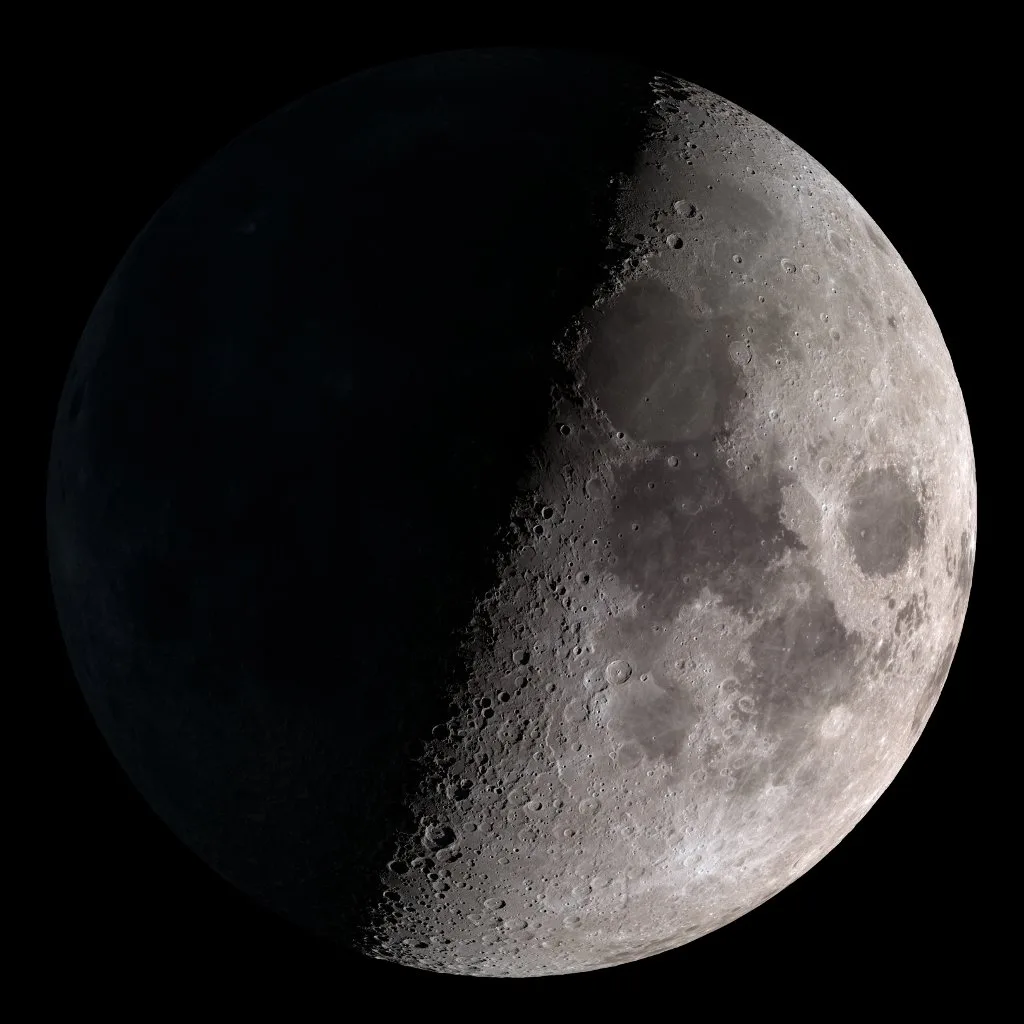
First quarter
Half the visible disc is now lit. It's called a quarter not because a quarter is showing, but because the Moon has completed a quarter of its phase cycle. NASA gives its timing as rising around midday and setting around the middle of the night, so it rides high in the evening sky.
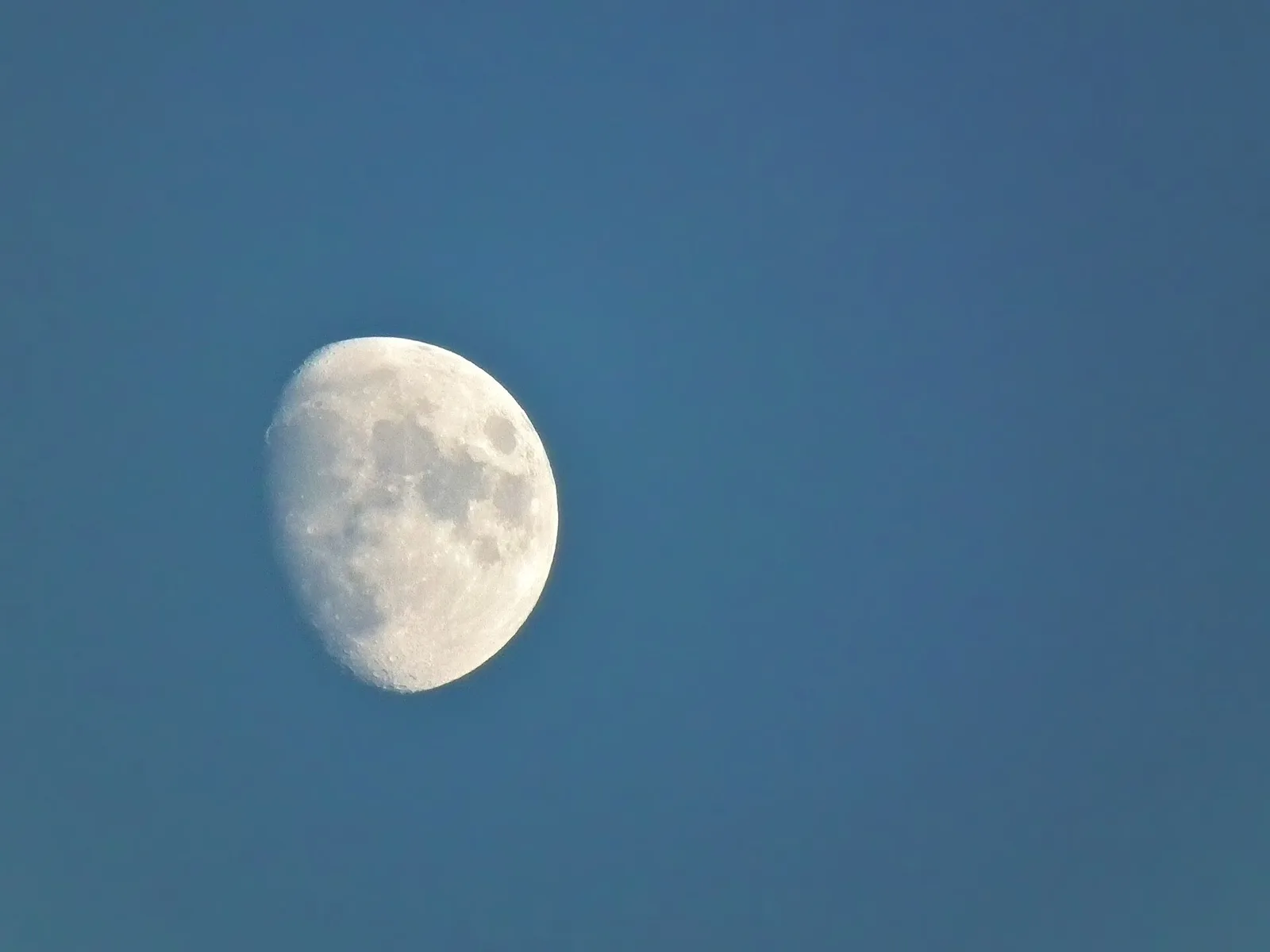
Waxing gibbous
More than half is lit now, the disc swelling toward full. Gibbous means humped or bulging, the term for any phase between a quarter and a full moon. The shadowed edge shrinks a little each night.
Full moon
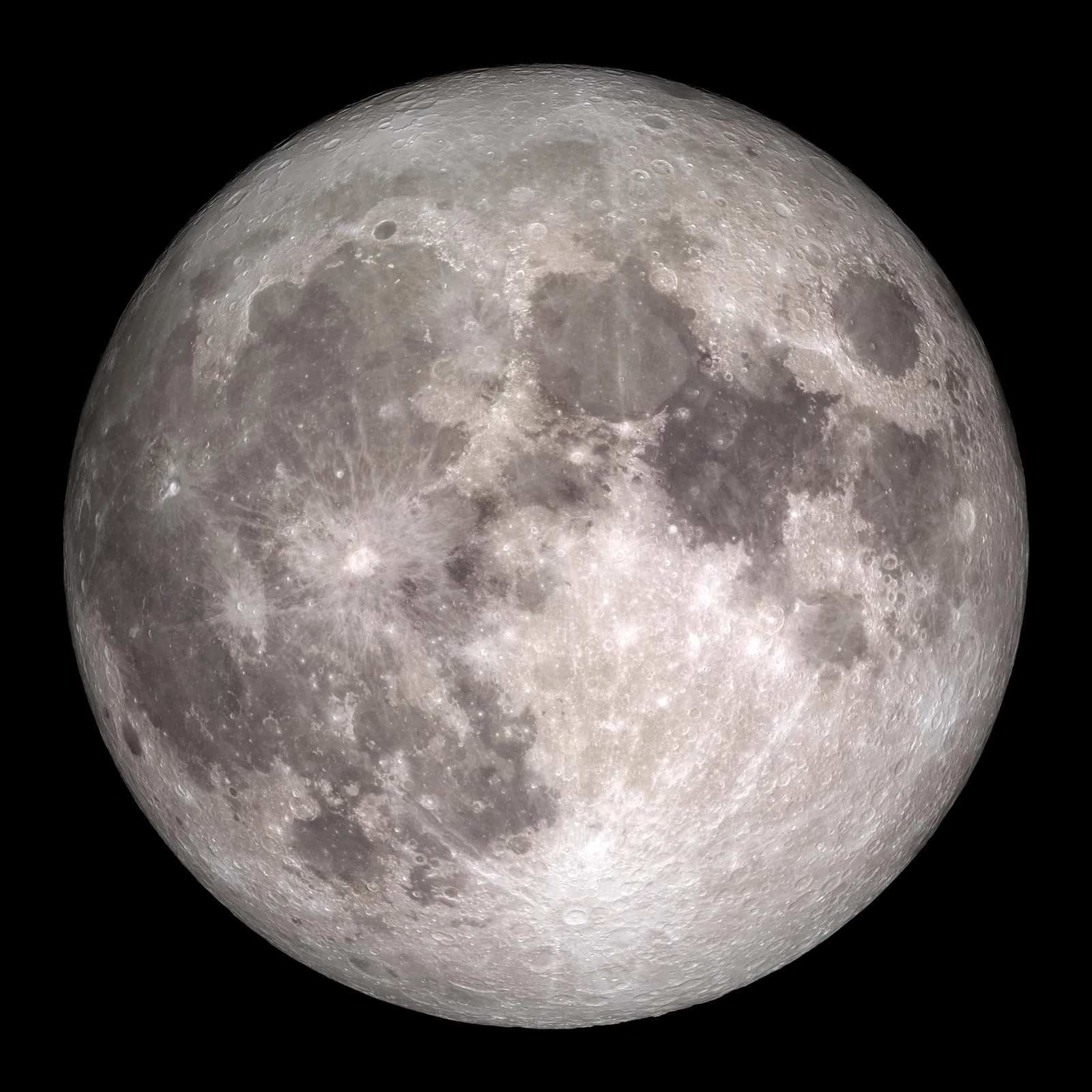
The Moon is opposite the Sun in our sky, and its near side appears fully lit. A full moon rises at sunset and sets at sunrise, so it is up the whole night through: the brightest, roundest moment of the month, and the one that has drawn human attention for as long as we've looked up.
Waning gibbous
Past full, the lit area begins to shrink. Waning means the illuminated portion is decreasing. The Moon now rises later each evening, well after dark, and the shadow creeps back across the disc from the opposite edge.
Last quarter
Half lit again, but the other half this time: the mirror of the first quarter. Also called the third quarter, it marks three-quarters of the phase cycle complete. NASA gives its timing as rising around the middle of the night and setting around midday, which is why it is a small-hours and dawn moon.
Waning crescent
A thinning sliver lingers in the pre-dawn east, dimming night by night until the shadow takes the last of it. Then the Moon returns to new and the cycle starts over.
Four phases or eight?
Search for this and you will be told both, which is why it is worth settling. The US Naval Observatory puts it exactly: New Moon, First Quarter, Full Moon, and Last Quarter phases are considered to be primary phases
. Those four are moments, not stretches. Each is a single instant when the Sun, Earth and Moon reach a particular alignment, and each can be given to the minute.
The other four (the crescents and the gibbous phases) are the intervals between those instants, and they last about a week each. NASA lists all eight together because that is what you see over a month. So a four-phase diagram and an eight-phase diagram are not disagreeing: one is naming the checkpoints, the other is naming the journey between them. A print showing eight is showing the cycle; a calendar listing four is listing the events.
Why the Moon has phases
The Moon doesn't make its own light: it reflects sunlight. One half of it is always lit and the other always dark, as one half of the Earth always faces the Sun. As the Moon orbits us, we see varying amounts of its lit half. The phases are nothing more than our changing view of the line between lunar day and night.
It helps to picture the geometry. At new moon the Moon is roughly between us and the Sun, so the dark side faces Earth. At full moon it's on the far side of us from the Sun, so the lit side faces Earth. In between, we catch the lit half at an angle: a crescent, a quarter, a gibbous swell. We do not get an eclipse every month because the Moon's orbit is tilted: NASA puts the tilt at "about five degrees", so the Moon usually passes just above or below the Sun-Earth line, not across it.
Waxing, waning and the in-between names
Two words carry the whole cycle. Waxing means growing: the lit portion is increasing toward full. Waning means shrinking: the light is retreating toward new. In our north-up diagram, a waxing Moon brightens on the right; a waning Moon thins from the right, leaving light on the left.
The other terms describe shape. A crescent is less than half lit, a curved sliver. A quarter shows exactly half the disc, marking a quarter or three-quarters of the orbit. A gibbous moon is more than half but not yet full. Pair these with waxing or waning and you can name any phase at a glance.
Waxing gibbous moon
A waxing gibbous moon is more than half lit but not yet full: the shape between first quarter and full. Gibbous means humped, and the disc bulges on the lit side while a shrinking band of shadow clings to the left edge. It rises in the afternoon and sets after midnight.
Waning gibbous moon
A waning gibbous moon is the mirror image: more than half lit, but shrinking now that full has passed. The shadow creeps in from the right, leaving the bulge on the left. It rises later each evening, well after dark, and is often still up after sunrise.
Waxing crescent and waning crescent moon
A crescent moon is less than half lit. A waxing crescent grows on the right-hand edge and follows the Sun down in the western sky after sunset; a waning crescent thins on the left and lingers low in the east before dawn. Both often show earthshine across the dark part of the disc.
Waxing vs waning
Waxing means the lit portion is growing towards full; waning means it is shrinking back towards new. In a north-up diagram, light on the right means waxing and light on the left means waning. When you look up, the Moon can be tilted relative to the horizon; follow whether its lit portion is growing or shrinking across successive nights.
How long is the lunar cycle?
One full cycle (new moon to new moon) takes about 29.5 days, a figure both NASA and the Royal Observatory Greenwich give. This is the synodic month, and it's what we mean by a lunar month. It is why most calendars settle on months of roughly that length. Twelve of those come to about 354 days (12 x 29.5), some eleven short of a solar year, which is why a purely lunar calendar drifts against the seasons.
There's a subtler figure worth knowing. The sidereal month (the time the Moon takes to return to the same position against the background stars) is shorter than the synodic month: NASA puts the Moon's orbital period at 27.322 days, which is where the usual 27.3 comes from. The difference exists because the Earth is also moving around the Sun, so the Moon must travel a touch further each cycle to line up with the Sun again. The phases follow the synodic 29.5 days; the stars follow the sidereal 27.3.
How long does each phase last?
The eight names do not divide the month into eight equal periods. New moon, first quarter, full moon and last quarter are primary instants. Each crescent or gibbous interval runs between two of those instants, lasting roughly a week, with the exact length varying. The US Naval Observatory makes this distinction; it also explains why the Moon can look full for several nights around the precise full-moon instant.
The practical version: watch the same hour each clear night and you will see the change for yourself. The lit edge moves, the terminator - the line between lunar day and night - slides across the disc, and within a week the shape has visibly rebuilt itself.
The Moon's craters
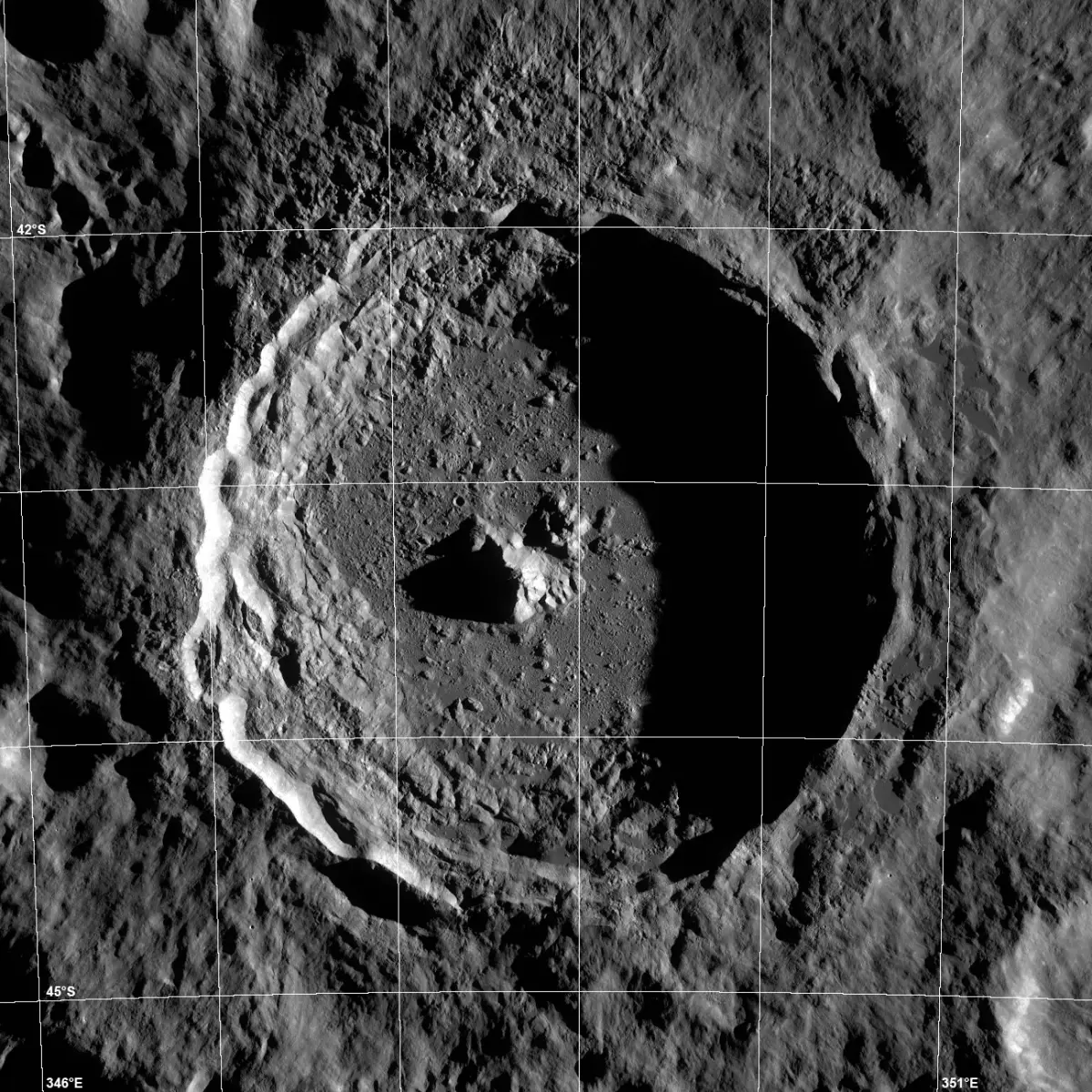
Look at any full moon and you are looking at a record of impacts. The Moon has no wind, no rain and no plate tectonics, so the marks left by asteroid, meteoroid and comet strikes stay put: NASA describes the surface as a preserved history of the solar system's collisions, and the processes that erase craters on Earth have never worked there.
Three names repay a pair of binoculars. Tycho, in the southern highlands, is about 53 miles (85 km) across and, at around 110 million years old, young enough that its bright ejecta rays still spread across much of the near side. Copernicus, roughly 93 km wide, shows the terraced walls and central peak of a mature impact. Aristarchus is smaller but sharply terraced, and easy to find near the western edge of the disc.
The big dark patches are a different thing entirely. The maria - the shapes people read as a face, a rabbit or a man in the Moon - are not craters but the flooded floors of giant impact basins: NASA counts more than 40 basins over 300 km across, most carved around 3.9 billion years ago, their floors later filled by basaltic lava. The face you can see from your garden is geology, not coincidence.
Three details most guides skip
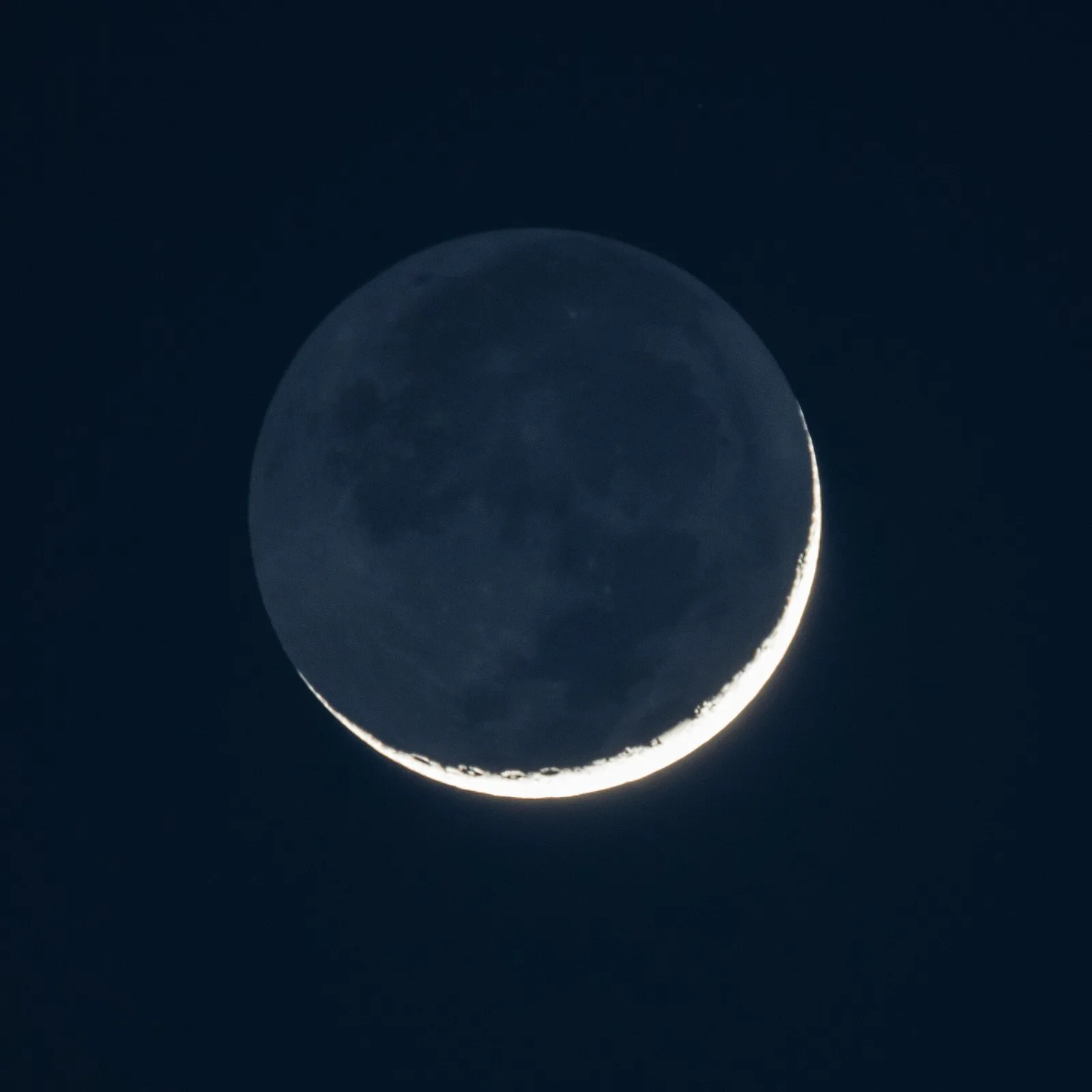
Earthshine. During the crescent phases, look at the dark part of the disc: it often glows faintly. That is sunlight bouncing off the Earth onto the Moon and back again - NASA calls it earthshine, and it is why a thin crescent so often shows a ghostly outline of the whole disc.
Libration. The Moon keeps one face towards us, but not exactly. NASA describes it as appearing to "twist, nod, and roll slightly" over the month - a slow rocking called libration - which is why, over time, we see a little more than exactly half of the surface.
Daytime moons. The Moon spends plenty of its month in the daytime sky. A first-quarter moon is up from around midday to the middle of the night, so on a clear afternoon it is often already there: pale, plain, and easy to forget you are looking at the same object that rules the night.
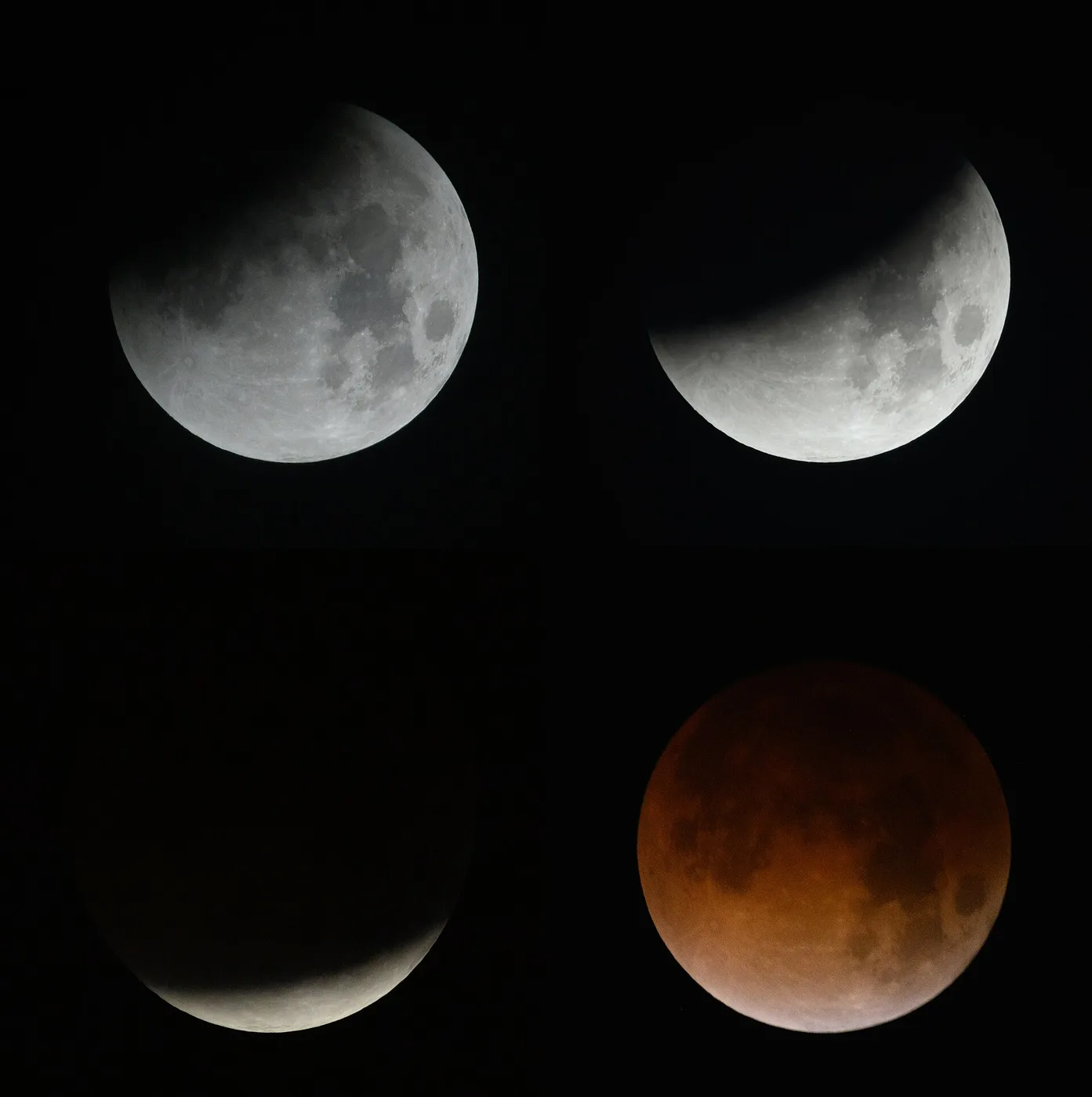
A solar eclipse can only happen at new moon, and a lunar eclipse only at full moon, when the Sun, Earth and Moon line up exactly. The next solar eclipse visible from Britain is in the UK solar eclipse guide.
What phase is it tonight?
This page doesn't change day to day, so for tonight's phase use NASA's Daily Moon Guide - an interactive map showing the current phase and position for your location. Pair it with the rise-and-set timings above and you can plan a whole month of evenings.

The phases as wall art
Laid out as a row, the eight phases read as one object, not eight: a shape that grows, fills and thins again. It is also a sequence you can check against tonight, which is most of the appeal.
Every moon phases print we make sits in the wider moon and lunar collection, alongside the rest of the sky. To give one, our moon gifts page compares the cycle print with a moon phase print for a single date.
This is the opening read in Looking up, the part of the site about what's overhead, not what's for sale. Two more of its pages take the same approach to different objects: what a constellation is, and what a nebula is.