A solar eclipse happens when the Moon passes between the Earth and the Sun. From the UK, every eclipse in the next few years is partial: the Moon takes a bite out of the Sun, but never covers it completely.
The next solar eclipse in the UK, and the rest to 2030
| Date | From the UK | How much of the Sun is covered |
|---|---|---|
| 2 August 2027 | Partial, across the whole UK, in the morning (greatest around 10am BST) | About 48% from the Isles of Scilly, 45% from London, 13% from Shetland |
| 26 January 2028 | Partial, low in the south-west near sunset | About 55% from Cornwall, 51% from west Wales, 42% from Northern Ireland |
| 12 June 2029 | Slight, near sunrise, mostly the north-east | About 19% from eastern Scotland and north-east England |
| 1 June 2030 | Partial, near sunrise | Up to about 49%, best in south-east England |
Figures from BBC Sky at Night Magazine; the London figure and time for 2027 are from the Royal Observatory Greenwich. Coverage changes with where you stand, so a town between two listed places sits between their figures.
Where to go for totality
The eclipse of 2 August 2027 is total along a narrow path through southern Spain, Gibraltar and North Africa, with some of the longest totality of the century in Egypt. It is the closest total eclipse to the UK for years, and a short flight away. On 26 January 2028 parts of Portugal and Spain see an annular eclipse, where a thin ring of Sun stays visible around the Moon.
The 12 August 2026 eclipse was total across northern Spain and a deep partial here, which is why so many people travelled for it. The next totality on the British mainland, on 23 September 2090, crosses Cornwall.
How to watch a solar eclipse safely
- Never look at the Sun directly, even when most of it is covered. Sunglasses, smoked glass and exposed film don't protect your eyes.
- Use eclipse glasses or viewers made to the ISO 12312-2 standard, from a supplier you trust, and check them for scratches first.
- Or project it: a pinhole in a piece of card throws a small image of the crescent Sun on to a second card or the ground. Gaps between tree leaves do the same thing.
- Binoculars, telescopes and camera lenses need a proper solar filter over the front. Never look through them at the Sun without one.
Solar and lunar eclipses
A lunar eclipse is the other way round: the Earth's shadow falls on the Moon, and it is safe to watch with the naked eye. They always happen at full moon, and the full moon calendar marks the ones in 2026 and 2027.
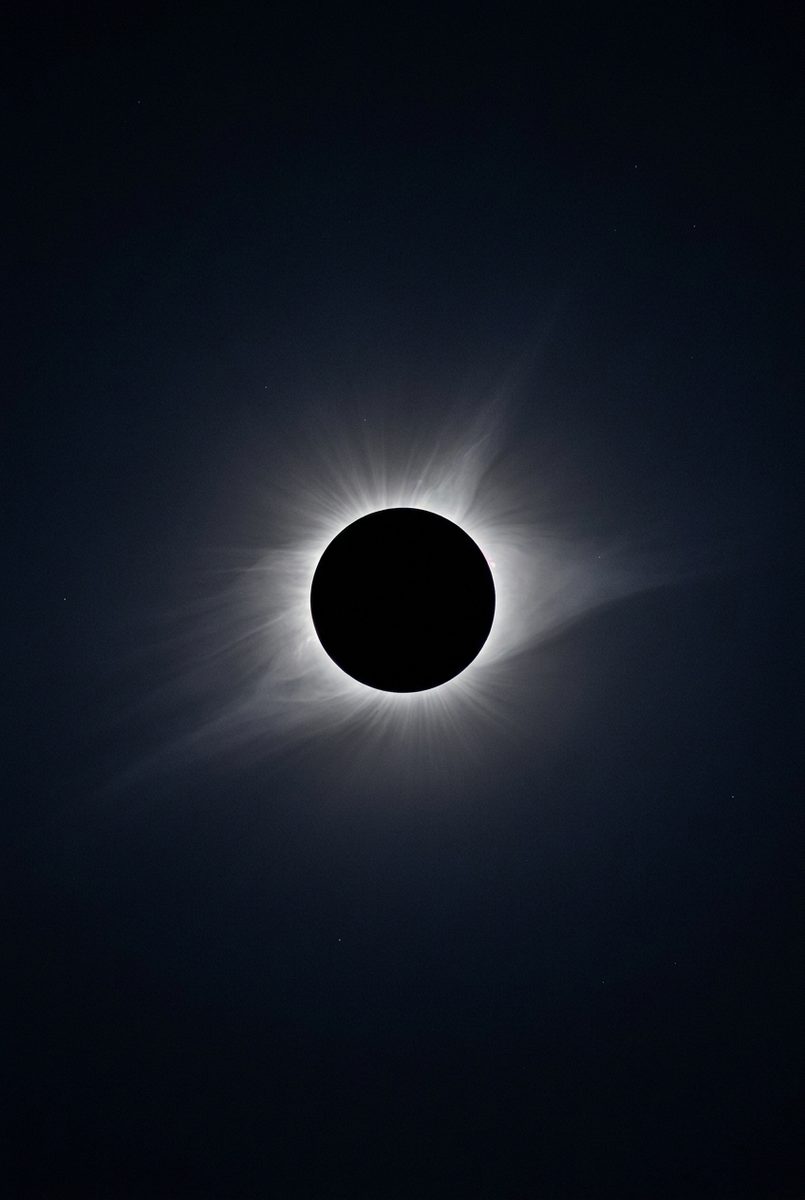
For the moment of totality itself, our Totality print shows the black Sun and its silver corona.