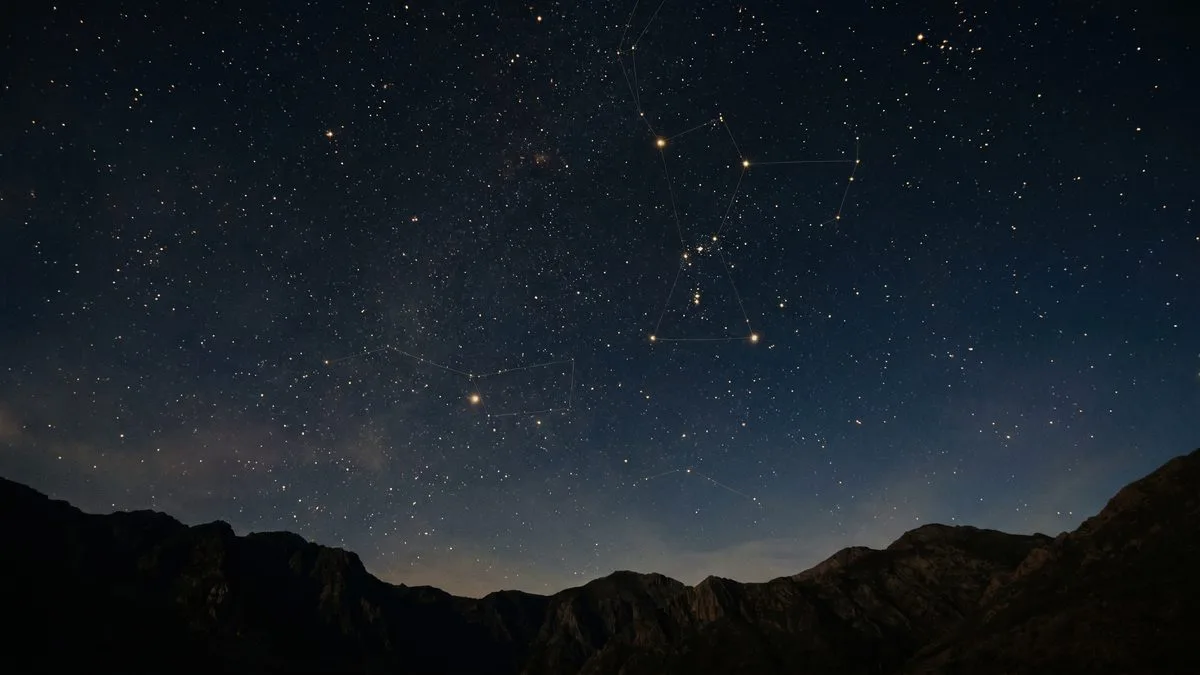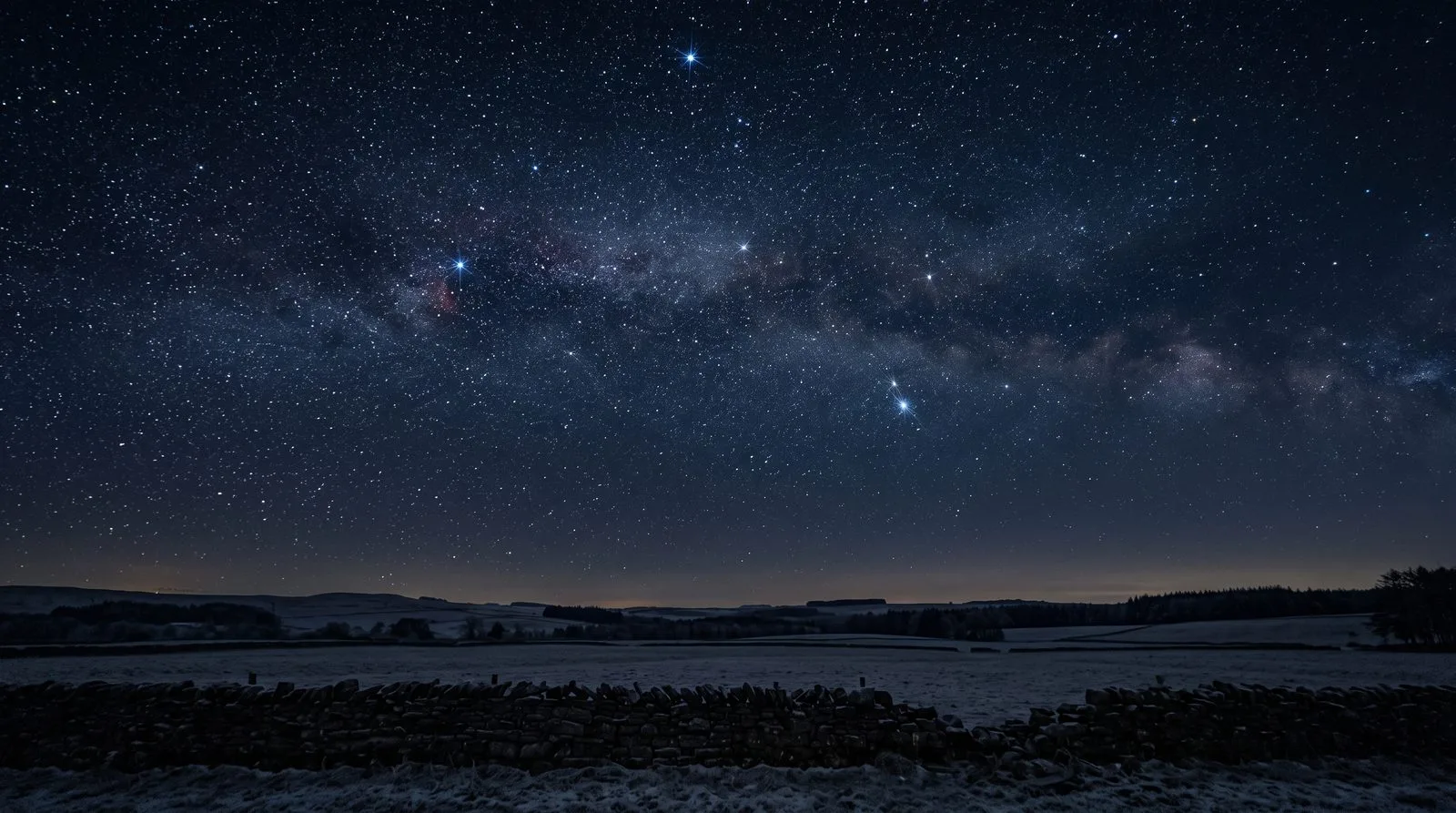
Look up on any clear night and the stars you can point at almost all have names older than the telescope. But star names aren't folklore left to drift: since 2016 the International Astronomical Union has run an official list, and a star's proper name is now a matter of record. This covers how that works, the named stars worth knowing, and the clouds of glowing gas that hang behind them.
Want the sky over one place on one night instead? A personalised star map plots catalogue stars above the mathematical horizon for the place, date and time you give. Our catalogue contains 5,044 records with magnitudes up to 6.0; the worked star-map example and model limits explain what is included.
Who names the stars?
The IAU's Working Group on Star Names standardises proper names for astronomical research. It draws on historical and indigenous naming traditions, while public NameExoWorlds campaigns provide another route for naming selected stars beyond naked-eye visibility.
Two systems coexist. The proper name is the old one: Sirius, Vega, Aldebaran. The designation is the catalogue code professional astronomers use - Betelgeuse is also Alpha Orionis, HD 39801, HR 2061 and several other identifiers at once, which is why the IAU's intervention on spellings mattered.
And the lineage of the names? The IAU puts it plainly: most modern star names are the product of "translation, misunderstandings, abbreviations and transformation from the original Greek texts to Arabic to mediaeval Latin and modern languages". Some names never changed - Sirius appears in Hesiod's Works and Days in the 8th century BCE.
If you are choosing a gift, our comparison of naming a star and giving a star map explains the difference between a symbolic dedication and a calculated keepsake.
Orion, the one everyone can find
The constellations themselves are also official. At its first General Assembly in Rome in 1922 the IAU agreed a list of 88 constellations covering the entire sky, with defined boundaries - so every object in the sky belongs to exactly one of them.
Orion is the one almost everyone learns first, and its brightest stars are all on the IAU's approved list, each with its Bayer designation from the old scheme of labelling stars by Greek letter:
- Betelgeuse - Alpha Orionis, the red giant at the hunter's shoulder, described by the IAU as "the red giant in the constellation Orion".
- Rigel - Beta Orionis, the blue-white balance point on the opposite corner.
- Bellatrix - Gamma Orionis.
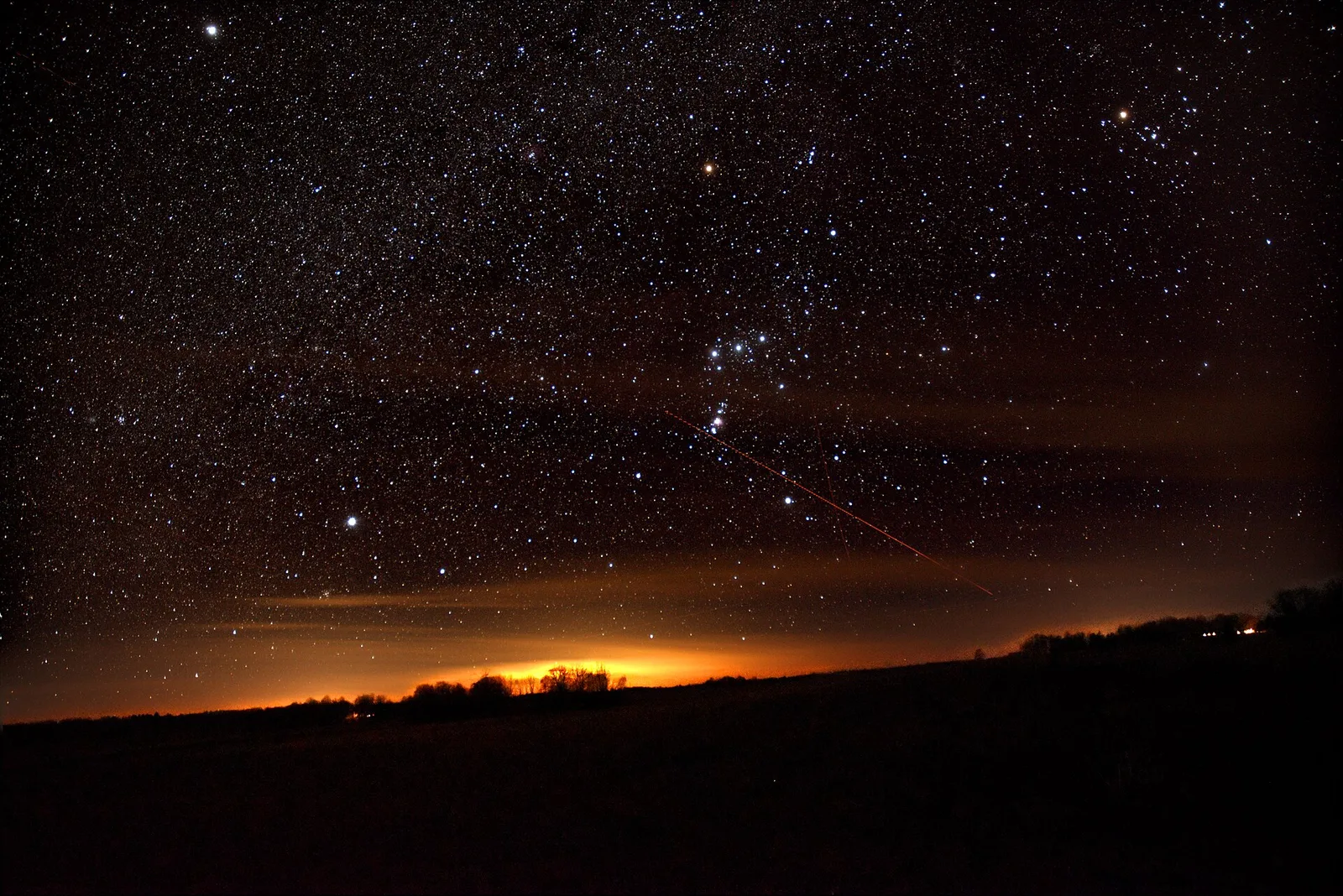
- Alnitak, Alnilam and Mintaka - Zeta, Epsilon and Delta Orionis, the three stars of the belt, close enough in a line that you can check them against this page tonight.
- Saiph - Kappa Orionis, and Meissa - Lambda Orionis, at the head.
Find the belt and the rest of the figure follows - which makes Orion the reliable winter signpost from which the other constellations are usually taught.
Sirius, the Dog Star
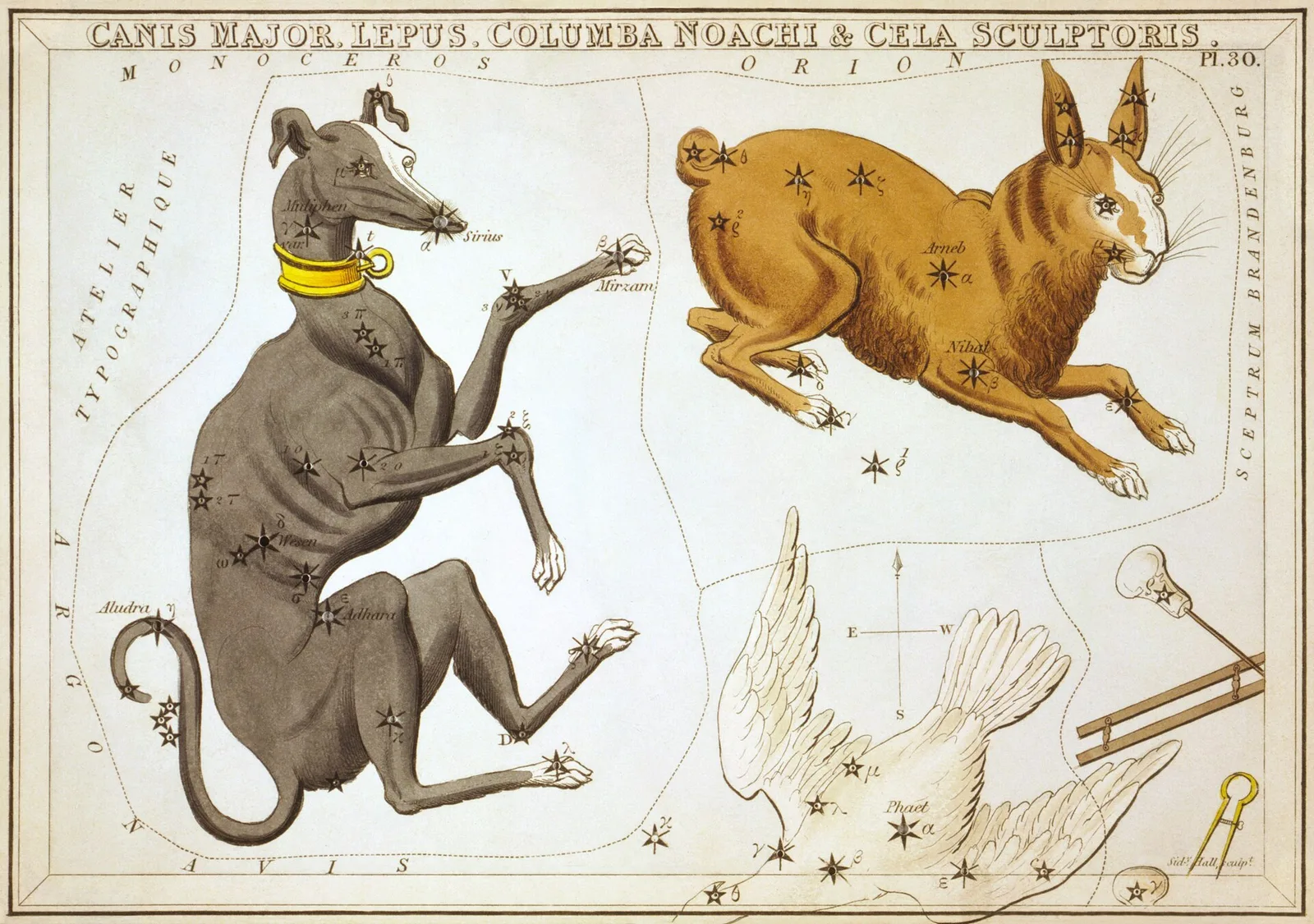
Sirius is the brightest star in the night sky, and it sits in Canis Major, the Great Dog, which is where the nickname comes from. Royal Museums Greenwich puts its distance at only around eight and a half light years away
, which is most of why it looks the way it does. From the UK it's a winter star: Sirius appears diagonally to the left of Orion in the sky. It forms part of the Winter Triangle asterism along with Betelgeuse (in Orion) and Procyon.
Find Orion’s belt, follow it down and left, and the brightest thing there is Sirius.
Low in a winter sky Sirius twinkles hard and flashes colour, and in photographs it grows spikes. Neither is its real shape: what shape are stars explains both.

The names of stars and meanings that survive
Most star names reached us by a long road. The IAU describes them as a product of the processes of translation, misunderstandings, abbreviations and transformation from the original Greek texts to Arabic to mediaeval Latin and modern languages
, with Arabic astronomers such as Abd Al-Rahman al-Sufi adding indigenous names of their own in the tenth century. Only a handful are preserved unchanged since Greek antiquity
: the IAU lists Sirius, Antares, Arcturus, Canopus, Capella, Procyon, Regulus, Spica and Vindemiatrix among them.
Below are familiar bright stars with their constellation and Bayer designation from the IAU catalogue. The National Museums Scotland’s research on its medieval astrolabe supplies language-specific translations for several names. Its table connects historical inscriptions with the modern stars; the spelling and wording can change as a name passes between languages. RMG and NASA supply the other meanings cited here. A blank cell means no meaning has been established from the sources used for this table.
| Star | Constellation | Bayer | Documented meaning |
|---|---|---|---|
| Sirius | Canis Major | Alpha Canis Majoris | Greek: glowing or scorching (National Museums Scotland) |
| Betelgeuse | Orion | Alpha Orionis | Arabic: hand of Orion, in the museum’s historical name table |
| Vega | Lyra | Alpha Lyrae | Arabic: the falling eagle (National Museums Scotland) |
| Aldebaran | Taurus | Alpha Tauri | Arabic for follower, after the Pleiades it trails (RMG) |
| Antares | Scorpius | Alpha Scorpii | Rival of Marsin Greek, for its colour (RMG) |
| Arcturus | Boötes | Alpha Boötis | Greek: guardian of the bear (National Museums Scotland) |
| Capella | Auriga | Alpha Aurigae | Latin: little goat (National Museums Scotland) |
| Deneb | Cygnus | Alpha Cygni | Arabic for the tail(NASA) |
| Polaris | Ursa Minor | Alpha Ursae Minoris | Not established |
Polaris has no meaning listed because the sources used here do not establish its etymology. That is a limit of this table, not a claim that no authority has ever discussed the name. Historical meanings and the IAU’s approval of a modern spelling answer different questions.
Vega and Deneb are also two corners of one useful observing pattern. The Summer Triangle finder joins them to Altair and shows how to recognise Lyra, Cygnus and Aquila around those bright landmarks.
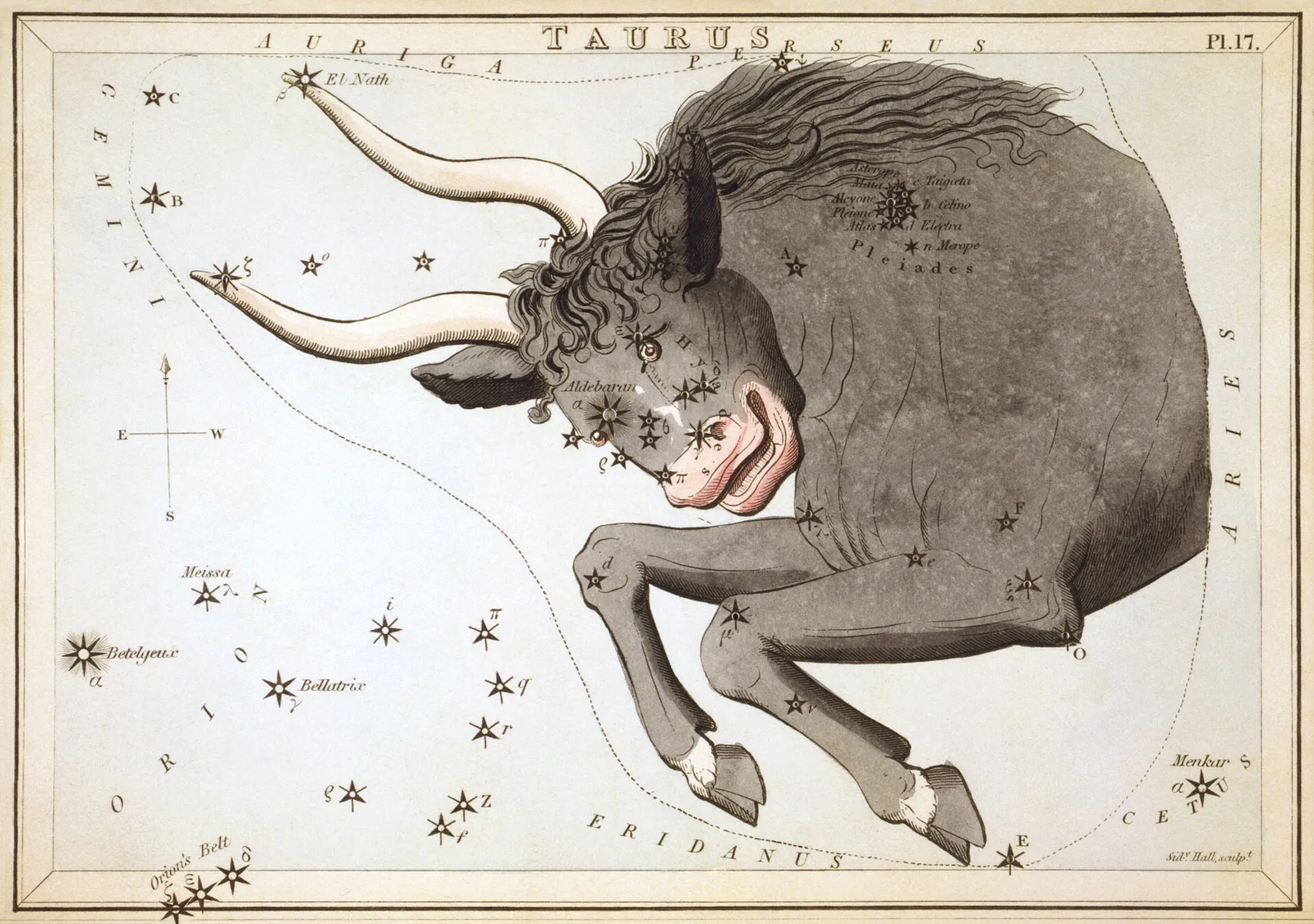
Star names beyond Orion
The IAU list runs far beyond one constellation, and a few names are worth knowing on sight:
- Sirius - the name is unchanged since Greek antiquity; Hesiod wrote it down in the 8th century BCE, though it was absent from Ptolemy's later Almagest catalogue.
- Polaris - the pole star, approved by the IAU in 2017, standing almost still while the whole sky turns.
- Vega - the IAU's own example of the difference between a proper name and a designation (also HD 172167).
- Antares, Arcturus, Canopus, Capella, Procyon, Regulus, Spica - traditional names on the IAU list, one bright marker per region of sky.
The pattern behind almost all of them: a Greek description, translated into Arabic as astronomy travelled through the mediaeval world, then Latinised and kept. The names are fossils of the history of the science.
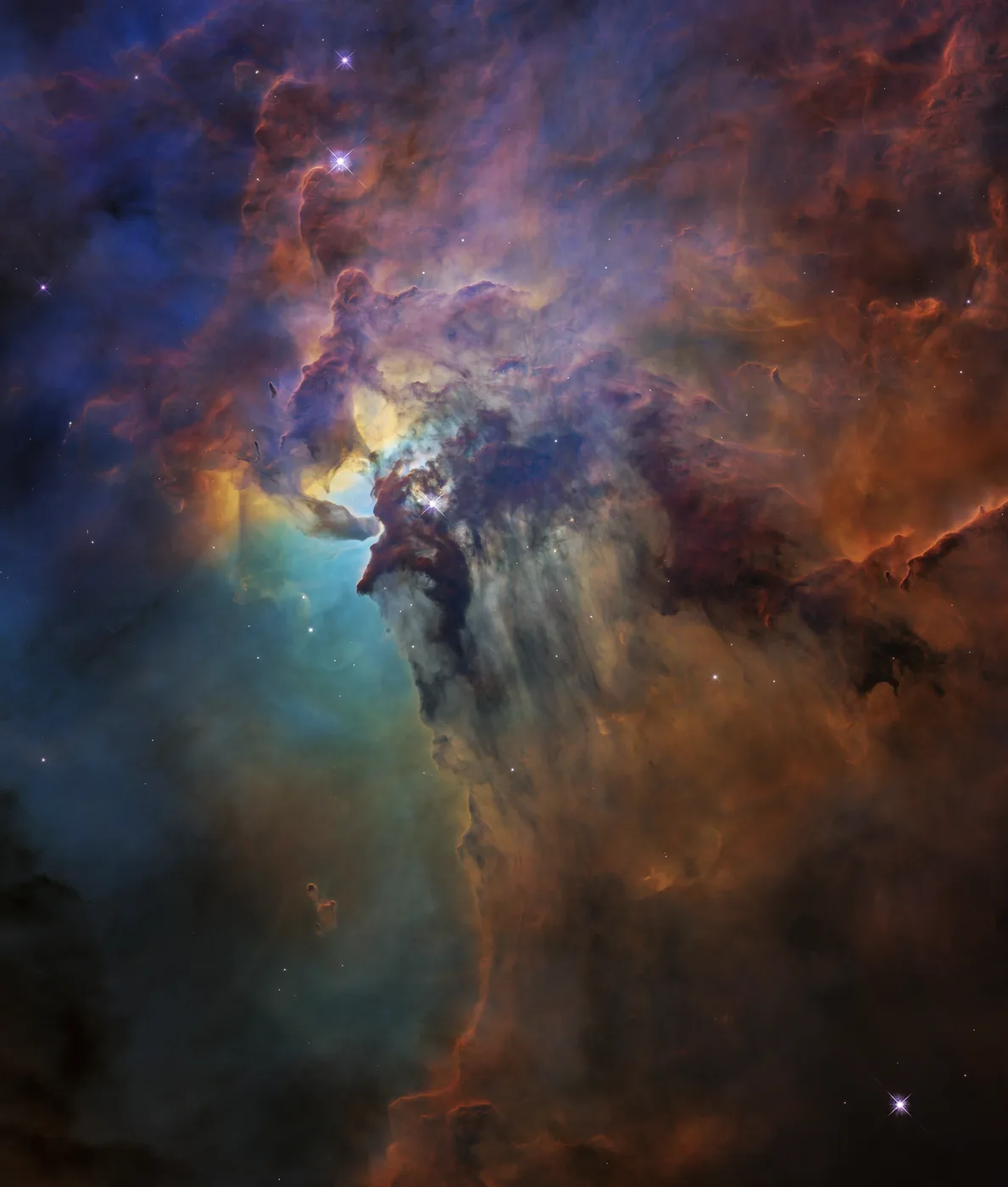
The glowing clouds: what a nebula is
Behind and between the stars sit the nebulae - NASA describes them as "enormous clouds of dust and gas occupying the space between the stars". Not all are alike, and the differences are the interesting part.
An emission nebula glows on its own: stars heat the surrounding gas and its atoms respond by lighting up - NASA's comparison is a neon sign in a shop window. A reflection nebula does the opposite: NASA describes it as "like fog around a street lamp" - it shines only because dust scatters the light of a star embedded in it, and emits no visible light of its own. Reflection nebulae take on a bluish cast because their dust grains preferentially reflect blue starlight.
Orion happens to hold examples of both. The famous Orion Nebula is the emission kind; nearby sits NGC 1999, a reflection nebula imaged by Hubble weeks after the 1999 repair mission, illuminated by a bright, recently formed star. The whole region is a stellar nursery - which is why the same patch of sky serves both as constellation and as laboratory.
For the planets that wander in front of these fixed patterns, read the planets in order - the pair together cover most of what is overhead. Both live in Looking up, the free-reading half of the site, and the patterns these stars sit in are drawn out in our constellation prints. To keep one particular night of that sky, a personalised star map plots it for your own date and place.