How to read the numbers
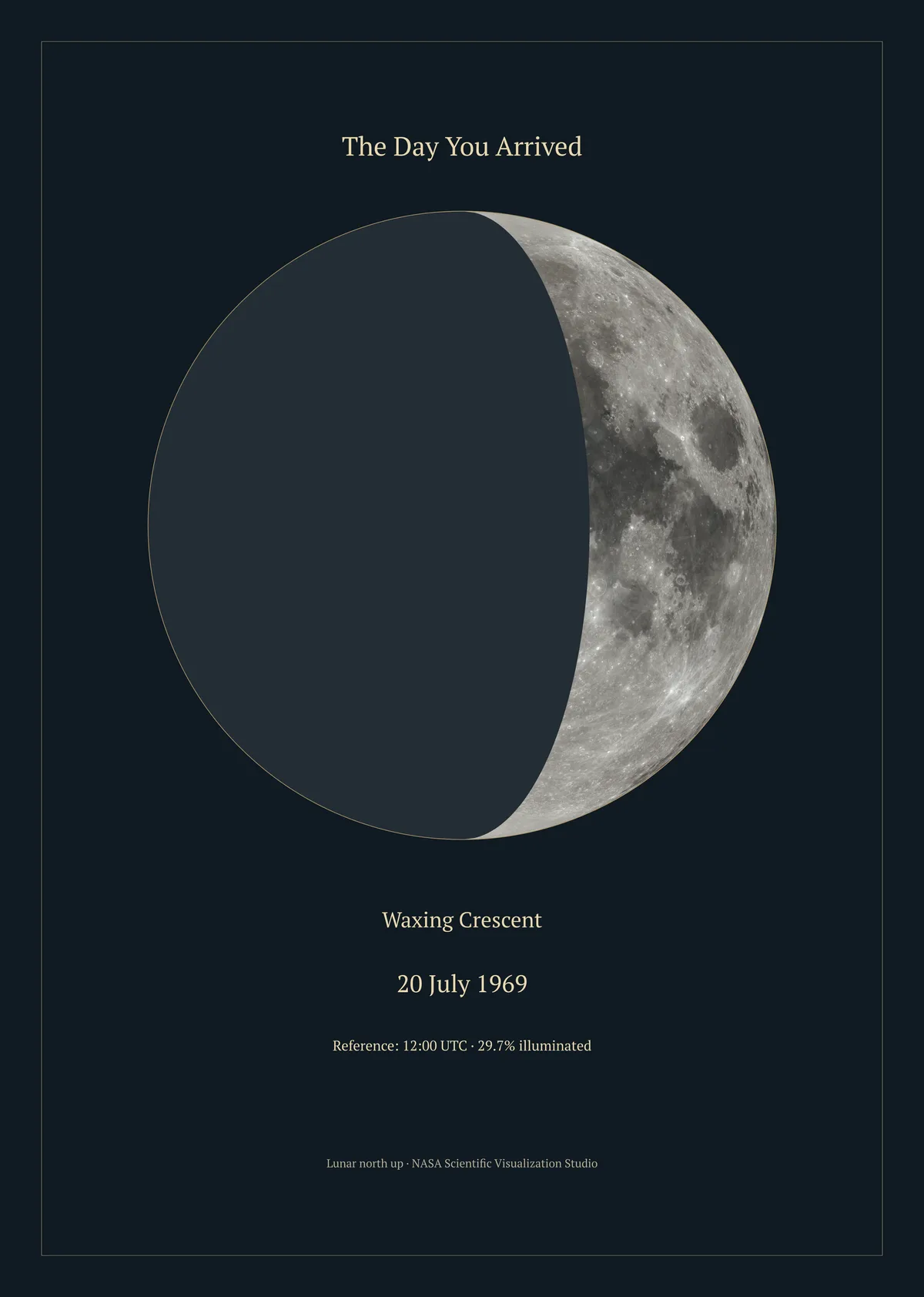
Phase is the Moon's shape tonight, on its way from new to full and back again. Lit is how much of the face we can see is catching sunlight, as a percentage. Age is the number of days since the last new Moon. It runs from 0 up to about 29.8, because a full cycle takes a little over 29 and a half days on average, and any single cycle can run a bit shorter or longer.
A full Moon is a moment, not a night. It is the instant the Moon sits exactly opposite the Sun in our sky. To the eye it stays round for roughly a day on each side of that instant, which is why the tool can say 99% lit and still name the full Moon as tomorrow.
Why every time is London time
Dates and times on this page are London time, so they read GMT in winter and BST in summer. The same moment can fall on another date elsewhere. A full Moon at 4am in London is the evening before in New York.
The Moon on your birthday
Type any date from 1900 to 2100 into the box and the tool works out the Moon at midday UTC on that day. That is the same reference our Moon phase print uses, so the phase you see here is the phase that gets printed.
The Moon moves fast. Around the first and last quarter its lit share changes by about a tenth in a single day. If you know the hour someone was born, the real figure for that hour can sit a few percent either side of the midday one.
How it is worked out
The positions come from Astronomy Engine 2.1.19, an open astronomy library. Its phase times agree with the US Naval Observatory's published times for 1900, 2000, 2026 and 2100 to within three minutes. Every full Moon in our full moon calendar for 2026 and 2027 comes out of this tool to within a minute of the table, and that table was checked against the Royal Observatory Greenwich.
Want the story behind each shape? The eight phases of the Moon walks through them in order. Planning a night outside? The UK meteor shower dates show which peaks have a dark sky.
Written by Craig Fearn, Aphelion Prints.