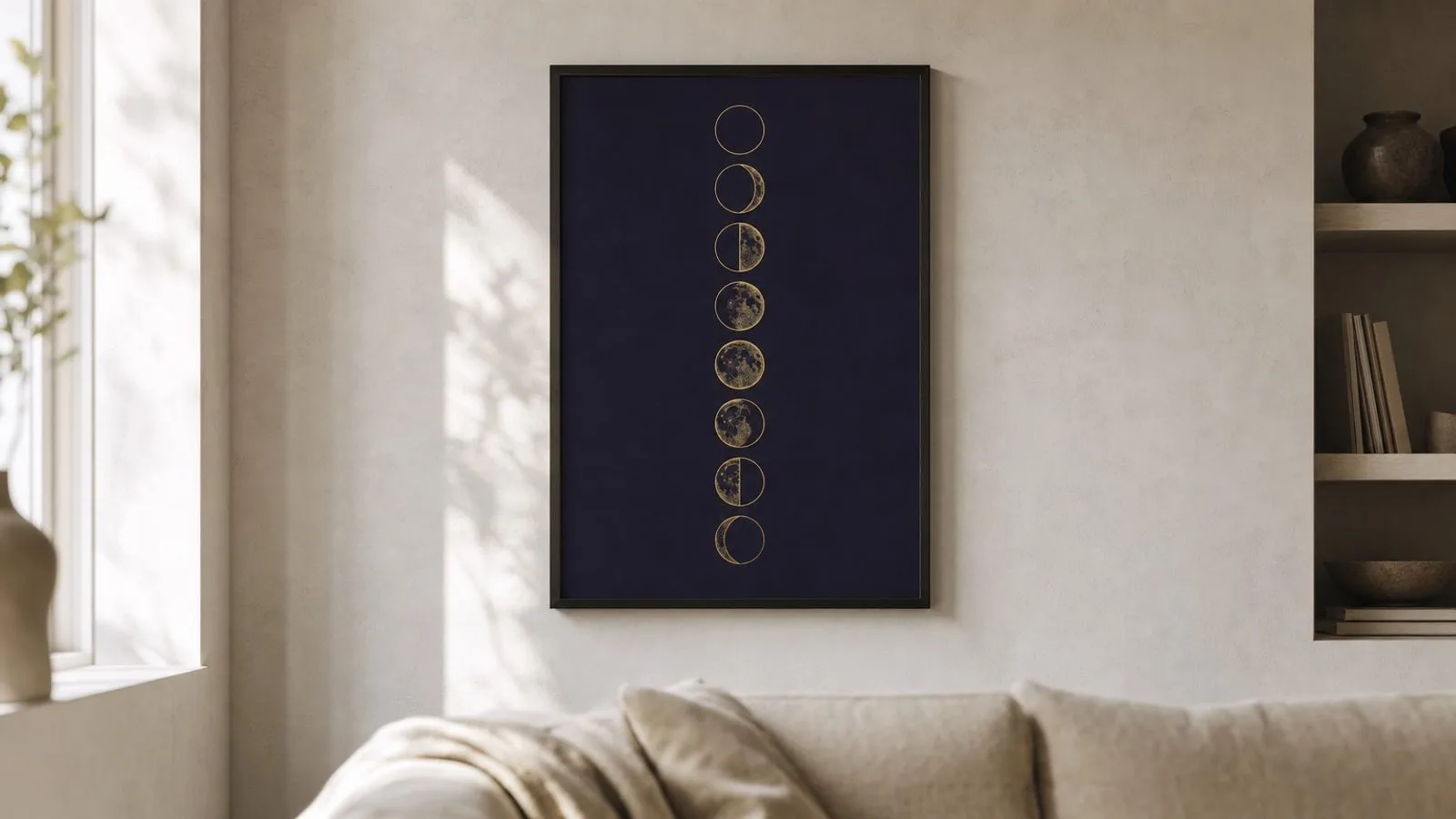
Moon phase wall art can show a whole cycle or one chosen phase. Check the sequence and illuminated shapes; if a print claims to show a specific date, check its source for that date too. This guide explains those checks and the formats available here.
Christmas picks
Each moon print is made once you order it. Production and UK delivery normally take 4 to 9 working days, so leave extra days near Christmas. That is a typical window, not a promised date, so if you are working to a deadline, read delivery and returns before you buy. If it is a moon gift you want, the moon phases print is first, with Watercolour Moon and Visit the Moon beside it. For more ideas, see moon gifts; space Christmas gifts shows the last order day for Christmas.
Is the moon phase chart accurate? The one test: does the sequence run true?
The Moon runs through eight phases in a fixed order - new, waxing crescent, first quarter, waxing gibbous, full, waning gibbous, last quarter, waning crescent - in a cycle of about 29.5 days. NASA keeps that list, and any moon phase print should match it. Our phases guide covers each one.
So the test, on any print you're considering:
- Count the phases. Eight, or the four principal ones (new, first quarter, full, last quarter) - but in the right order.
- Check the direction of growth. From the northern hemisphere, a waxing Moon lights from the right. If a print shows the crescents growing from the left on the way up to full, it is decorative nonsense.
- Check the terminator. The projected boundary between light and dark is curved at crescent and gibbous phases. At first and last quarter it appears approximately straight, dividing the visible disc in half. A crescent's points taper.
- Distrust extra detail. Stars inside the dark part of a disc, moons shown with random surface features per phase - none of that survives contact with a telescope or binoculars.
The same checks apply to the personalised kind: the popular prints that show the moon phase on a specific date - a wedding, a birth. There the accuracy question is about the date, not the order: is the phase shown the phase that was in the sky on that date? A seller who cannot tell you their data source is guessing. NASA's Daily Moon Guide shows the real phase for any recent date, so you can verify before the print ships.
Sizes and framing
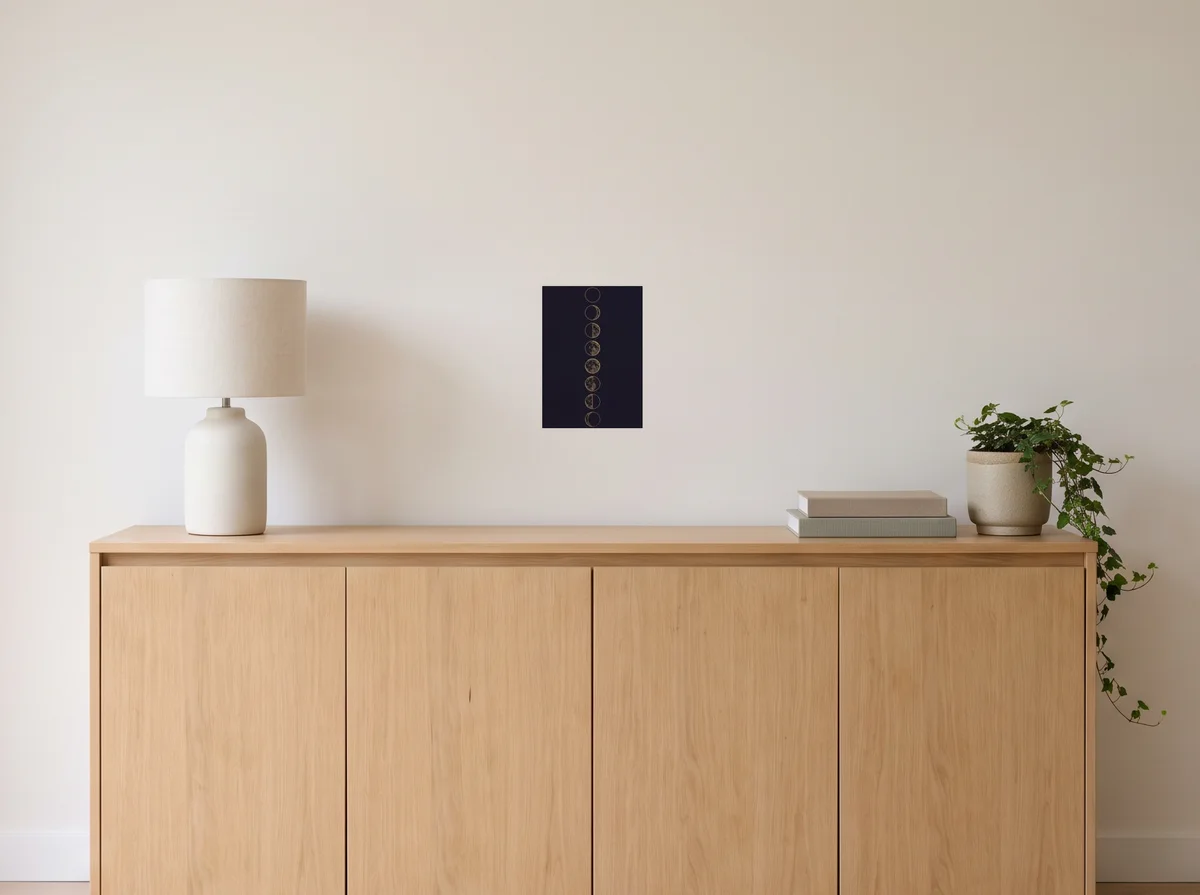
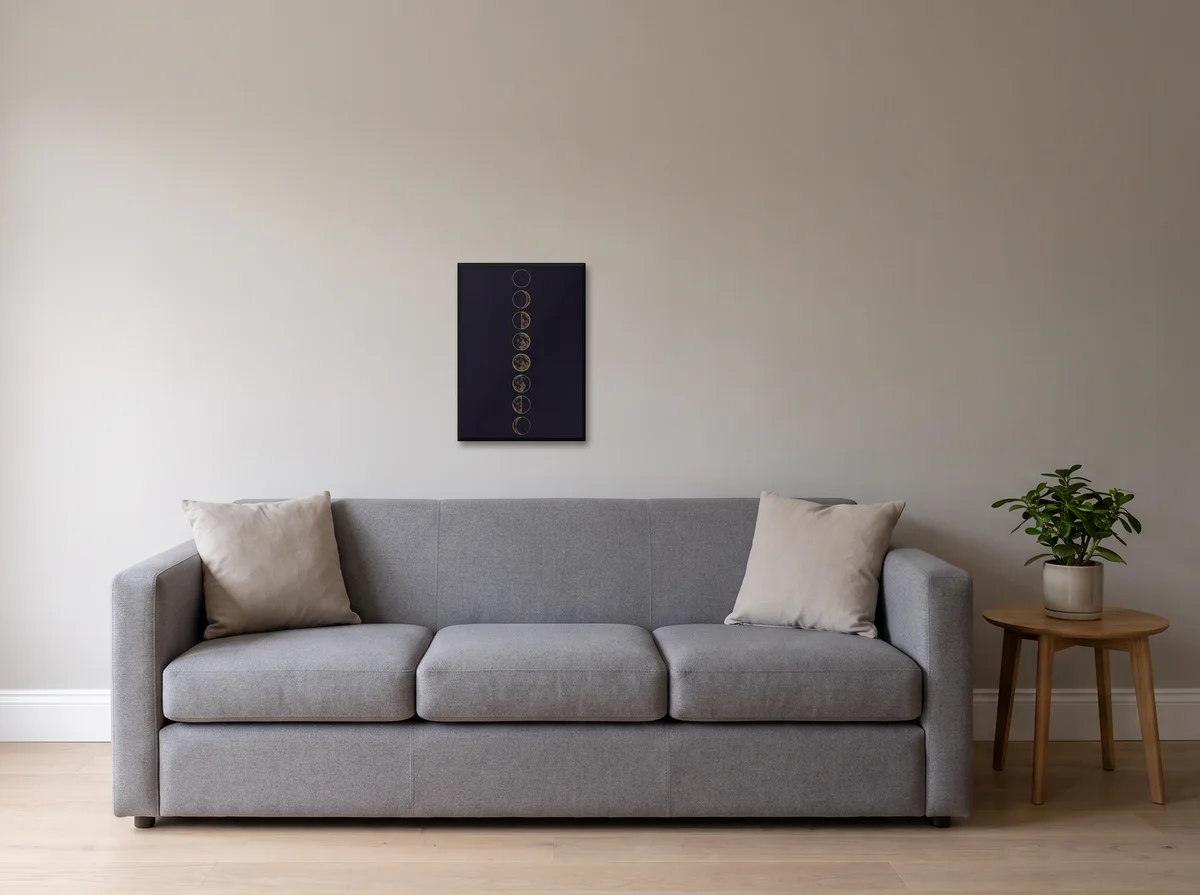
Moon phase art is usually bought large-ish, because the sequence needs width to read - the whole point is the row. The format decisions are the same as for any art print, which our canvas vs framed print vs poster guide covers in full; the short version for this piece:
- Unframed prints (A4, A3, A2) - the most flexible: frame them to your room, cheaper to post, easy to group with other pieces.
- Framed prints - arrive ready to hang; on a sequence piece the frame is part of the reading, so pick a finish you can live with for years.
- Canvas - wrapped round a 2 cm frame, no glass, reads as a single object, not a picture in a frame. Suits the cycle well.
What the prints cost
Our prices come from the catalogue when the page loads; they are never typed in by hand, so the Lunar Phases page lists every format and size with its current price. The formats: posters from A4 to 70x100 cm; framing at A3 or A2, with a black or natural wood frame; canvas from 30x40 to 60x80 cm, and framed canvas up to 50x70 cm; and metal and wood for the pieces you want to feel like objects. Everything is made to order with free UK delivery.
What we won't do is quote a market-wide price band, because "moon phase print" covers everything from mass-poster decoration to hand-drawn commissions and the spread is meaningless. Judge by the checks above and the seller's willingness to answer them.
The one we make
We are biased, obviously: we make prints, and you can hold our Lunar Phases plate to every test in this piece. The moon & lunar collection has two other plates, a watercolour full Moon and a travel poster, which show one scene rather than a sequence.
For the timing behind the sequence - why each phase lasts a few nights and why the cycle takes 29.5 days - read the phases guide. For the dates of the full moons themselves, there is the full moon calendar. Both are part of Looking up, the half of this site that's free to read and not trying to sell you anything. This page is the exception that proves the pattern: it sells, but the checks above work on our competitors too.