
The sturgeon moon is August’s full moon. The next one is full on Tuesday 17 August 2027 at 8:29am BST. It coincides with a penumbral lunar eclipse.
What is the August full moon called?
The Sturgeon Moon. In the words of Royal Museums Greenwich: North American fishing tribes called August’s full moon the sturgeon moon since the species appeared in number during this month.
Watching the sturgeon moon from the UK
In 2026 the Sturgeon Moon carries a partial lunar eclipse: part of the Moon passes into the Earth’s dark inner shadow, which is visible without any equipment and looks like a bite taken out of one edge. Royal Museums Greenwich publishes a guide to viewing it from the UK, which puts first contact at 3:33am BST and maximum at 5:12am with the Moon low in the west.
August is the first month where a British night is dark again, and the full moon is starting to climb back up. It is also the month of the Perseid meteor shower, and a bright full moon near the peak is the single worst thing for meteor watching. The two are not always close, but in a year when they are, pick one.

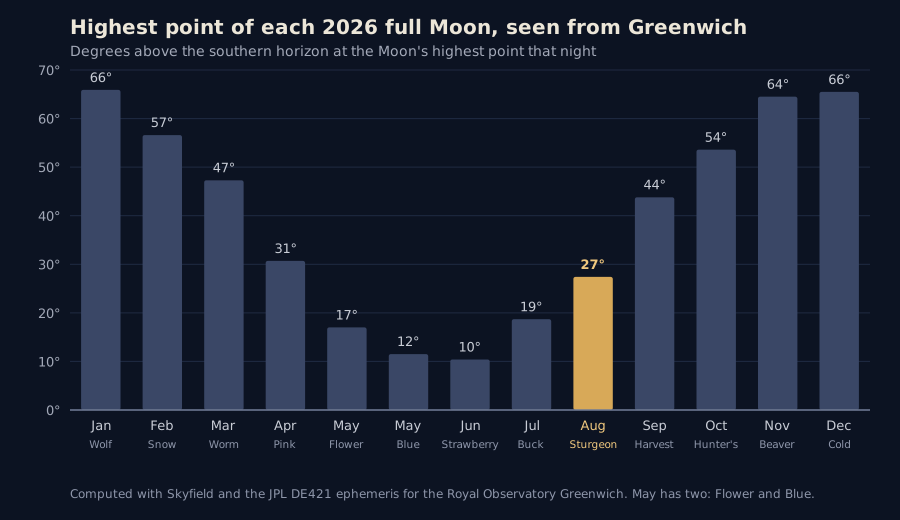
How high the sturgeon moon climbs
From Greenwich on the night of 16 to 17 August 2027, 7 of 2027’s full moons climb higher than the sturgeon moon and 4 stay lower.
| Sturgeon Moon rises | 8:01pm, south-east |
|---|---|
| Sturgeon Moon at its highest | 12:49am, 24° up, due south |
| Sturgeon Moon sets | 5:48am, west |
| Time above the horizon | 10 hours for the Sturgeon Moon |
| Sun at 12:49am | 25° below the horizon |
Also in the August sky
The Perseids peak around 12 to 13 August, the best-known meteor shower of the British year. Whether the Moon spoils them depends on where the full moon falls, and the meteor shower guide gives the year-by-year picture.
For August’s meteor dates and how much the Moon gets in the way, see UK meteor showers and the Moon.
What people get wrong about the sturgeon moon
That a partial lunar eclipse needs equipment. It does not. The Earth's dark shadow takes a visible bite out of the Moon and the whole thing is comfortable to watch with nothing but eyes, which is not true of a solar eclipse and is the main reason lunar ones are worth the early start.
Sturgeon Moon dates, London time
- 2026: Friday 28 August 2026 at 5:18am (BST), with a partial lunar eclipse
- 2027: Tuesday 17 August 2027 at 8:29am (BST), with a penumbral lunar eclipse
The 2026 sturgeon moon time is from NASA and the Royal Observatory; 2027 is NASA only until the Observatory publishes.
In 2027 the sturgeon moon falls on Tuesday 17 August 2027. Why named full moons drift.

The sturgeon moon in the sequence
In 2026 the sturgeon moon is the ninth of 13 full moons. It comes after the Buck Moon (Wednesday 29 July 2026), and the Harvest Moon follows it on Saturday 26 September 2026. On the nights either side of the sturgeon moon the Moon isn’t quite full: it’s a waxing, then a waning, gibbous, and the eight phases of the Moon explains both.
Any moon print can be checked the same way, sturgeon moon or not: how to tell an accurate moon phase print.
Written by Craig Fearn, Aphelion Prints. Last updated .
