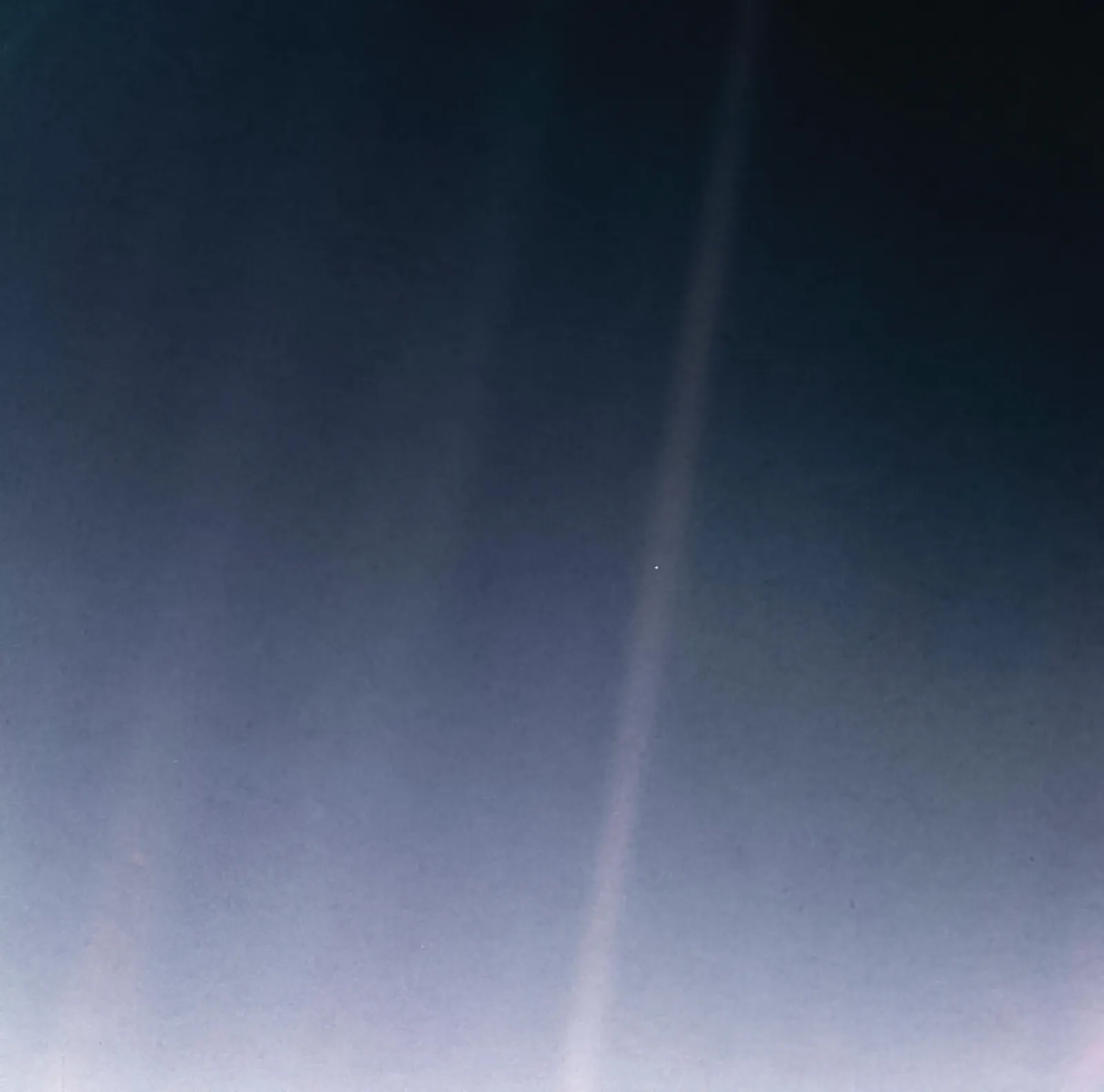
Image: the Pale Blue Dot as reprocessed by NASA/JPL-Caltech in 2020 from the 1990 Voyager 1 frame. Credit: NASA/JPL-Caltech.
The Pale Blue Dot is a photograph of Earth taken by NASA's Voyager 1 spacecraft on 14 February 1990. NASA gives the range as 3.7 billion miles (6 billion kilometres) from the Sun, about forty times the Earth–Sun distance. At that range our entire world appears as less than a single pixel: a faint bluish point of light, almost lost in a band of scattered sunlight.
The Pale Blue Dot image, and the moment Voyager turned around
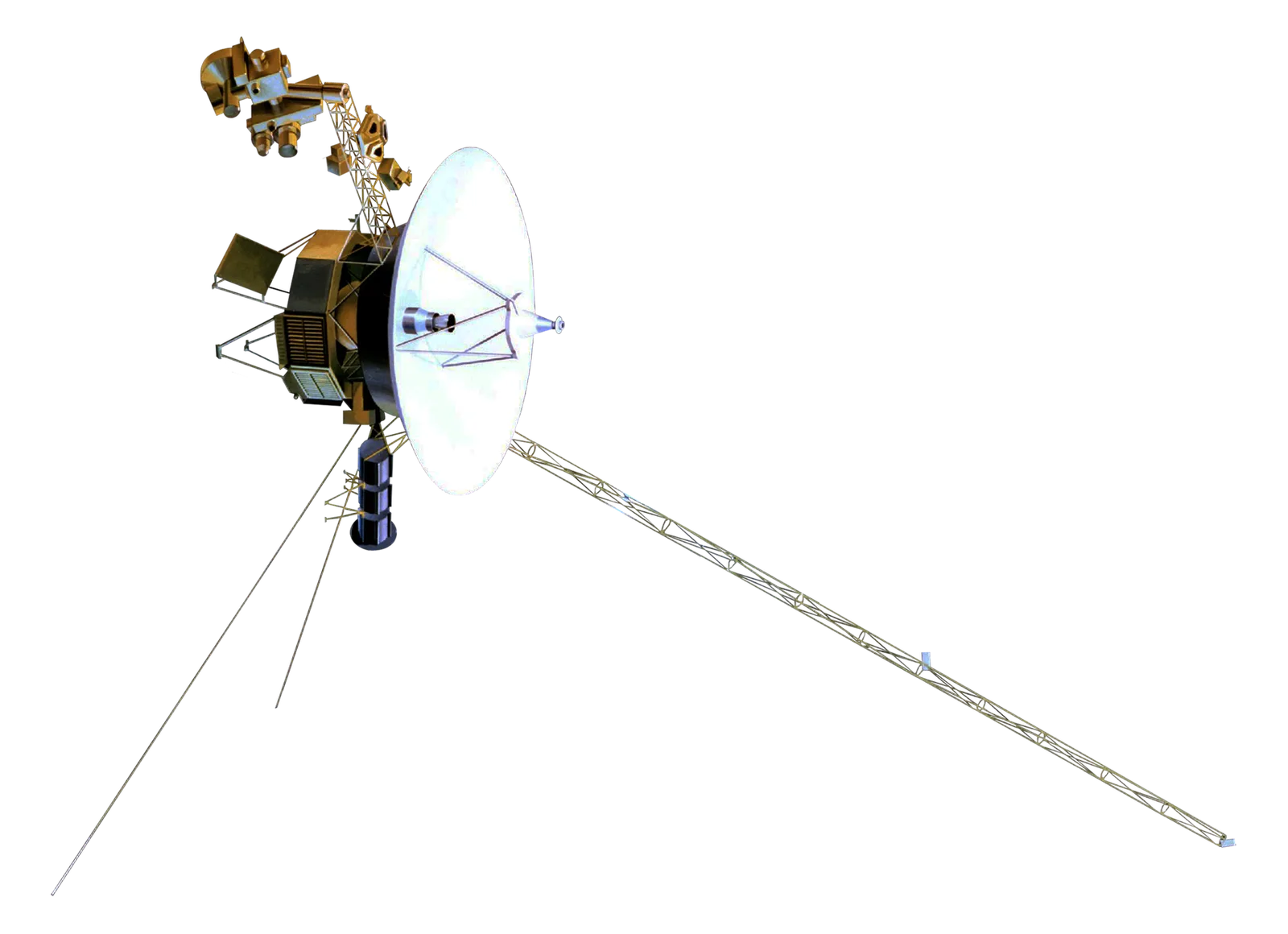
Voyager 1 had finished its work among the planets. Having swept past Jupiter and Saturn, the little spacecraft was climbing out of the Solar System on an outward trajectory, faster than anything humanity had built before. There was no scientific reason to look back. The cameras were due to be switched off to conserve power, their planetary targets long behind them.
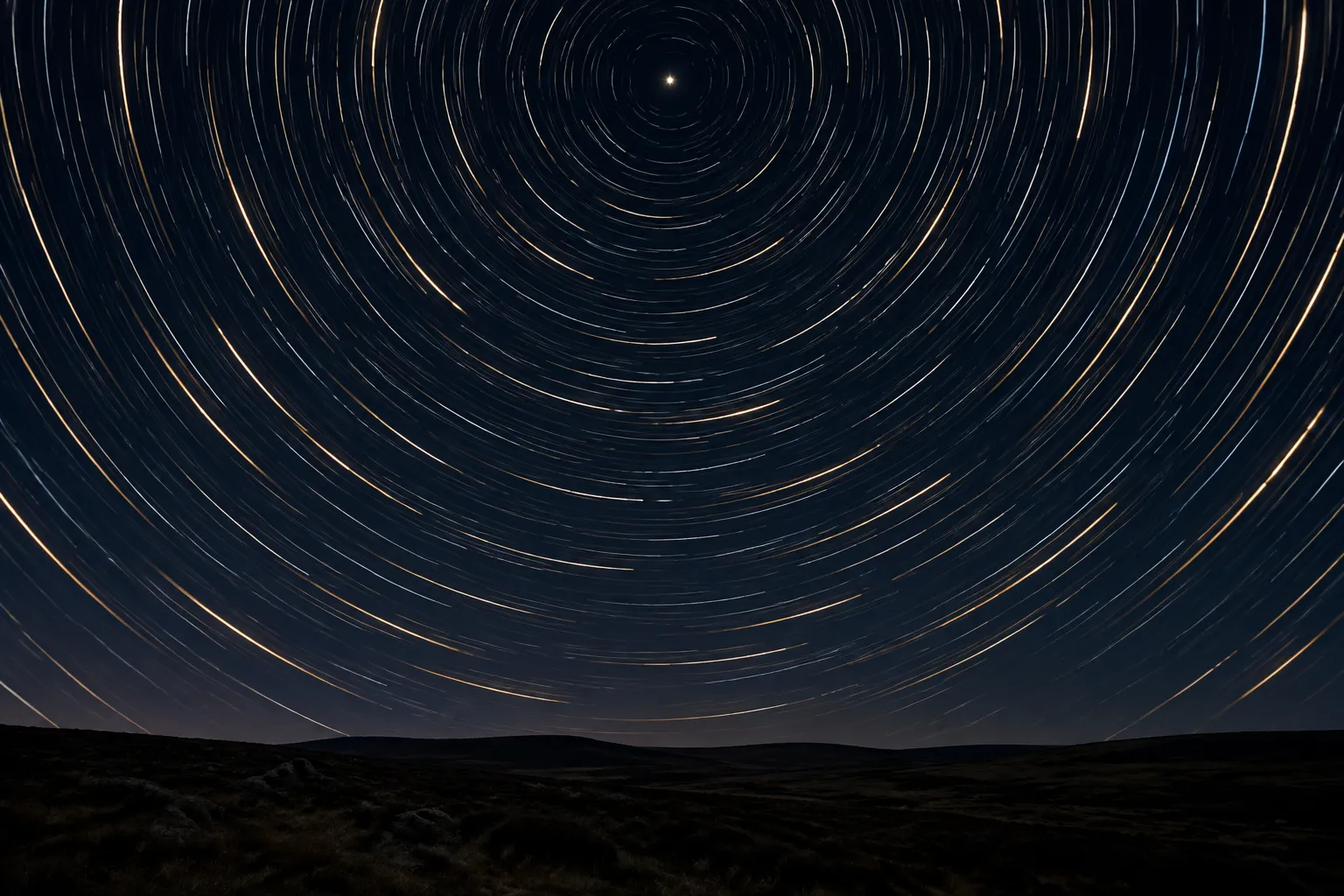
But before they were shut down, the spacecraft was commanded to rotate and aim its cameras homeward: back across the emptiness it had crossed. From beyond the orbit of Neptune, Voyager photographed the planets one last time. In one frame, Earth sits suspended in a pale shaft of light: a single dot, with Earth itself smaller than a pixel, caught by chance in a ray of sunlight scattered within the camera's own optics.
Why did Carl Sagan ask for the picture?
The image exists because the astronomer Carl Sagan, a member of the Voyager imaging team, pressed NASA for years to take it. He argued not for its scientific value (there was almost none) but for its perspective. From six billion kilometres, Earth carries no detail, no continents, no visible sign of anything we have ever done. That, he understood, was precisely the point.
To see ourselves as a single point of light, alone against the dark, was to be handed a kind of humility that no map or globe could offer. Sagan wanted the human species to look at the photograph and feel the smallness of it: and, in that smallness, something worth protecting.
The reflection that made it famous
Sagan later wrote about the image in words that have outlived the mission itself. He described Earth as "a mote of dust suspended in a sunbeam", a single phrase that's now quoted far more often than the mission that took the picture. The passage that follows it turns the photograph into an argument: that every life, every history, every cruelty and kindness has played out on this one small grain of light.
What gives the words their weight is the picture beneath them. Without the dot, the sentiment might read as poetry. With it, the claim is true: verifiable, photographed, returned to us across six billion kilometres of nothing.
The Family Portrait it belongs to
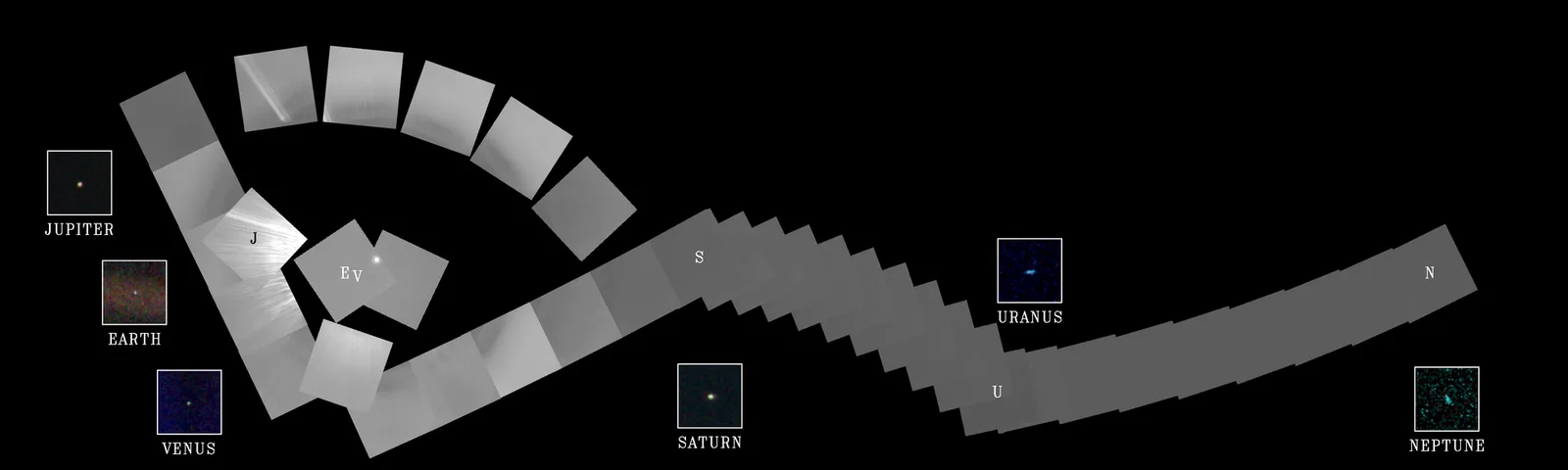
The Pale Blue Dot wasn't taken in isolation. It forms part of a sequence sometimes called the Family Portrait: a set of frames in which Voyager 1 captured several of the planets together, a final group photograph of the Solar System seen from the outside. Mercury was lost in the Sun's glare and Mars proved too faint, but the others were caught as tiny points scattered across the dark.
Earth's frame is the one that endured. Among a handful of distant specks, it was ours: and the accident of a sunbeam falling across it gave the photograph a quiet, unrepeatable beauty that no deliberate composition could have arranged.
Why does it endure as wall art?
Most images of space astonish us with grandeur, vast nebulae, ringed planets, fields of stars. The Pale Blue Dot does the opposite. It says almost nothing, shows almost nothing, and in that restraint it holds a viewer longer than spectacle ever could. A single point of light in a near-empty frame is an image you keep returning to.
On a wall, it works as a daily reminder more than a decoration. It rewards the second glance and the long pause. There is no drama to exhaust, only a question that stays open: the same question Sagan left hanging beneath his sunbeam.

The print
Our print is our own artwork inspired by the image, not a reproduction of Voyager 1's photograph. That restraint is what we set out to honour. Our Pale Blue Dot plate shows Earth as a single pale pixel adrift in a shaft of scattered light, for a wall and a long second look. You'll find it among the full catalogue, alongside the rest of our astronomy prints.
Voyager's photograph closes Looking up. Before it come the objects themselves, including the 88 constellations and how they were fixed, and the practical question of how deep-sky pictures are taken.