How to use it
Open the page and the five clocks are already running: the next meteor shower peak, the next full Moon, the next lunar eclipse you can see from the UK, the next solar eclipse seen from London, and the next equinox or solstice. Each counts down in days, hours and minutes. When one arrives, reload the page and it moves on to the next.
Every time is UK time, so GMT in winter and BST in summer. Each event links to our guide on it, where there is one.
How to read the answers
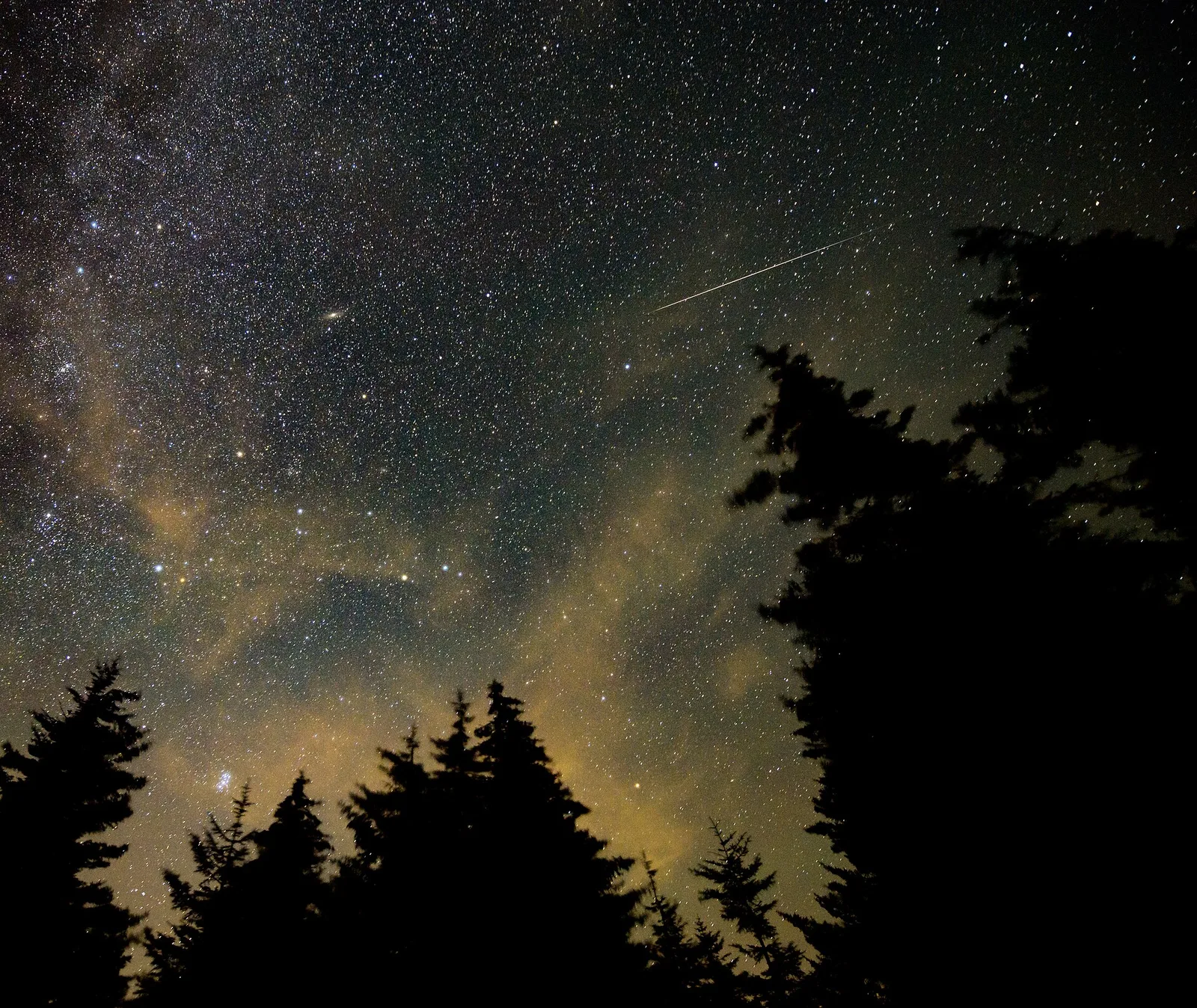
Meteor showers peak over a night, not at a minute, so that clock counts to midnight at the start of the peak date: the middle of the peak night. The hourly rate is a best case for a dark sky. Moonlight and town lights cut it down a lot.
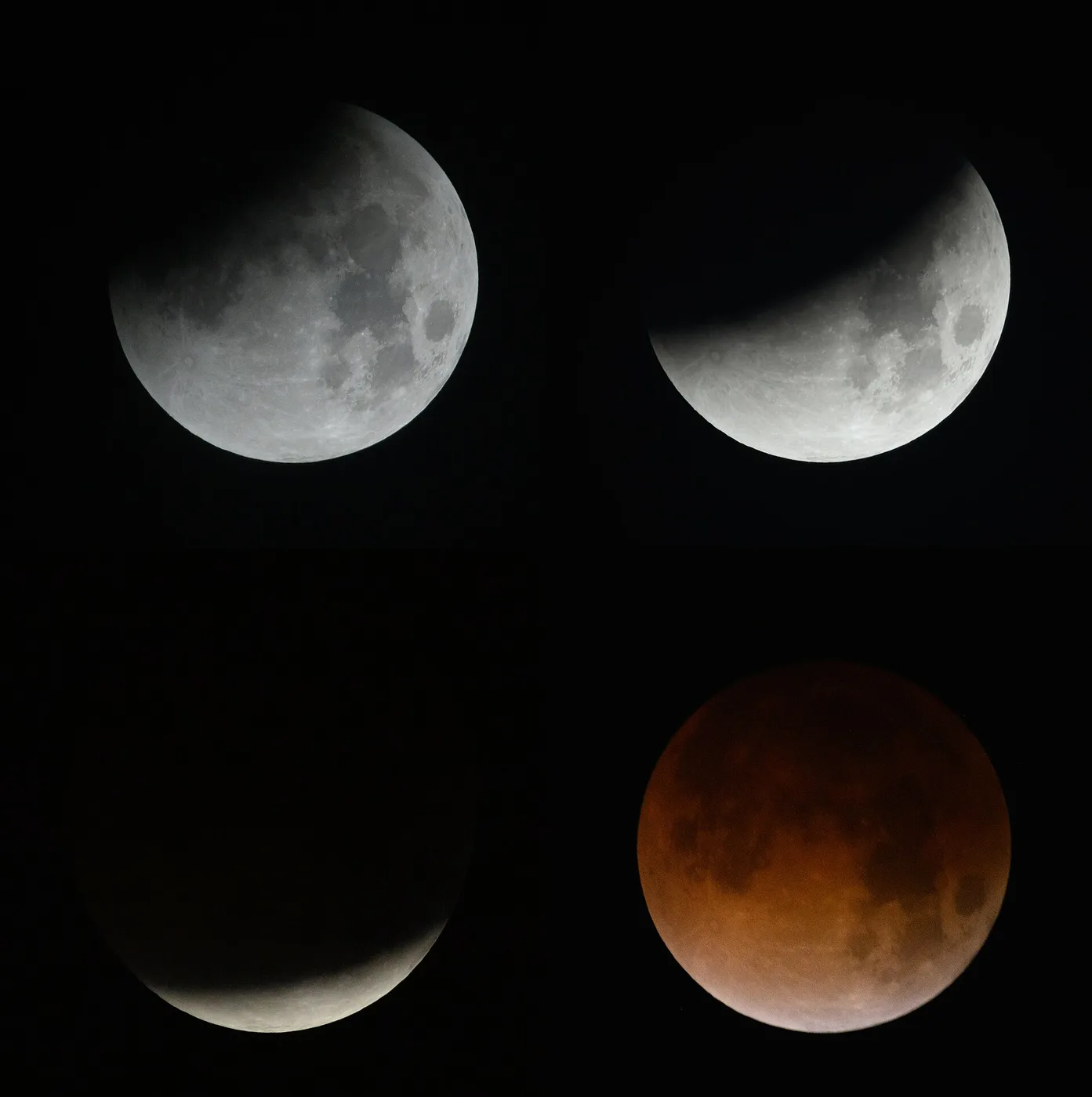
A lunar eclipse is the Earth's shadow falling on the full Moon, and it is safe to watch. We only count one if the Moon is above the horizon in London at the greatest point. A penumbral eclipse, where the Moon only meets the faint edge of the shadow, is often too subtle to notice.
A solar eclipse is the Moon passing in front of the Sun. The percentage is how much of the Sun's face is covered from London at the greatest point. Further north usually means a little less, further south a little more. Never look at the Sun without proper eclipse glasses, even when most of it is covered.
Equinoxes and solstices are moments, not days. At an equinox the Sun crosses the equator in the sky; at a solstice it turns back at its furthest north or south.
How it is worked out
The full Moon, the eclipses and the seasons come from Astronomy Engine, an open astronomy library, worked out for the moment you open the page. We check it against published figures. It puts the 12 August 2026 eclipse at about 91% of the Sun covered from London, greatest at 7.13pm, where the Royal Observatory Greenwich gave 90% at 7.12pm. Its lunar eclipses fall within two minutes of NASA's tables, and its equinoxes and solstices within about a minute of the US Naval Observatory. Astronomers write moments like these as a Julian Date, and our Julian date converter turns any date and time into one.
Published figures for one eclipse can differ by a few per cent. For 2 August 2027 the Royal Observatory says roughly 45% from London, while our sum, like other calculators, gives about 42%. Meteor shower dates are not worked out: they come from Royal Museums Greenwich for 2026 and the International Meteor Organization for 2027. The full Moon names come from our full moon calendar.
Plan a night out
For the Moon tonight and the next few phases, use Moon phase today. UK meteor showers and the Moon shows which peaks have a dark sky, and the next solar eclipse in the UK lists every one to 2030 with how to watch safely.
Written by Craig Fearn, Aphelion Prints. Last updated .