Free UK delivery

Your basket (0)

Free tool · nothing to join

Solar system scale model and planet walk

Choose a size for the Sun or a length for your walk, and see how big each planet is and how far away to put it, using NASA figures. Then print the cards and lay it out.

Set the scale by

A 20 cm ball, a little smaller than a football, is a good Sun for a school field. For a walk along a road or a park path, start from its length: 1000 metres is one kilometre.

A 20.0 cm Sun puts Neptune 649 m away

Scale 1 to 6.96 billion: one millimetre in the model stands for 6,957 km in space.

Sun
20.0 cm
Earth
1.8 mm
Earth from Sun
21.5 m
Neptune from Sun
649 m

Every planet at this scale

BodySizeAbout as big asFrom the SunFrom the last one
The Sun20.0 cma little smaller than a size 5 football (about 22 cm)Start here–
Mercury0.70 mmas wide as a bank card is thick (0.76 mm)8.3 m8.3 m
Venus1.7 mmas wide as 2.5 bank cards stacked (0.76 mm each)15.6 m7.2 m
Earth1.8 mmas wide as 2.5 bank cards stacked (0.76 mm each)21.5 m6.0 m
Mars0.98 mmas wide as 1.5 bank cards stacked (0.76 mm each)32.8 m11.3 m
Jupiter20.6 mmabout the size of a 1p coin (20.32 mm)112 m79.1 m
Saturn17.3 mmabout the size of a 5p coin (18 mm)206 m93.9 m
Uranus7.3 mm–412 m206 m
Neptune7.1 mm–649 m237 m

Sizes are diameters, straight across. Distances are each planet's average distance from the Sun: real orbits are slightly oval, and the planets are never all in a line.

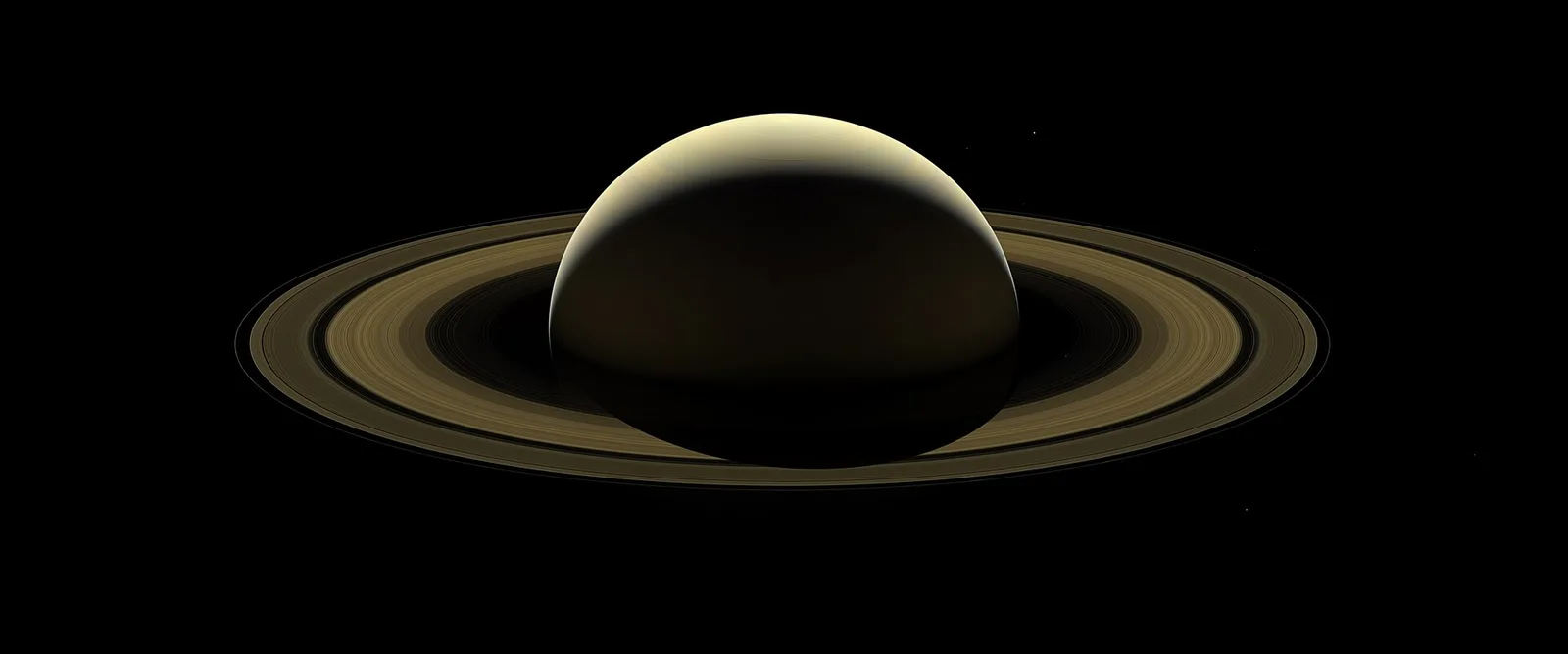
Saturn and its broad rings seen from above against black space.
Cassini’s last full mosaic of Saturn and its rings, 13 September 2017, two days before its plunge into the planet. Credit: NASA/JPL-Caltech/Space Science Institute.

Print the planet-walk cards

Nine A4 cards, one for the Sun and one for each planet, at the scale above. Each has the name, the model size, the distance from the Sun and one true fact. Where a planet fits on the page it is drawn at its model size, so print at 100% (actual size). Put the Sun card at the start, then pace out each distance and stand the card there.

How to use it

Pick how you want to set the scale. If you have a ball for the Sun, type its width in centimetres. If you have a path or a field of a known length, type that instead and the tool fits Neptune at the far end. Every planet's size and distance from the Sun change to match, and the address in your browser updates so you can share the plan.

Then print the cards. There are nine, one for the Sun and one for each planet, each on its own sheet of A4. Planets small enough to fit are drawn at their model size, so set the printer to 100% or "actual size". Laminate them if they are going outside.
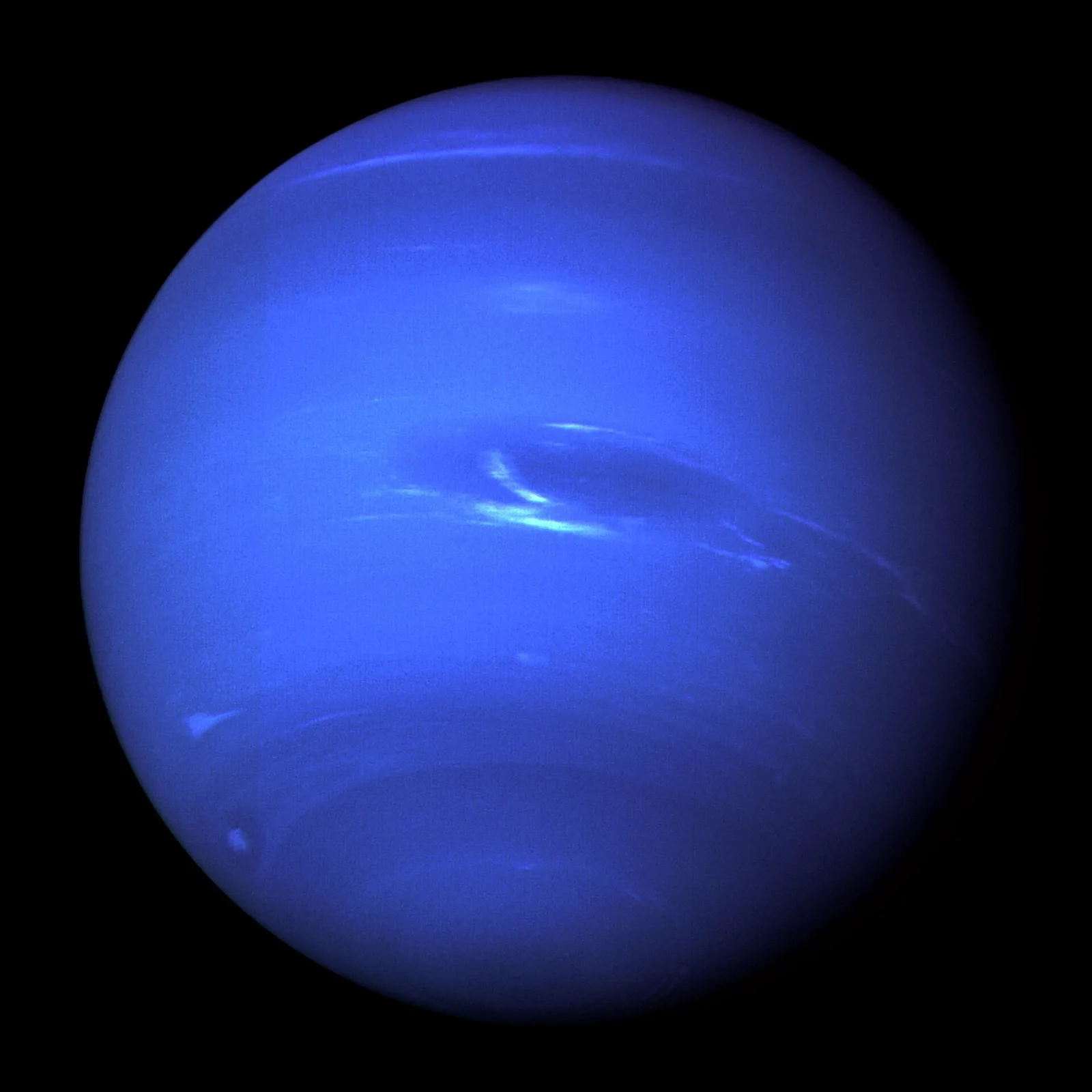
Neptune, a deep blue planet with white streaks of cloud and a dark oval storm.
Neptune from Voyager 2’s last whole-planet images, in enhanced colour. Credit: NASA.

Running a planet walk

Stand the Sun card at the start. Pace or measure out each distance from the Sun along a straight line, and set the card down there. The "from the last one" column saves walking back to the start each time. With a 20 cm Sun, the four rocky planets all sit within 33 metres, and then the gaps open up: Jupiter is 112 metres out and Neptune 649 metres. That jump is the point most groups remember.

It works for Scout and Guide groups, a school field, a society open evening or a long beach. One thing to know: on a walk of a kilometre or so, the rocky planets come out at three millimetres across or less. That is not a mistake; space is mostly empty.

How it is worked out

Every size and distance comes from NASA's Planetary Fact Sheet and Sun Fact Sheet. The tool finds one scale, your Sun's width divided by the real Sun's 1,391,400 km, or your walk divided by Neptune's 4,515 million km, and multiplies everything by it. Distances are each planet's average distance from the Sun; real orbits are slightly oval and the planets are never lined up.

The everyday comparisons use things with a fixed, published size: UK coins from The Royal Mint, sports balls from their governing bodies' rules, and the 0.76 mm thickness of a bank card. When nothing is close, the tool leaves the comparison out rather than stretch it.

Keep going

Our guide to the planets in order from the Sun has a trick for remembering them. For a classroom wall, there is a free solar system learning chart to download, and the solar system prints are there for a wall at home.

Written by Craig Fearn, Aphelion Prints. Last updated .

Common questions

If the Sun were a football, how big would Earth be?
With a 22 cm Sun, about the size of a size 5 football, Earth is about 2 mm across and sits about 24 metres away. Jupiter is about 2.3 cm across and 123 metres away.
How long is a planet walk?
It is up to you. The tool fits Neptune at the end of whatever length you give. With a 20 cm Sun, Neptune is 649 metres out, so allow a little over 1.3 km there and back.
Why are the small planets so tiny?
Because the Sun is huge and space is mostly empty. The Sun is about 109 times as wide as Earth, so on a planet walk of a kilometre or so, the rocky planets come out as specks of three millimetres or less.
Can I print the planet cards for free?
Yes. Set your scale, press Print the cards, and you get nine A4 sheets with the name, model size, distance and one fact for the Sun and each planet. There is no sign-up.