Free UK delivery

Your basket (0)

Free tool · nothing to join

Light-year converter

A light-year is a distance, not a time. Convert it to kilometres, miles, astronomical units or parsecs, and see how long light takes to reach us from the Moon, the planets and the stars.

A light-year is a distance, not a time. It is how far light travels in one year: 9.46 trillion kilometres, or about 5.88 trillion miles.

1 light-year is

The same distance in every unit
kilometres9.46 trillion
miles5.88 trillion
astronomical units (au)63,241
parsecs0.307
light-seconds31.56 million
light-minutes525,960
light-hours8,766

Light covers it in 1 year. Driving at 70 mph without stopping would take about 9.58 million years; flying at 550 mph, about 1.22 million years.

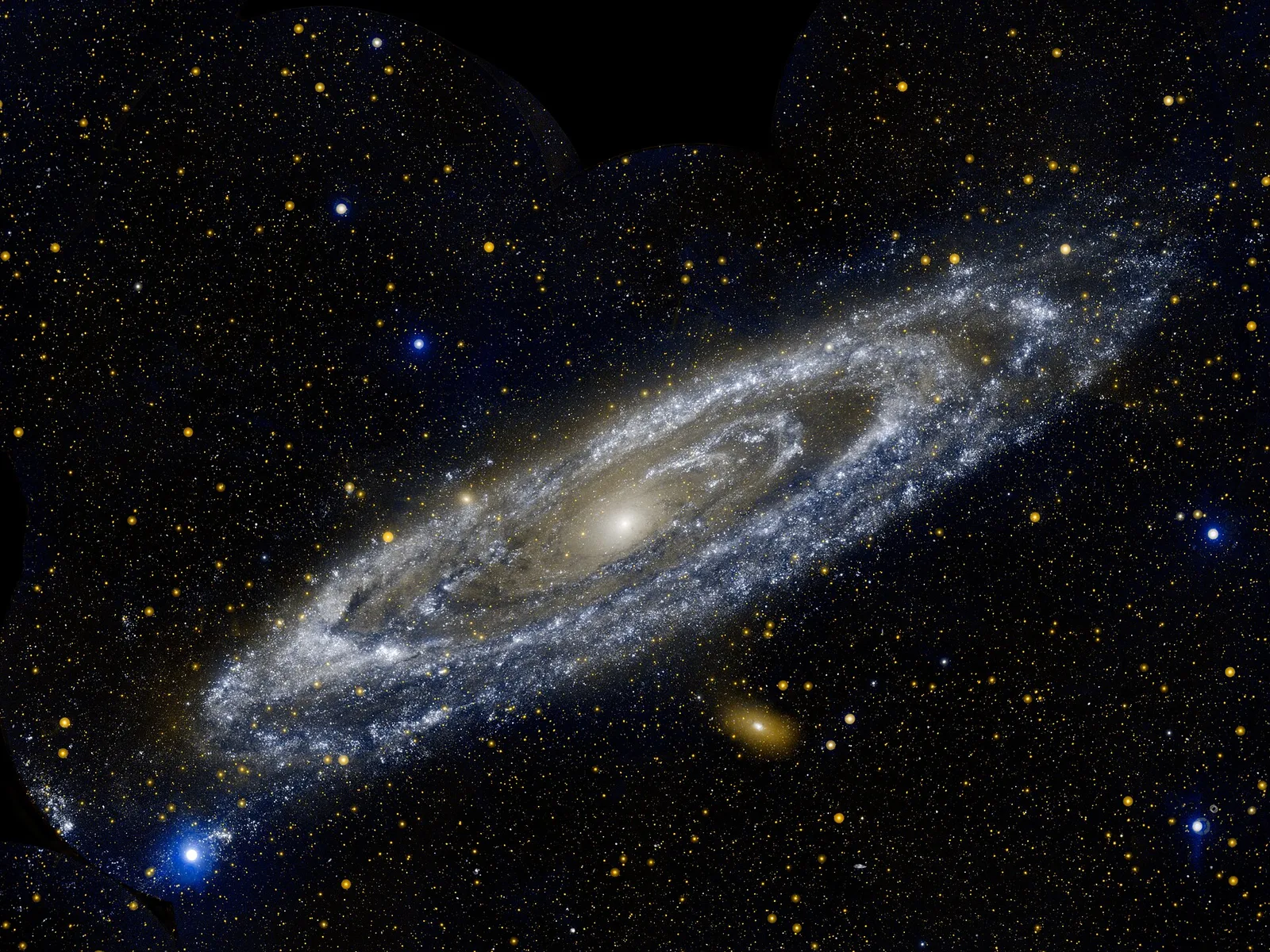
The Andromeda Galaxy in ultraviolet, a tilted spiral of blue-white stars.
The Andromeda Galaxy in ultraviolet from NASA’s Galaxy Evolution Explorer, about 2.5 million light-years away. Credit: NASA/JPL-Caltech.

How long light takes to reach us

When you look at any of these, you see it as it was when the light set off. Tap a row to put its distance in the converter.

FromDistanceLight takesAt 70 mph
The MoonNASA, mean distance 384,400 km 384,400 km 1.28 seconds about 5 months
The SunIAU, 1 astronomical unit 149.6 million km 8 minutes 19 seconds about 151 years
Mars at its closestNASA Mars fact sheet, 54.6 million km 54.6 million km 3 minutes 2 seconds about 55.3 years
Mars at its farthestNASA Mars fact sheet, 401.4 million km 401.4 million km 22 minutes 19 seconds about 406 years
Jupiter at its closestNASA Jupiter fact sheet, 588.5 million km 588.5 million km 32 minutes 43 seconds about 596 years
Jupiter at its farthestNASA Jupiter fact sheet, 968.5 million km 968.5 million km 53 minutes 51 seconds about 981 years
Proxima Centauri, the nearest star after the SunESA Gaia (Data Release 3), 4.2465 light-years 4.2465 ly 4.2465 years about 40.68 million years
The Andromeda GalaxyNASA, about 2.5 million light-years 2.5 million ly 2.5 million years about 23.95 trillion years

The 70 mph column is a car that never stops, never slows and never needs fuel. A jet at 550 mph would reach the Moon in 18 days 2 hours, and Proxima Centauri in about 5.18 million years.

A small white dome observatory in a frosty back garden at night, its slit open to a starry sky, a bare tree beside it.

Put it on your society's website

Astronomy societies, schools, and Scout and Guide groups are welcome to use this converter on their own sites. Copy the code below into any page that accepts HTML. It shows the converter and the light-time table, with no shop and no cookies.

How to use it

Type a distance, pick its unit, and every other unit appears underneath, with how long light takes to cover it. Tap any row in the table of places to drop its distance into the converter. The address in your browser changes as you go, so you can share the exact answer.

What the units mean

A light-year is how far light goes in a year: about 9.46 trillion kilometres. An astronomical unit, or au, is the average distance from Earth to the Sun, set at exactly 149,597,870.7 km. A parsec is about 3.26 light-years. It comes from the way astronomers measure star distances: a star one parsec away seems to shift by one second of arc as Earth goes round the Sun. A light-minute is how far light goes in a minute, about 18 million kilometres.

Because light takes time to travel, looking out is looking back. You see the Sun as it was about 8 minutes and 19 seconds ago, and the Andromeda Galaxy as it was 2.5 million years ago.
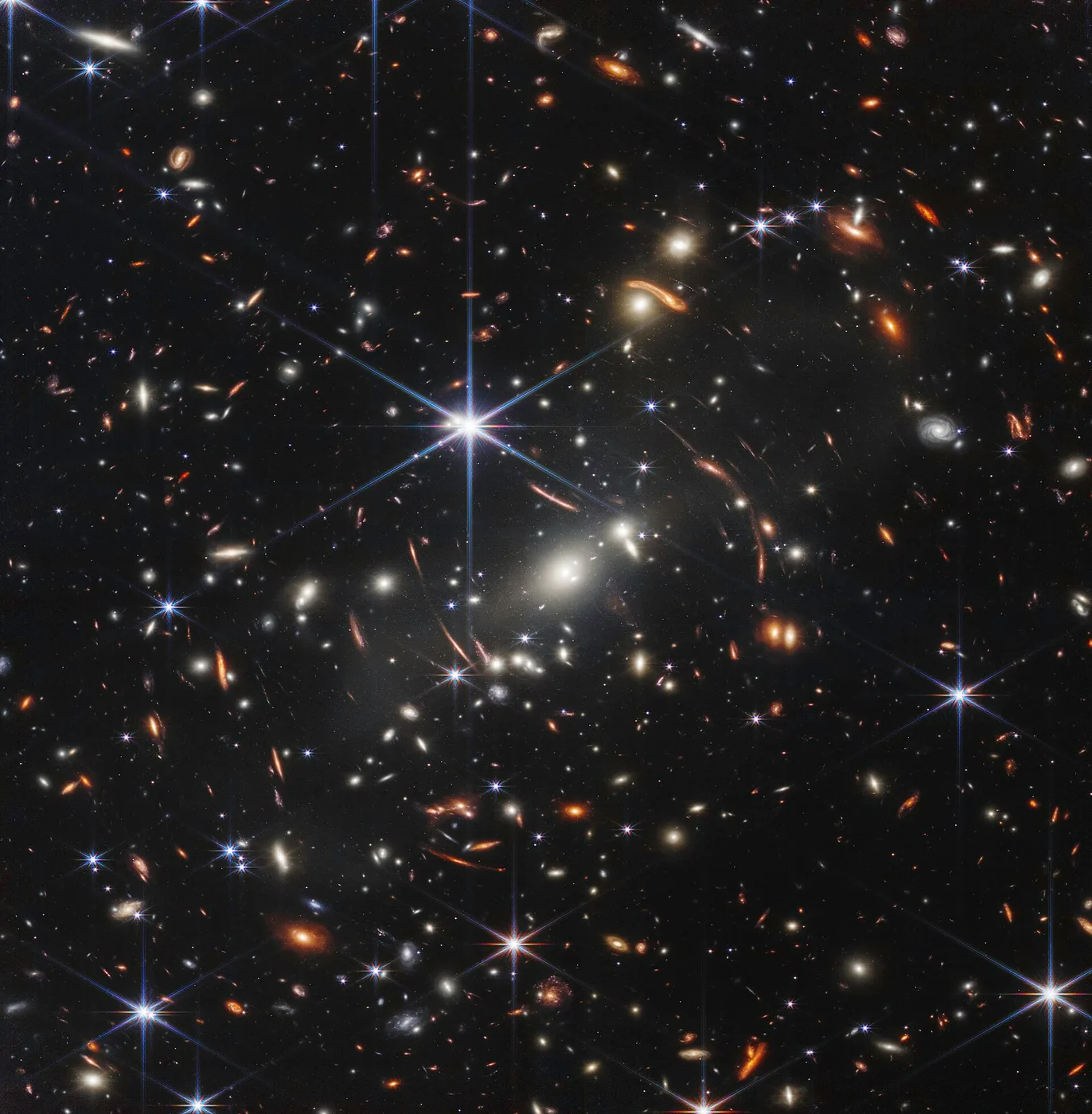
A deep field of thousands of galaxies with a few foreground stars carrying sharp six-pointed spikes.
Webb’s First Deep Field. Credit: NASA, ESA, CSA and STScI.

How it is worked out

Everything is multiplication by fixed numbers. Light travels at exactly 299,792.458 km every second, which is how the metre is defined. The International Astronomical Union fixes the light-year at that speed times 365.25 days, the astronomical unit at 149,597,870.7 km, and the parsec at 648,000 divided by pi astronomical units. A mile is exactly 1.609344 km.

The distances in the table come from NASA's fact sheets for the Moon, Mars and Jupiter, NASA's Hubble catalogue for Andromeda, and the European Space Agency's Gaia mission for Proxima Centauri. Mars and Jupiter are given at their closest and farthest, because the gap changes as they and Earth go round the Sun.

Further out

For a slower trip, our guide to how long it takes to get to the Moon compares real missions, from Apollo's few days to the 13 months ESA's SMART-1 probe took. The galaxy prints include Andromeda, a galaxy we see as it was 2.5 million years ago.

Written by Craig Fearn, Aphelion Prints. Last updated .

Light-year converter questions

How far is a light-year in miles?
About 5.88 trillion miles, or 9.46 trillion kilometres. It is the distance light travels in one year of 365.25 days.
Is a light-year a measure of time?
No. It sounds like one, but it is a distance: how far light goes in a year. The time light takes is how long ago you are seeing something, which is a different question the converter also answers.
How long does light from the Sun take to reach Earth?
About 8 minutes and 19 seconds on average. Earth is a little closer in January and a little farther in July, so it varies by about 8 seconds either way.
How many light-years away is the nearest star?
After the Sun, the nearest star is Proxima Centauri, 4.2465 light-years away by the European Space Agency's Gaia measurements. Its light left it about four and a quarter years ago.